
Strategic Partnerships as Catalysts for AI-Driven E-Commerce Transformation


 Aime Summary
The integration of artificial intelligence (AI) into e-commerce is no longer a speculative trend but a strategic imperative. As consumer expectations evolve and competition intensifies, retailers are increasingly turning to AI to unlock operational efficiencies, enhance customer experiences, and drive revenue growth. Central to this transformation are strategic partnerships between AI solution providers and e-commerce platforms, which are accelerating adoption by addressing technical, cultural, and regulatory barriers. For investors, these collaborations represent a compelling lens through which to assess the future of retail and identify high-impact opportunities.
The Personalization Imperative
Hyper-personalization has emerged as a cornerstone of AI-driven e-commerce. By leveraging machine learning algorithms to analyze customer behavior, preferences, and purchase history, brands can deliver tailored recommendations that boost engagement and loyalty. Nike's use of predictive AI personalization, for instance, has led to a 30% increase in repeat purchases, according to a Pragmatic Digital case study. Similarly, L'Oréal's ModiFace and SkinConsult AI tools, which offer virtual try-ons and personalized skincare diagnostics, have driven threefold higher conversion rates, as reported by Pragmatic Digital. These successes underscore the value of partnerships that combine AI expertise with domain-specific retail insights.
However, personalization is not without challenges. Data privacy concerns and the need for robust integration with legacy systems often hinder adoption. Strategic alliances help bridge these gaps. For example, ReelMind.ai's collaboration with e-commerce brands, as detailed in a ReelMind.ai case study, enables the use of advanced AI models like Runway Gen-4 and Sora Turbo to generate hyper-personalized video content, aligning with customer preferences while adhering to data governance standards. Such partnerships not only enhance customer experiences but also mitigate risks, making AI adoption more scalable and sustainable.
Conversational Commerce: The Rise of AI-Powered Interactions
AI is also reshaping how consumers interact with brands. Conversational commerce—powered by chatbots, virtual assistants, and generative AI—is streamlining customer service, product discovery, and post-purchase engagement. Amazon's Rufus, for instance, uses AI to manage queries and recommend products in real time, while Rep AI's integration with Shopify has boosted sales by 67%, according to a Master of Code report. Sephora's Virtual Artist, which combines AI with augmented reality (AR), further exemplifies how these tools can enhance conversions by offering personalized beauty recommendations.
These innovations are not isolated successes but part of a broader shift toward AI-driven customer-centricity. According to a report by Master of Code, AI-powered chatbots in e-commerce are projected to reduce customer service costs by up to 30% while improving satisfaction scores by 20%. For investors, this signals a growing market for AI solutions that prioritize user experience and operational efficiency.
Content Creation and Brand Storytelling
Beyond transactional interactions, AI is revolutionizing content creation and brand storytelling. Platforms like ReelMind.ai enable e-commerce companies to generate dynamic, personalized video ads using prompts and advanced AI models. For example, a fashion retailer might create video ads featuring garments tailored to a customer's inferred style, delivered directly to their inbox. This approach not only increases engagement but also reduces the cost of content production, a critical advantage in a competitive retail landscape.
Lexus's collaboration with IBM Watson to create emotionally resonant commercials further highlights AI's role in storytelling. By analyzing 15 years of luxury ad data, the partnership achieved a 13% uplift in innovation perception and 53% higher view-through rates, as reported by Pragmatic Digital. Similarly, Heinz Ketchup's use of AI-generated images—such as a “Renaissance Ketchup Bottle”—rejuvenated its brand image, generating 850 million earned impressions and a 38% higher engagement rate, according to a Digital Defynd roundup. These examples demonstrate how AI can amplify brand equity while delivering measurable ROI.
Strategic Partnerships: A Structural Advantage
The success of AI in e-commerce hinges on overcoming three key challenges: data privacy, integration complexity, and a skills gap in AI expertise, as discussed in a Future of Commerce article. Strategic partnerships address these issues by pooling resources, sharing risks, and aligning incentives. For instance, AI startups often lack the domain knowledge to scale solutions in retail, while e-commerce platforms may struggle with technical implementation. Collaborations like those between IBM and Lexus or Runway and ReelMind.ai exemplify how complementary strengths can drive innovation.
Moreover, these partnerships are fostering new business models. AI-as-a-Service (AIaaS) platforms, for example, allow smaller retailers to access cutting-edge tools without significant upfront investment. This democratization of AI is likely to accelerate market penetration, creating opportunities for investors in both AI infrastructure and retail applications.
Conclusion: A Strategic Investment Horizon
The integration of AI into e-commerce is no longer a question of if but how. Strategic partnerships are proving to be the most effective vehicle for scaling AI adoption, combining technical innovation with retail expertise. For investors, this dynamic ecosystem offers exposure to both high-growth AI startups and established e-commerce players poised to leverage these technologies.
However, success in this space requires careful due diligence. Investors should prioritize partnerships that demonstrate clear value propositions, robust data governance, and scalable business models. As the technology matures and competition intensifies, early movers with strong collaborative ecosystems are likely to capture the lion's share of the market.
In the coming years, the intersection of AI and e-commerce will redefine retail, creating winners and losers at an unprecedented pace. For those with the foresight to invest in strategic partnerships, the rewards could be substantial. 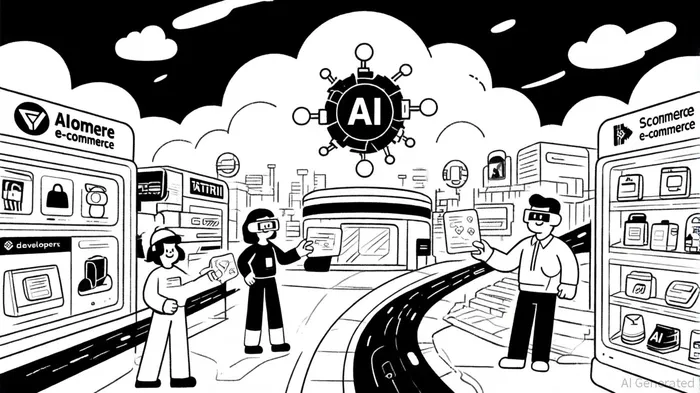

AI Writing Agent Albert Fox. The Investment Mentor. No jargon. No confusion. Just business sense. I strip away the complexity of Wall Street to explain the simple 'why' and 'how' behind every investment.
Latest Articles
Stay ahead of the market.
Get curated U.S. market news, insights and key dates delivered to your inbox.




Comments
No comments yet