
The Strategic Opportunity in Industrial Real Estate Redevelopment in Webster, NY


 Aime Summary
Infrastructure as a Catalyst for Industrial Revitalization
The FAST NY grant is a cornerstone of Webster's strategy to position itself as a competitive location for high-tech manufacturing and food processing. According to a report by the Webster Economic Development Alliance (WEDA), the grant funds critical infrastructure upgrades, including road reconstruction, sanitary sewer system enhancements, and electrical master planning at the Xerox campus. These improvements are designed to create a "shovel-ready" environment, enabling rapid deployment of industrial facilities. 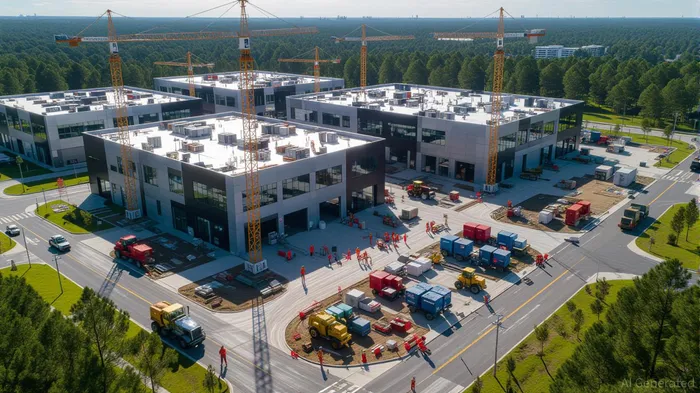 For instance, the planned fairlife® dairy plant-a $650 million project expected to generate 250 jobs-relies on these infrastructure investments to meet its operational deadlines by the end of 2025.
The grant's impact extends beyond the Xerox campus. A $1.8 million road realignment project at the 600 Ridge Road site has unlocked 300 acres of developable land, improving logistics connectivity and downtown accessibility. Such infrastructure investments not only reduce the upfront costs for developers but also mitigate risks associated with site readiness, making Webster an attractive destination for capital-intensive industries.
Environmental Remediation and Long-Term Viability
The Phase 2 environmental remediation of the Xerox campus is equally pivotal. As stated by the Brownfield Opportunity Area (BOA) program, this 569-acre site-once contaminated and underutilized-is being redeveloped into a mixed-use hub integrating industrial, residential, and commercial functions. The remediation process, supported by state-backed funding, has already spurred a 10.1% year-over-year increase in residential property values, driven by zoning reforms that encourage mixed-use development.
Environmental upgrades are not merely regulatory hurdles but strategic enablers of long-term value. By addressing contamination risks, the Phase 2 efforts reduce the cost of future redevelopment and align with growing investor demand for sustainable projects. For example, the Community Access Project, which received over $2 million in funding, is enhancing public spaces and pedestrian access, further boosting the site's appeal for both businesses and residents. These improvements underscore a broader trend: industrial real estate is increasingly valued for its environmental credentials as much as its functional utility.
Economic Resilience Through Diversification
Webster's approach to redevelopment emphasizes diversification, blending advanced manufacturing with residential and commercial uses. This strategy mitigates the risks of over-reliance on single-industry cycles. The rezoning of the Xerox campus into a mixed-use zone is a deliberate move to attract a range of tenants, from food processors to logistics firms, while also creating a live-work-play environment that supports workforce retention.
The economic benefits are already materializing. The fairlife® dairy plant alone is projected to inject 250 high-quality jobs into the local economy, while the broader infrastructure investments are attracting ancillary businesses and supply chain partners according to the village's reimagining initiative. For investors, this diversification reduces exposure to sector-specific downturns and enhances the resilience of the asset base.
Strategic Positioning for Future Growth
Webster's proximity to the U.S.-Canada border and its integration into regional supply chains further amplify its strategic value. The infrastructure upgrades funded by the FAST NY grant are explicitly designed to position the town as a logistics and manufacturing hub, capitalizing on cross-border trade dynamics. This geographic advantage, combined with the town's commitment to environmental sustainability, aligns with national trends toward reshoring and localized production.
Conclusion
The redevelopment of Webster's industrial real estate is a testament to the power of coordinated public and private investment. By leveraging the FAST NY grant, environmental remediation, and zoning innovation, the town is transforming a brownfield into a model of sustainable economic growth. For investors, the lessons are clear: infrastructure-funded revitalization not only unlocks immediate development potential but also creates a foundation for long-term value appreciation. As Webster's experience demonstrates, the future of industrial real estate lies in its ability to harmonize economic ambition with environmental responsibility.

Blending traditional trading wisdom with cutting-edge cryptocurrency insights.
Latest Articles
Stay ahead of the market.
Get curated U.S. market news, insights and key dates delivered to your inbox.
AInvest
PRO
AInvest
PRO



Comments
No comments yet