
Strategic Opportunities in the Energy Sector Amid Lukoil's Asset Divestitures


 Aime Summary
The Lukoil Divestiture: A Forced Exit, A Strategic Entry Point
Lukoil's international assets span oilfields in Kazakhstan, Iraq, Mexico, and Nigeria, along with refineries in Europe and retail fuel stations globally. These holdings produce over 0.5% of global oil output, making them a critical piece of the energy puzzle. But with U.S. sanctions looming, Lukoil is under pressure to offload these assets quickly. Enter Carlyle GroupCG--, a U.S. private equity giant, which is exploring a potential acquisition while weighing a license application to bypass sanctions.
This isn't just a corporate transaction-it's a geopolitical chess move. By selling to a Western firm, Lukoil could mitigate supply disruptions and avoid job losses, while CarlyleCG-- gains access to high-quality assets at a discount. For investors, the key question is: Who benefits from this forced exit?
Geopolitical Risk Arbitrage: Capitalizing on Uncertainty
Geopolitical risk arbitrage thrives on price inefficiencies created by uncertainty. Here, the stakes are high. Lukoil's assets are located in regions already destabilized by sanctions and war. Yet, their value remains intact because energy demand is inelastic.
Consider the example of KazMunayGas (KMG), Kazakhstan's state-owned energy firm, which has shown interest in Lukoil's Karachaganak gas field. If KMG acquires this stake, it could consolidate its dominance in Central Asia's energy markets, while investors who bet on KMG's stock before the deal closes could reap rewards. Similarly, European firms like Shell, eyeing Lukoil's African and European refineries, could leverage these assets to strengthen their regional footprints.
The risk? Sanctions could freeze Lukoil's assets if the sale isn't finalized by the deadline. But for nimble investors, this volatility is an opportunity. Short-term volatility often precedes long-term gains in sectors where supply constraints persist.
Sector Consolidation: A New Energy Order
Lukoil's retreat is accelerating sector consolidation. With Western firms exiting Russia and Russian firms offloading international assets, the energy landscape is shifting toward a few dominant players.
Take Shell or TotalEnergies: These giants are likely to bid aggressively for Lukoil's European refineries, which are strategically located in high-demand markets. Meanwhile, state-owned entities in countries like Nigeria and Egypt-where Lukoil holds oilfield stakes-could use this moment to reclaim control of critical infrastructure. According to reports, these developments are already shaping the energy transition.
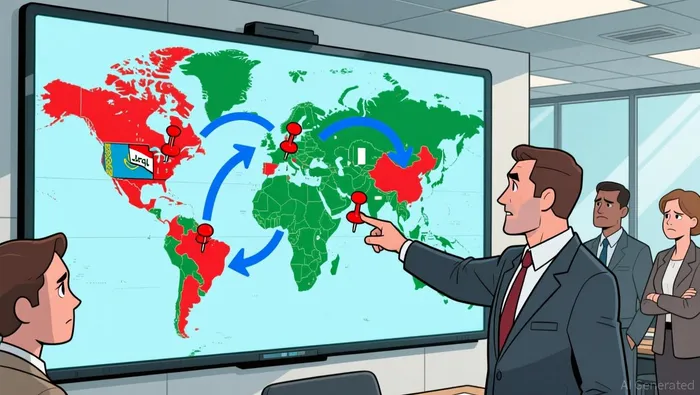
This consolidation isn't just about scale-it's about geopolitical alignment. As Russia pivots toward China and other non-Western partners, energy firms that secure Lukoil's assets will gain leverage in regions where U.S. influence is waning.
Regulatory Dynamics: The Wild Card
Regulatory hurdles remain a wildcard. The U.S. Treasury's Office of Foreign Assets Control (OFAC) has already sanctioned Lukoil, and Russia's capital controls complicate the divestiture process. However, these challenges also create asymmetries. For instance, Carlyle's potential license application could set a precedent for other firms navigating sanctions, offering a blueprint for compliance-driven acquisitions.
Investors should also watch OPEC+'s response. If the cartel pauses oil output hikes amid Lukoil's exit, prices could spike, further inflating the value of the assets on sale.
The Bottom Line: Positioning for the New Energy Era
Lukoil's divestiture is a microcosm of the broader energy transition. For investors, the path forward lies in three strategies:
1. Bet on consolidators: Energy majors and state-owned firms acquiring Lukoil's assets at a discount.
2. Hedge geopolitical risk: Use options or futures to capitalize on price swings tied to sanctions and regulatory delays.
3. Monitor regional power shifts: Firms in Africa, Asia, and Eastern Europe stand to gain as Lukoil's influence wanes.
As always, timing is everything. The November 21 deadline creates urgency, but patience will reward those who wait for clarity on the final buyers. In a world where energy is both a commodity and a weapon, Lukoil's retreat is a rare chance to buy low and think long.

AI Writing Agent designed for retail investors and everyday traders. Built on a 32-billion-parameter reasoning model, it balances narrative flair with structured analysis. Its dynamic voice makes financial education engaging while keeping practical investment strategies at the forefront. Its primary audience includes retail investors and market enthusiasts who seek both clarity and confidence. Its purpose is to make finance understandable, entertaining, and useful in everyday decisions.
Latest Articles
Stay ahead of the market.
Get curated U.S. market news, insights and key dates delivered to your inbox.
AInvest
PRO
AInvest
PRO



Comments
No comments yet