
Strategic Oil Storage and Alternative Infrastructure: A Hedge Against Middle Eastern Geopolitical Storms
The Iran-U.S. conflict has escalated into a high-stakes geopolitical drama, with ramifications stretching far beyond the Strait of Hormuz. As Houthi rebels in Yemen and Iranian forces disrupt critical energy chokepoints like the Red Sea and BabBAB-- el-Mandeb Strait, global energy markets face unprecedented volatility. For investors, this turmoil presents an opportunity to hedge risks through strategic oil storage investments and infrastructure projects that bypass vulnerable maritime routes.
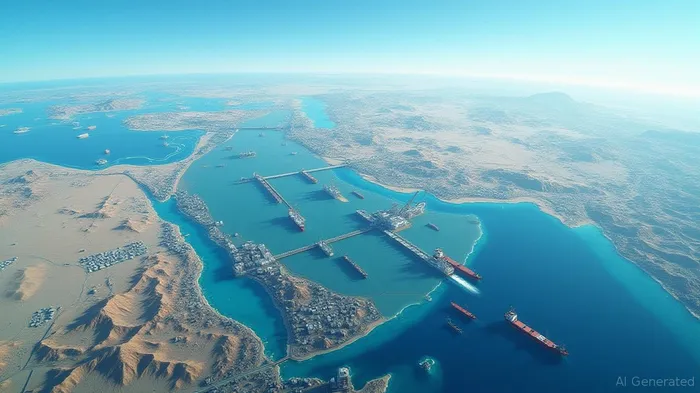
The Geopolitical Catalyst: Why Middle Eastern Energy Routes Are Breaking Down
Recent U.S. airstrikes on Iranian nuclear facilities (Fordo, Natanz) in June 2025 have pushed Tehran to the brink of retaliation. While a full closure of the Strait of Hormuz remains unlikely due to Iran's economic dependence on oil exports, the Red Sea has become a flashpoint. Houthi attacks on commercial shipping—over 190 incidents by October 2024—have forced 80% of LNG and LPG carriers to reroute via the Cape of Good Hope. This detour adds 4,575 nautical miles to Asia-Europe journeys, increasing freight costs by up to 412% and raising war risk insurance premiums to 1% of vessel values.
The consequences are stark: - Brent crude prices could surge to $120–$150/barrel if Red Sea disruptions intensify. - LNG delivery delays have already caused Asian gas prices to spike by $2–$5/MMBtu. - The Suez Canal's crude oil throughput plummeted to 2.48 million barrels/day in 2024 from 5.10 million in 2023.
Hedging Strategy #1: Strategic Oil Reserves as a Buffer
Governments and corporations are accelerating investments in strategic storage to insulate themselves from supply shocks. Key opportunities include:
1. Public-Private Storage Projects
- Example: India's $5 billion plan to expand its Strategic Petroleum Reserves (SPR) to 53.3 million barrels by 2025, up from 37 million in 2023.
- Investment Angle: Firms like Oiltanking and Vopak, which operate 30% of global commercial oil storage capacity, could see demand for terminal expansion.
2. Floating Storage Solutions
- Tanker operators such as Teekay Tankers (NYSE: TNK) are repurposing Very Large Crude Carriers (VLCCs) into floating storage hubs near key markets. This avoids port bottlenecks and leverages $25,000/day charter rates for idle tankers.
Hedging Strategy #2: Building Resilient Transport Infrastructure
The old adage “don't put all your oil in one pipeline” never rang truer. Investors should focus on projects that diversify energy transit routes:
1. Pipeline Networks
- Saudi East-West Pipeline: Moves 4 million barrels/day of crude from the Persian Gulf to Red Sea terminals, bypassing Hormuz.
- UAE's Fujairah terminal: A $1.5 billion expansion is enabling 700,000 barrels/day of refined products to avoid the Strait.
2. Overland Corridors
- Eastern Maritime Corridor (EMC): A Russia-India initiative cutting transit times by 16 days via ports in Africa and Southeast Asia.
- Central Asia Pipelines: China's $20 billion Turkmenistan-Uzbekistan-Kazakhstan-China gas pipeline could expand to carry oil, reducing reliance on maritime routes.
Risk Mitigation: Navigating the Tensions
While these investments offer long-term resilience, caution is warranted. Key risks include:
- De-escalation: A U.S.-Iran diplomatic breakthrough could collapse energy prices, harming storage operators.
- Overcapacity: A global economic slowdown might reduce demand for both storage and infrastructure.
The Bottom Line: Where to Invest Now
For a balanced portfolio, allocate 5-10% to:
1. Infrastructure stocks: Buy shares in pipeline builders like Dragados (Spain) or China's CNPC International.
2. Storage plays: Consider ETFs tracking energy logistics firms (e.g., iShares Global Energy ETF (IXC)).
3. Geopolitical ETFs: The Global X Defense ETF (DEFN) includes firms like Huntington Ingalls (naval systems) and Raytheon (cybersecurity).
Conclusion: A Geopolitical Hedge for the Energy Era
The Middle East's energy infrastructure is now a geopolitical battlefield. Investors who position in strategic storage and resilient transport networks will be insulated from supply shocks—and positioned to profit from the $400 billion market for energy security upgrades. As the old saying goes: In volatile times, the best offense is a diversified defense.
Investment Grade: Buy/Strong Buy
Risk Rating: Moderate-High (Geopolitical Uncertainty)
Time Horizon: 3–5 years

Stay ahead of the market.
Get curated U.S. market news, insights and key dates delivered to your inbox.


AInvest
PRO
AInvest
PRO



Comments
No comments yet