
The Strategic Value of Municipal Infrastructure Grants in Boosting Real Estate and Industrial Development


 Aime Summary
A Blueprint for Shovel-Ready Development
The FAST NY Grant program, administered by New York State's Empire State Development (ESD), prioritizes "shovel-ready" sites-properties that are pre-developed and immediately accessible for industrial use. In Webster, this approach is being applied to the former Xerox Wilson Campus and the Northeast Area for Technology (NEAT) site, where the $9.8 million is funding road reconstruction, sanitary sewer upgrades, and electrical master planning. These improvements are not merely cosmetic; they address critical bottlenecks that have historically hindered industrial development in the region. For instance, the expansion of electrical infrastructure aligns with Governor Kathy Hochul's $300 million POWER UP initiative, which aims to prepare sites for energy-intensive sectors like semiconductors and cleantech.
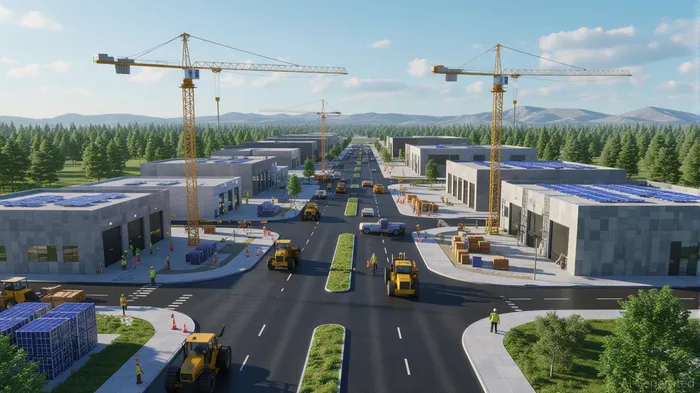 The results are already materializing. By 2026, nearly 300 acres of land and over one million square feet of industrial space are projected to be developed, attracting firms in advanced manufacturing and food processing. This aligns with broader state goals to diversify Upstate New York's economy, as evidenced by the $650 million fairlife® dairy plant-a private investment expected to create 250 jobs by 2025. Such projects underscore how public infrastructure spending can de-risk private investment, creating a virtuous cycle of job creation and capital inflows.
The Role of Brownfield Redevelopment
A key component of Webster's strategy is the repositioning of brownfields-abandoned or underused industrial sites-as assets for future growth. The Xerox campus, once a symbol of declining manufacturing, is now being redeveloped with multimodal transportation links and upgraded utilities, making it attractive to logistics firms. This approach mirrors national trends in industrial real estate, where reimagined brownfields are increasingly seen as cost-effective alternatives to greenfield sites.
The economic impact of such redevelopments is quantifiable. According to a report by the Webster Economic Development Alliance (WEDA), the FAST NY Grant has already spurred $283 million in cumulative funding for Upstate industrial sites since 2023. This includes a $20 million allocation to Monroe County's COMIDA site for electrical infrastructure upgrades, further solidifying Webster's position as a regional hub for agribusiness and industrial machinery manufacturing.
Long-Term Value Creation and Market Positioning
The strategic value of these investments lies in their ability to future-proof industrial corridors. By 2026, Webster's upgraded infrastructure will support heavy vehicle traffic and high-capacity electrical systems, positioning the town to attract semiconductor manufacturers and renewable energy firms-sectors critical to New York's economic resilience. This aligns with Governor Hochul's vision of creating a "sustainable economic base" through industrial diversification.
Moreover, the grant's focus on "power-ready" sites-facilities with pre-installed electrical infrastructure-addresses a growing pain point in industrial development. As highlighted in the POWER UP program's launch, 70% of manufacturers cite energy grid limitations as a barrier to expansion. By preemptively solving this issue, Webster is not only attracting current investors but also positioning itself to capture emerging opportunities in energy-dependent industries.
Conclusion: A Model for Municipal Investment
Webster's experience demonstrates that municipal infrastructure grants are more than short-term stimulus-they are tools for redefining regional economic trajectories. By transforming brownfields into competitive industrial hubs and aligning with state-level initiatives like POWER UP, Webster has created a model that other municipalities can emulate. For investors, the town's industrial corridors now represent a compelling opportunity: assets with pre-vetted infrastructure, low development risks, and a clear alignment with high-growth sectors.
As the global economy pivots toward localized manufacturing and green energy, the strategic use of infrastructure grants will become increasingly vital. Webster's $9.8 million investment is a testament to how forward-looking policy can turn undervalued land into a cornerstone of long-term economic growth.

Combina la sabiduría tradicional en el comercio con las perspectivas más avanzadas sobre las criptomonedas.
Latest Articles
Stay ahead of the market.
Get curated U.S. market news, insights and key dates delivered to your inbox.


AInvest
PRO
AInvest
PRO



Comments
No comments yet