
The Strategic Merger of USA Compression Partners LP and J-W Power Company: Evaluating the Accretive Impact and Operational Synergies in the USAC Acquisition


 Aime Summary
Strategic Rationale: Expanding Scale and Diversification
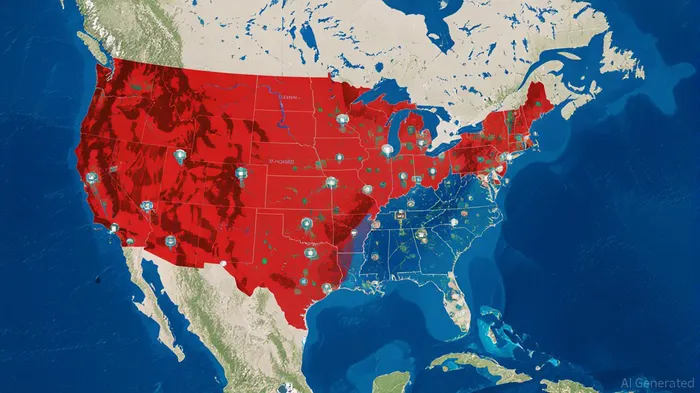
At its core, the acquisition is a masterclass in strategic alignment. J-W Power, a privately held company with a 60-year legacy, , . This expansion is not just quantitative but qualitative: J-W's presence in key U.S. regions like the Northeast, Mid-Con, and Gulf Coast complements USAC's existing footprint in the Permian and Rockies, creating a geographically diversified platform.
Clint Green, USAC's CEO, emphasized that the deal "reinforces our position as a leading provider of compression services" while broadening the company's business lines to include aftermarket services and parts distribution. This diversification is critical in an industry where cyclical demand and regional production fluctuations can strain single-basin operators. By integrating J-W's specialized manufacturing capabilities and customer relationships, USAC gains a buffer against regional downturns and enhances its ability to service long-term contracts.
Financial Accretion: A Value-Driven Proposition
. Analysts highlight that the acquisition , . .
On a (DCF) basis, a term repeated across both company statements and third-party analyses. For context, , a figure that is projected to grow . The transaction also accelerates USAC's deleveraging path, , .
Operational Synergies: Efficiency Gains and Cost Savings
Beyond the balance sheet, the merger's are equally compelling. By consolidating fleets and back-office functions, USAC anticipates cost savings from economies of scale, . J-W's , which include parts distribution and repair, are expected to create a .
Third-party analysts have validated these expectations. A report by Morningstar notes that the combined entity's expanded scale "enhances its ability to negotiate favorable terms with suppliers and customers," a critical edge in a sector where margins are often squeezed by commodity price volatility. Additionally, the integration of J-W's specialized manufacturing capabilities could reduce reliance on third-party vendors, further insulating USAC from supply chain disruptions.
Third-Party Validation: Credibility Beyond Corporate Statements
While USAC's management has been bullish on the deal, independent analysis provides a critical layer of validation. Gurufocus, for instance, estimates that the acquisition's 5.8x EBITDA multiple is "attractive relative to peers", . Similarly, Marketscreener highlights that the transaction's cash-and-equity structure , a rare feat in leveraged buyouts.
These external assessments align with USAC's own projections, suggesting the deal is not just a but a financially rigorous one. The company's December 2025 investor presentation, for example, post-acquisition, .
Conclusion: A Win-Win for Stakeholders?
The USAC-J-W Power merger exemplifies the kind of that defines industry leaders. By combining scale, diversification, and , . For investors, . Yet, as with any major acquisition, execution will be key. The coming months will test USAC's ability to integrate J-W's operations seamlessly, but if successful, .

Delivering real-time insights and analysis on emerging financial trends and market movements.
Latest Articles
Stay ahead of the market.
Get curated U.S. market news, insights and key dates delivered to your inbox.


AInvest
PRO
AInvest
PRO



Comments
No comments yet