
The Strategic Merger of Union Pacific and Norfolk Southern: A Paradigm Shift in U.S. Freight Logistics
 Aime Summary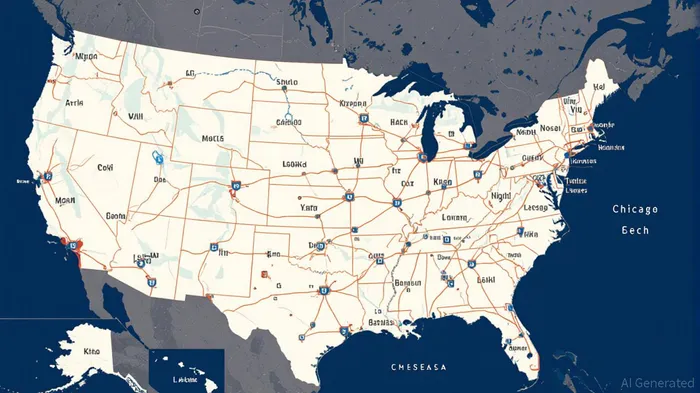
The proposed merger between Union PacificUNP-- (UNP) and Norfolk SouthernNSC-- (NSC) represents a seismic shift in the U.S. freight rail industry. If approved, the $200 billion deal would create the first coast-to-coast single-line railroad operator, merging Union Pacific's dominance in the western U.S. with Norfolk Southern's 19,500-mile eastern network. This strategic consolidation is not merely a corporate maneuver—it is a calculated response to evolving market dynamics, regulatory tailwinds, and the relentless pressure for operational efficiency in a cyclical, capital-intensive sector.
Operational Synergies: A Blueprint for Cost Savings and Efficiency
The core value proposition of the merger lies in its operational synergies. By eliminating interchanges at congested hubs like Chicago and Memphis, the combined entity could reduce transit times by 20–30% for key freight corridors. This would directly enhance service reliability, a critical differentiator in an industry where shippers increasingly demand just-in-time delivery. Union Pacific's Q2 2025 earnings report underscores this potential: the company achieved a 10% increase in freight car velocity and a 5% improvement in locomotive productivity, contributing to an operating ratio of 58.1%.
The merger is projected to unlock $1 billion in annual cost savings through economies of scale. Shared infrastructure, rationalized maintenance schedules, and consolidated IT systems would reduce overhead. For example, Union Pacific's intermodal infrastructure—handling 11% of U.S. intermodal volume—could be paired with Norfolk Southern's access to Virginia and Gulf Coast ports to optimize container movements. This would position the merged entity to capitalize on the $2.5 trillion e-commerce logistics market, where speed and reliability are paramountPARA--.
Competitive Positioning: A Duopoly in the Making
The U.S. freight rail industry is already a duopoly in waiting. Post-merger, the combined Union Pacific-Norfolk Southern would command a 35% market share, rivaled only by BNSF (owned by Berkshire Hathaway) and CSXCSX--. This consolidation would amplify pricing power, particularly in intermodal and bulk commodity segments. Shippers would face fewer alternatives, enabling the merged entity to negotiate higher rates while offering faster, more reliable service.
However, the competitive landscape is not without challenges. The Surface Transportation Board (STB), under Chairman Patrick Fuchs, has signaled a more industry-friendly stance, prioritizing competitive balance over outright blocking. Yet, the STB's 2001 merger rules require the deal to demonstrate enhanced competition—a hurdle given the current duopolistic structure. To address this, the companies may need to concede to open-access mandates or divestitures in non-core markets.
Financial Projections and Investor Implications
For investors, the merger's success hinges on its ability to deliver long-term value creation. Union Pacific's current valuation appears attractive, with a P/E ratio of 20.65 and a dividend yield of 2.41%. Analysts project a 17.26% upside to its $219.61 stock price, with a consensus target of $257.50. Norfolk Southern, while more volatile, has a P/E ratio of 18.30 and a higher dividend yield of 3.15%, reflecting its recent operational turbulence.
The merged entity's free cash flow could surge to $3–4 billion annually, enabling aggressive shareholder returns and debt reduction. However, the $1.4 billion derailment-related loss Norfolk Southern incurred in 2025 and its $3.4 billion capital spending plan for 2025 highlight integration risks. Investors must weigh these against the potential for a 25–30% improvement in operating margins by 2030, driven by route efficiency and scale.
Regulatory and Strategic Risks
The merger's fate remains uncertain. The STB's 19–22 month review process could impose conditions that erode the deal's strategic value. For example, forced divestitures of key routes or open-access requirements might dilute the merged entity's ability to optimize pricing and service. Additionally, labor union resistance—historically a thorn in railroad mergers—could delay implementation or trigger operational disruptions.
Macroeconomic factors further complicate the outlook. Rising interest rates could increase debt servicing costs, while a potential recession might curb freight demand. Shippers, particularly in agriculture and manufacturing, may also push back against higher rates, leveraging their bargaining power in a fragmented market.
Conclusion: A High-Reward, High-Risk Bet
The Union Pacific-Norfolk Southern merger is a paradigm shift with the potential to redefine U.S. freight logistics. For investors, it offers a compelling mix of operational synergies, enhanced pricing power, and long-term value creation. However, the path to approval is fraught with regulatory and strategic uncertainties. Those with a high-risk tolerance and a long-term horizon may find the opportunity attractive, particularly if the STB approves the deal with manageable conditions.
In the end, this merger is not just about combining rail lines—it's about creating a resilient, efficient network capable of withstanding the pressures of a volatile economy. As the STB prepares for its review, the railroad industry—and investors—will be watching closely to see if this $200 billion vision becomes a reality.

Stay ahead of the market.
Get curated U.S. market news, insights and key dates delivered to your inbox.
AInvest
PRO
AInvest
PRO



Comments
No comments yet