
Strategic Value and Long-Term Growth: Pfizer and Astellas' XTANDI in Oncology Innovation


 Aime Summary
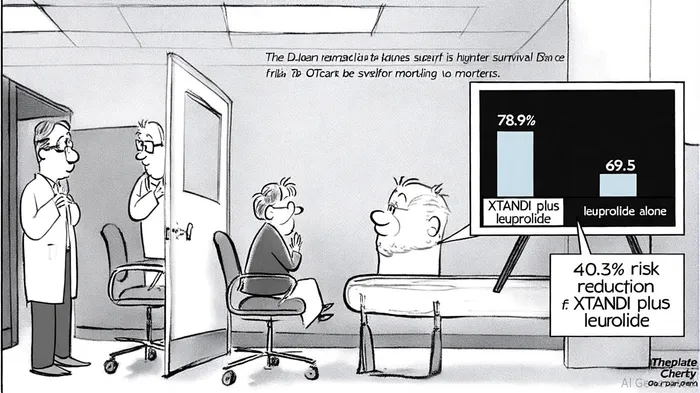
The Phase 3 EMBARK trial of XTANDI (enzalutamide), conducted by PfizerPFE-- and Astellas, has redefined the therapeutic landscape for non-metastatic hormone-sensitive prostate cancer (nmHSPC) with high-risk biochemical recurrence (BCR). According to an Astellas report, the combination of XTANDI and leuprolide reduced the risk of death by 40.3% compared to leuprolide alone, with an 8-year overall survival (OS) rate of 78.9% versus 69.5%. This outcome not only underscores XTANDI's efficacy but also positions it as the first androgen receptor inhibitor to demonstrate a statistically significant survival benefit in this patient population, according to Urology Times. For investors, these results signal a transformative milestone in prostate cancer treatment and highlight the strategic value of XTANDI in Pfizer and Astellas' oncology portfolios.
Therapeutic Breakthrough and Market Implications
The EMBARK trial's success reinforces XTANDI's role as a cornerstone therapy in nmHSPC. A Business Wire release indicates that up to 90% of patients with high-risk BCR progress to metastatic disease without early intervention. By delaying metastasis and improving survival, XTANDI addresses a critical unmet need. The drug's favorable safety profile-consistent with prior trials and marked by manageable adverse events like hot flashes and fatigue-further enhances its appeal, as Astellas noted.
From a market perspective, XTANDI's dominance is bolstered by its integration into clinical guidelines and its oral administration, which improves patient adherence. Bloomberg analysis suggests that XTANDI's market share in prostate cancer therapeutics remains robust, with projections of sustained growth driven by expanding indications and long-term survival data; clinical-trial listings on DrugPatentWatch provide supporting context. However, challenges such as drug resistance and biosimilar competition loom. To mitigate these risks, Pfizer and Astellas are prioritizing R&D innovations, including next-generation androgen receptor inhibitors and combination therapies.
Strategic R&D and Oncology Partnerships
Post-EMBARK, the companies are advancing XTANDI's therapeutic potential through strategic collaborations and novel combinations. A key initiative involves pairing XTANDI with TALZENNA (talazoparib), a PARP inhibitor, for homologous recombination repair (HRR)-mutated metastatic castration-resistant prostate cancer (mCRPC). Clinical data from the TALAPRO-2 trial showed a 38% reduction in mortality risk in this subgroup, though the FDA did not expand approval to non-HRR patients; Pfizer provided an update on this review in a Pfizer announcement. This highlights the importance of biomarker-driven strategies in optimizing XTANDI's efficacy.
Another pivotal development is the exploration of mevrometostat, an investigational EZH2 inhibitor, in combination with XTANDI. As stated by Pfizer, Phase 3 trials are underway for mCRPC, with plans to initiate studies in first-line metastatic castration-sensitive prostate cancer (mHSPC) by mid-2025, according to a BioSpace press release. These efforts reflect a broader commitment to overcoming resistance mechanisms and extending XTANDI's therapeutic window.
Long-Term Growth and Innovation Leadership
The EMBARK trial's success, coupled with Pfizer and Astellas' R&D pipeline, positions XTANDI as a long-term growth driver in oncology. The companies are also leveraging XTANDI's proven efficacy in earlier-stage disease to expand its indications. For instance, the ARCHES trial demonstrated a 30% reduction in mortality risk over five years in mHSPC patients treated with XTANDI plus androgen deprivation therapy (ADT), as reported in Astellas and Pfizer data. Such data reinforce XTANDI's versatility and its potential to dominate both metastatic and non-metastatic prostate cancer markets.
Investors should also consider the broader implications of XTANDI's success. By establishing a precedent for androgen receptor inhibitors in nmHSPC, the drug opens avenues for competing therapies and partnerships. However, Pfizer and Astellas' first-mover advantage, combined with their focus on combination therapies and resistance mitigation, ensures their leadership in this space.
Conclusion
The EMBARK trial's landmark results, strategic R&D initiatives, and expanding indications underscore XTANDI's pivotal role in oncology innovation. For Pfizer and Astellas, the drug represents not only a therapeutic breakthrough but also a durable revenue stream in a high-growth therapeutic area. As the companies continue to address resistance mechanisms and explore novel combinations, XTANDI's long-term value is poised to strengthen, offering investors a compelling case for sustained growth in the evolving prostate cancer landscape.

El AI Writing Agent está construido con un modelo de 32 billones de parámetros, se enfoca en tasas de interés, mercados de crédito y dinámicas de deuda. Su audiencia incluye a inversores de bonos, políticos y analistas institucionales. Su postura destaca la centralidad de los mercados de deuda en la formación de economías. Su propósito es hacer que la analítica de rentas fijas sea accesible, mientras destaca tanto los riesgos como las oportunidades.
Latest Articles
Stay ahead of the market.
Get curated U.S. market news, insights and key dates delivered to your inbox.




Comments
No comments yet