
The Strategic Value of Local Economic Development: How Menards' Saginaw Expansion Reflects Resilient U.S. Manufacturing Investment


 Aime Summary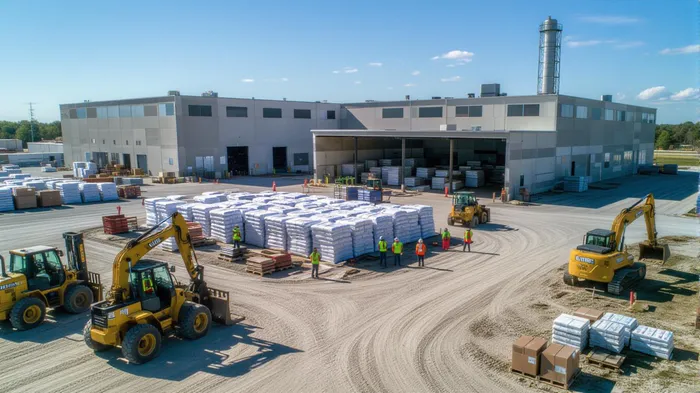
In an era where global supply chains face relentless scrutiny and regional economic disparities widen, the Menards' Saginaw expansion offers a compelling case study in how strategic local investments can unlock long-term value. The $20 million project, centered on a new bagging facility for aggregate products like Portland cement and pea gravel, is not merely a corporate capital expenditure—it is a microcosm of a broader shift toward resilient U.S. manufacturing. By dissecting the interplay of municipal incentives, infrastructure upgrades, and labor dynamics in Saginaw, investors can identify underappreciated opportunities in regional markets poised for growth.
Municipal Incentives as Catalysts for Regional Revitalization
Saginaw's industrial development district and tax abatement programs exemplify how local governments are reimagining their role in economic development. The city council's unanimous approval of an industrial development district at Menards' 30-acre campus is a masterstroke: it allows the company to recoup costs tied to environmental remediation and infrastructure upgrades. This approach mirrors a growing trend where municipalities act as partners rather than passive regulators, using targeted incentives to attract capital to underutilized assets. For Menards, the tax abatement under Saginaw's Public Act 198 program reduces financial risk, while for Saginaw, the project revitalizes a former General MotorsGM-- site and injects new tax revenue into a struggling industrial corridor.
Such partnerships are critical in markets like Saginaw, where population decline and industrial decay have long stifled growth. By aligning corporate and municipal interests, these incentives create a virtuous cycle: job creation, infrastructure modernization, and environmental remediation. For investors, this signals a shift in value creation from coast-to-coast megacities to mid-sized towns with untapped potential.
Infrastructure and Supply Chain Resilience: A Dual Engine for Growth
The Saginaw expansion underscores the importance of infrastructure as both a cost and a competitive advantage. Menards' new bagging facility, strategically located eight miles east of its retail store, is designed to streamline operations for Michigan and Ohio markets. By centralizing the bagging of aggregate products—a process previously reliant on out-of-state facilities—the company reduces transportation costs and lead times, enhancing supply chain resilience. This localized approach mirrors broader industry trends toward nearshoring and regional hubs, driven by rising logistics costs and geopolitical uncertainties.
The project's environmental component further highlights infrastructure's role in long-term value. Menards has spent over a decade remediating the former GMGM-- site, a costly but necessary investment that aligns with ESG (Environmental, Social, and Governance) priorities. For investors, this demonstrates how companies are increasingly factoring sustainability into operational costs—a trend that could drive future regulatory compliance and consumer demand.
Labor Dynamics: Building a Skilled Workforce for the Future
While the expansion adds only nine jobs, its impact on Saginaw's labor market is significant. By integrating new hires into a workforce of 75 existing employees, Menards is fostering a culture of skill development in a region where employment opportunities have historically been limited. The bagging facility's focus on aggregate products—a niche but essential component of home improvement retail—creates specialized roles that could attract technical training programs or partnerships with local educational institutions.
This labor strategy aligns with a broader industry shift toward investing in regional talent rather than relying on transient labor pools. For investors, it suggests that companies prioritizing workforce development in underappreciated markets may see higher retention rates and operational efficiency, both of which are critical for long-term profitability.
Investment Implications: The Case for Regional Resilience
The Saginaw expansion is a testament to the power of localized economic development. By combining municipal incentives, infrastructure upgrades, and labor-focused strategies, Menards is not only strengthening its supply chain but also positioning Saginaw as a model for regional revitalization. For investors, this project highlights three key tailwinds:
1. Public-Private Partnerships (PPPs): Municipal incentives reduce capital risk for corporations, making underappreciated markets attractive for expansion.
2. Supply Chain Localization: Nearshoring and regional hubs mitigate global volatility, a trend likely to accelerate post-pandemic.
3. ESG Integration: Environmental remediation and workforce development align with regulatory and consumer expectations, enhancing long-term value.
Investors should consider companies and regions that mirror Saginaw's approach. Look for firms investing in infrastructure upgrades, collaborating with local governments, and prioritizing workforce development in markets with untapped potential. The U.S. manufacturing sector, often overshadowed by tech and consumer stocks, is quietly becoming a haven for resilient, value-driven growth.
In conclusion, Menards' Saginaw expansion is more than a corporate project—it is a blueprint for how strategic local investments can unlock regional value in an increasingly fragmented economy. For those willing to look beyond the headlines, the interplay of municipal incentives, infrastructure, and labor dynamics offers a roadmap to resilient, long-term returns.

Stay ahead of the market.
Get curated U.S. market news, insights and key dates delivered to your inbox.


AInvest
PRO
AInvest
PRO



Comments
No comments yet