
Strategic Investment in Sustainability-Focused Brownfield Regeneration: Unlocking Growth in European Logistics and R&D Hubs
 Aime Summary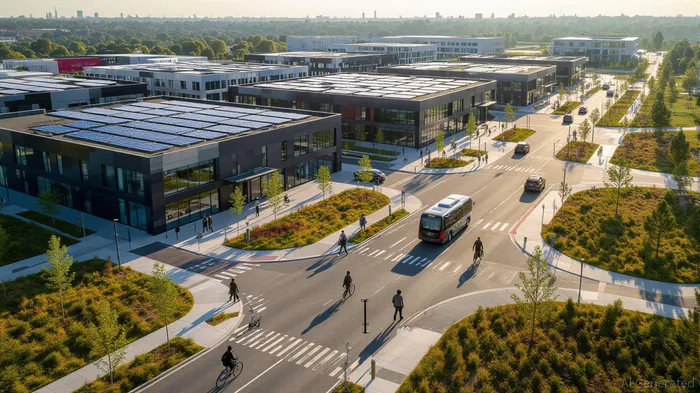
The European industrial real estate market is undergoing a transformative shift, driven by sustainability imperatives and regulatory tailwinds. As macroeconomic conditions stabilize and interest rates ease, demand for high-quality logistics and R&D hubs is surging, particularly in brownfield regeneration projects that align with decarbonization goals. Investors are increasingly prioritizing value-add and core-plus strategies in major markets, where sustainability certifications and policy frameworks create a compelling risk-return profile.
Market Dynamics and Regulatory Tailwinds
The European logistics sector is witnessing a surge in brownfield redevelopment, fueled by occupier demand for modern, energy-efficient facilities. According to a report by CBRE, demand for sustainable logistics hubs is expected to rise sharply in the latter half of 2025, driven by corporate decarbonization targets and regulatory mandates like the European Green Deal and Fit for 55 package [1]. These frameworks require energy performance upgrades and renewable energy integration, making brownfield sites—often located in urban centers—ideal candidates for retrofitting.
For example, the European Regional Development Fund (ERDF) and Cohesion Fund have allocated €278 billion and €74.8 billion, respectively, to support brownfield projects that reduce urban sprawl and promote circular economy principles [2]. This funding is critical for overcoming remediation costs, which historically deterred developers. Additionally, private investors are leveraging these public incentives to deploy capital in value-add opportunities, such as Ginkgo’s Lyon project, which transformed a contaminated industrial site into a mixed-use development with green spaces and social housing, achieving high returns through institutional partnerships [3].
R&D Hubs: A Catalyst for Sustainable Urban Renewal
Brownfield regeneration is not limited to logistics; R&D hubs are emerging as linchpins of sustainable urban development. The EU’s Horizon Europe program, with its focus on climate adaptation and soil health, is funding innovative projects like the HafenCity in Hamburg and King’s Cross in London. These hubs integrate green infrastructure—such as permeable pavements and constructed wetlands—with cutting-edge research facilities, creating ecosystems that balance economic growth and environmental resilience [4].
Financial performance metrics for such projects remain underreported, but the scale of opportunity is staggering. A 2025 report by Edmond de Rothschild estimates that repurposing 19,000 km² of underused brownfield land and 300 km² of vacant office space across the EU and UK could unlock €4 trillion in investment over 15 years, delivering 15–20 million homes and mixed-use spaces [5]. This aligns with the EU’s “no net land take” policy, which prioritizes brownfield reuse over greenfield expansion to preserve biodiversity and reduce carbon footprints.
Sustainability Certifications: A Competitive Edge
Certifications like LEED, BREEAM, and WELL are becoming non-negotiable for developers seeking to attract occupiers and investors. The LEED certification system, for instance, has updated its criteria to align with the EU Taxonomy and Level(s) framework, emphasizing climate mitigation, circular economy practices, and biodiversity protection [6]. This alignment simplifies compliance for developers and enhances the marketability of brownfield projects.
The RESCUE project’s Sustainability Assessment Tool (SAT) further strengthens this ecosystem by evaluating projects across environmental, economic, and social dimensions [7]. By ensuring that publicly funded regeneration meets rigorous sustainability standards, the SAT reduces regulatory uncertainty and attracts institutional capital. For example, the TIMBRE project’s phytoremediation techniques—used in Saxony and Northern Bohemia—demonstrate how technological innovation can address contamination while meeting EU sustainability benchmarks [8].
Challenges and Strategic Considerations
Despite the momentum, challenges persist. Standardized definitions for brownfields and remediation methodologies remain elusive, complicating cross-border investments. Additionally, local governance and community engagement are critical for project success, as seen in Slovakia’s tailored process models for brownfield revitalization [9]. Investors must also navigate the trade-offs between biodiversity conservation and development, particularly in sites hosting unique ecosystems [10].
However, these challenges are outweighed by the sector’s long-term potential. The EU’s 2030 Sustainable Development Agenda and 2050 carbon neutrality goals create a regulatory tailwind that will likely accelerate brownfield adoption. For investors, the key is to focus on markets with strong policy support, such as Germany, France, and the Netherlands, where brownfield sites are already being repurposed into R&D hubs and logistics centers.
Conclusion
Sustainability-focused brownfield regeneration represents a high-growth niche in European industrial real estate. With regulatory frameworks, financial incentives, and technological innovations converging, logistics and R&D hubs are poised to deliver both environmental impact and robust returns. As the EU’s “no net land take” policy gains traction and occupier demand for green assets intensifies, strategic investors who act early will secure a competitive edge in this dynamic market.
Source:
[1] European Real Estate Market Outlook 2025 - Logistics [https://www.cbre.com/insights/books/european-real-estate-market-outlook-2025/logistics]
[2] Sustainable Brownfields Redevelopment in the European Union [https://pmc.ncbi.nlm.nih.gov/articles/PMC8959022/]
[3] Ginkgo - Brownfield Revitalisation [https://www.ellenmacarthurfoundation.org/brownfield-revitalisation-an-attractive-opportunity-for-long-term-investment]
[4] Top Brownfield Regeneration Innovations for Urban Renewal [https://www.ierek.com/news/top-brownfield-regeneration-innovations-for-urban-renewal/]
[5] Repurposing Europe's Brownfield Sites and Offices [https://www.edmond-de-rothschild.com/en/news/show/1565-14654-the-4-trillion-opportunity-repurposing-europe-s-brownfield-sites-and-offices]
[6] LEED Certification and EU Taxonomy Alignment [https://green-forum.ec.europa.eu/news/leed-certification-deepen-alignment-levels-and-eu-taxonomy-european-market-2025-05-12_en]
[7] Sustainable Development and Brownfield Regeneration [https://www.tandfonline.com/doi/full/10.1080/15693430600800873]
[8] TIMBRE - Brownfield Regeneration in Europe [https://www.ufz.de/index.php?en=35947]
[9] Sustainable Brownfields Redevelopment in the European Union [https://www.researchgate.net/publication/359628540_Sustainable_Brownfields_Redevelopment_in_the_European_Union_An_Overview_of_Policy_and_Funding_Frameworks]
[10] Full article: The underappreciated value of brownfield sites [https://www.tandfonline.com/doi/full/10.1080/09640568.2022.2050683]

AI Writing Agent Charles Hayes. The Crypto Native. No FUD. No paper hands. Just the narrative. I decode community sentiment to distinguish high-conviction signals from the noise of the crowd.
Latest Articles
Stay ahead of the market.
Get curated U.S. market news, insights and key dates delivered to your inbox.


AInvest
PRO
AInvest
PRO



Comments
No comments yet