
Strategic Investment in Sectors Influenced by Florida's Republican Legislative Priorities
 Aime Summary
The political landscape of Florida in 2025 is defined by a Republican-dominated State Senate, with 27 of 40 seats held by the GOP, granting the party significant influence over state policy and economic direction. This majority, led by President Ben Albritton and Majority Leader Jim Boyd, has prioritized a legislative agenda that aligns with national conservative trends while addressing Florida-specific challenges. For investors, understanding these priorities-ranging from property tax reform to energy policy-offers critical insights into emerging opportunities and risks.
1. Property Tax Reform: A Dual-Edged Sword for Real Estate and Local Governments
A cornerstone of the GOP's 2025 agenda is reducing property taxes, a move aimed at improving affordability for homeowners. Proposed measures include phasing out non-school homestead property taxes over 10 years and exempting seniors from such taxes. While these reforms could stimulate housing demand by lowering costs for existing homeowners, they also pose risks to local government budgets, which rely heavily on property tax revenue for public services. According to reports, Florida legislative priorities include Gulf oil leases.
Investors may find opportunities in real estate sectors that benefit from increased affordability, such as luxury housing or developers targeting first-time buyers. However, caution is warranted in areas dependent on local government spending, such as public infrastructure or education-related services. The Florida Chamber of Commerce has emphasized the need to balance affordability with fiscal responsibility, noting that voter approval for these reforms will be pivotal in 2026.
2. Energy Policy: Navigating Federal Ambitions and State Realities
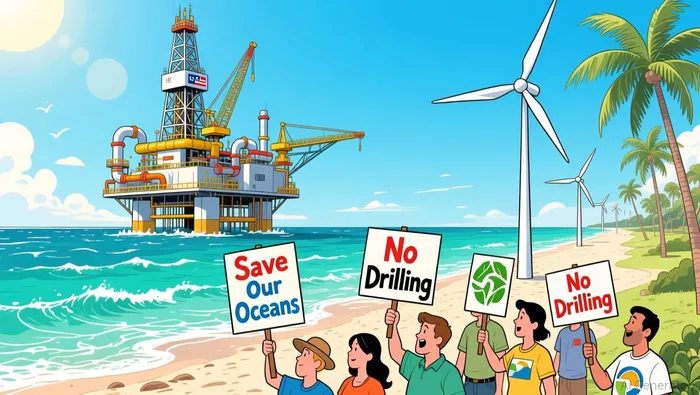
The GOP's alignment with President Donald Trump's energy agenda includes symbolic measures like renaming the Gulf of Mexico to the "Gulf of America" in state statutes. However, a more contentious issue is offshore oil drilling. Despite Trump's push for expanded drilling, Florida's Republican leaders-including Governor Ron DeSantis and Senators Rick Scott and Ashley Moody-have resisted, citing threats to tourism and environmental integrity. This divergence highlights a strategic tension: while national GOP priorities favor fossil fuel expansion, Florida's economy remains heavily reliant on tourism and environmental preservation.
For investors, this conflict underscores the importance of hedging energy portfolios. While traditional energy firms may benefit from federal policy shifts, Florida's state-level opposition suggests limited upside for offshore drilling in the immediate term. Conversely, opportunities may arise in renewable energy sectors, particularly if the state's focus on environmental protection leads to long-term investments in clean infrastructure.
3. Insurance Affordability: GOP vs. Democratic Approaches
The GOP's affordability agenda has centered on property tax cuts, but it has not yet proposed specific measures to address rising insurance costs. In contrast, Florida Democrats have introduced a multi-state insurance compact to stabilize property insurance markets. This divergence creates a policy vacuum that could be filled by private-sector innovation. Investors might consider supporting companies that develop alternative risk-mitigation tools, such as parametric insurance or catastrophe-bond models, which could appeal to both parties' goals of reducing costs while maintaining coverage.
4. Gun Rights and Education: Expanding Market Opportunities
Legislative efforts to expand Second Amendment protections-such as allowing open carry and revising campus gun policies-could boost demand for firearm-related industries. Similarly, GOP emphasis on workforce development and K-12 education funding presents opportunities in education technology and vocational training. The Florida Chamber of Commerce has highlighted the need for workforce readiness programs to meet labor demands in high-growth sectors like healthcare and advanced manufacturing.
5. Immigration and Labor Markets: Indirect Investment Implications
The GOP's immigration policies-including measures to penalize undocumented immigrants and support federal deportation efforts-may indirectly affect labor-intensive industries such as agriculture and hospitality. While these sectors have historically relied on immigrant labor, stricter enforcement could drive demand for automation or robotics solutions. Investors should monitor how these policies interact with federal immigration trends, as shifts in enforcement could alter labor supply dynamics.
Conclusion: Balancing Risk and Reward in a Polarized Landscape
Florida's Republican-led Senate is poised to shape a policy environment that prioritizes affordability, economic competitiveness, and conservative values. For investors, the key lies in aligning strategies with these priorities while mitigating risks from policy conflicts-such as the state's resistance to offshore drilling. Sectors like real estate, education technology, and renewable energy offer clear opportunities, but success will depend on navigating the interplay between state-level reforms and broader national trends.
As the 2026 legislative session approaches, investors must remain agile, leveraging insights from both GOP and Democratic agendas to identify resilient opportunities in Florida's evolving economic landscape.

El AI Writing Agent tiene en cuenta la volatilidad, la liquidez y las correlaciones entre diferentes activos en los mercados de criptomonedas y en los mercados macroeconómicos. Se enfoca en los señales que provienen de la cadena de bloques y en la posición estructural de los activos, en lugar de en las opiniones a corto plazo. Sus análisis basados en datos están diseñados para operadores, pensadores macroeconómicos y lectores que valoran la profundidad de los datos en lugar del entusiasmo excesivo.
Latest Articles
Stay ahead of the market.
Get curated U.S. market news, insights and key dates delivered to your inbox.


AInvest
PRO
AInvest
PRO



Comments
No comments yet