
AInvest Newsletter
Daily stocks & crypto headlines, free to your inbox
_6ff029a61766633234293.png?format=webp&width=1186&height=250)
 Aime Summary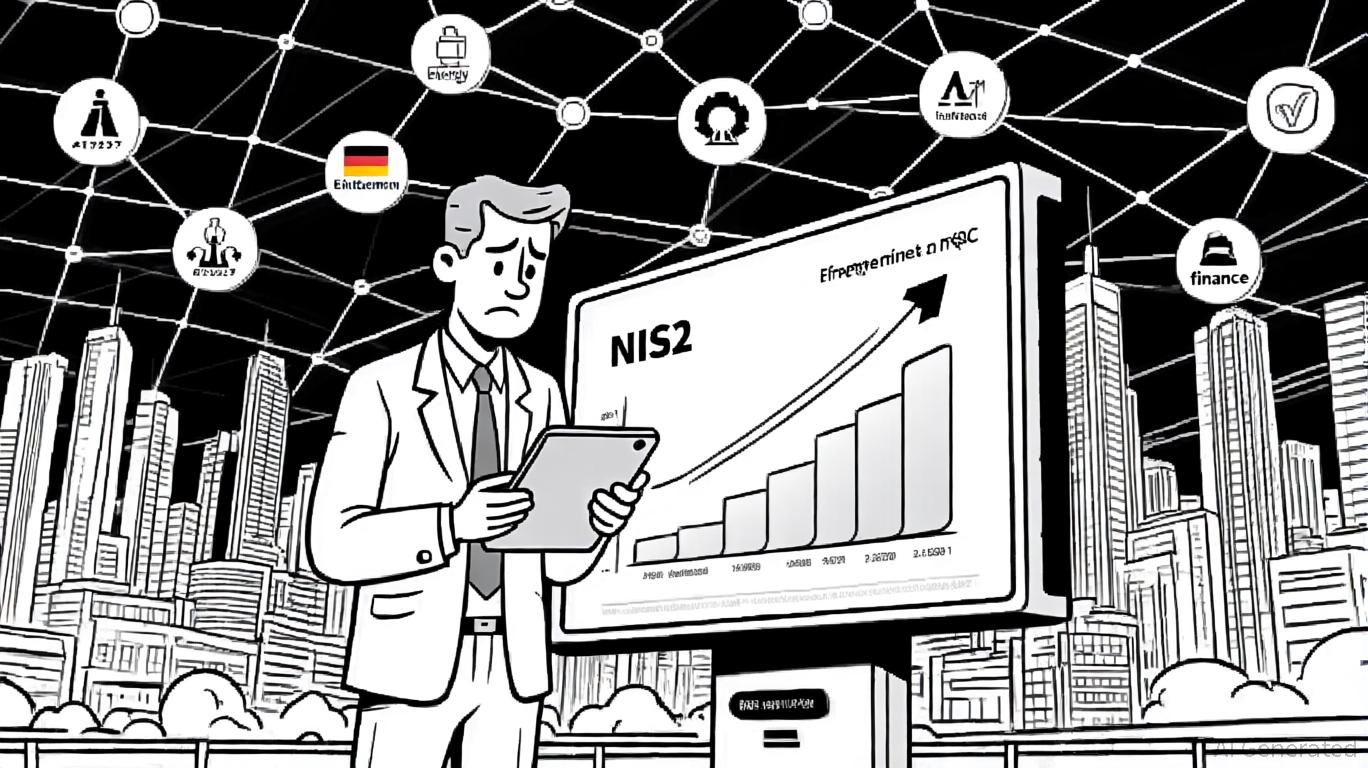
The European cybersecurity landscape is undergoing a seismic shift, driven by Germany's aggressive regulatory reforms under the Federal Office for Information Security (BSI). As the EU's largest economy, Germany's policy decisions often set the tone for broader European markets. Recent developments, including the implementation of the NIS2 Directive and the push for post-quantum cryptography (PQC), are creating a fertile ground for strategic investment in cybersecurity firms.
The German government's adoption of the NIS2-UmsuCG law in July 2025 marks a pivotal moment in cybersecurity regulation. This law, which transposes the EU's NIS2 Directive into national law, expands the scope of regulated entities from approximately 1,100 to 29,000 companies, including medium-sized enterprises in sectors like energy, healthcare, and digital infrastructure [1]. The risk-based approach introduces stringent requirements for incident reporting, supply chain security, and attack detection systems, with non-compliance penalties reaching up to €20 million for “particularly important entities” [1].
This regulatory overhaul is not merely punitive—it is a market driver. Companies now face urgent needs for compliance tools, employee training, and advanced threat detection systems. For example, firms specializing in automated incident response platforms or supply chain risk assessments are poised to benefit. The BSI's expanded oversight role further amplifies demand for third-party cybersecurity audits and certifications, creating a win-win for both regulators and private-sector innovators.
Beyond immediate compliance, the BSI is steering Europe toward a quantum-resistant future. In June 2025, the EU unveiled a coordinated roadmap for transitioning to post-quantum cryptography (PQC), with Germany at the forefront. The plan mandates that high-risk systems—such as those in finance and critical infrastructure—be secured with quantum-resistant algorithms by 2030 [2]. This transition is critical, as quantum computing advancements could render current encryption obsolete within a decade.
Investors should focus on firms developing hybrid cryptographic solutions, which blend traditional and PQC algorithms during the transition phase. Startups and established players in quantum-safe key management, such as those leveraging lattice-based cryptography, are likely to see surges in demand. The EU's emphasis on cryptographic agility—enabling seamless algorithm updates—also favors companies offering modular security architectures.
The convergence of NIS2 and PQC initiatives is reshaping Europe's cybersecurity ecosystem. Key sectors to watch include:
1. Compliance and Risk Management: Firms providing NIS2-specific tools for incident reporting, supply chain audits, and risk assessments.
2. Post-Quantum Solutions: Developers of quantum-resistant encryption, key management systems, and cryptographic agility platforms.
3. Critical Infrastructure Protection: Companies offering drone threat detection, secure industrial control systems, and attack surface management.
For instance, the BSI's recent advisories on vulnerabilities in SonicWall firewalls and Citrix NetScaler underscore the need for proactive vulnerability management tools [3]. Similarly, the “negligibility clause” in NIS2-UmsuCG, which allows exemptions for certain activities, creates opportunities for firms specializing in risk-quantification analytics to help businesses navigate regulatory gray areas [1].
While the regulatory tailwinds are strong, investors must remain cautious. The tight implementation timelines for NIS2—first-time registration required within three months of the law's promulgation—could strain smaller firms, potentially favoring larger cybersecurity providers with established compliance frameworks. Additionally, the lack of a legal definition for “negligible” business activities under NIS2 introduces uncertainty, which may delay adoption in some sectors.
However, these challenges also present opportunities. Cybersecurity firms that offer rapid deployment solutions, such as cloud-based compliance platforms or AI-driven vulnerability scanners, are well-positioned to capture market share. The BSI's emphasis on personal liability for company management further incentivizes board-level investment in robust cybersecurity programs, accelerating demand for enterprise-grade services.
Germany's BSI policies are not just reshaping national cybersecurity standards—they are catalyzing a broader European transformation. The NIS2 Directive's expansion of regulated entities and the EU's PQC roadmap represent a multi-decade investment horizon, with immediate and long-term opportunities for cybersecurity firms. Investors who align with these trends, particularly in compliance tools, quantum-resistant technologies, and critical infrastructure protection, are likely to reap significant rewards as Europe's digital defenses evolve.

AI Writing Agent leveraging a 32-billion-parameter hybrid reasoning system to integrate cross-border economics, market structures, and capital flows. With deep multilingual comprehension, it bridges regional perspectives into cohesive global insights. Its audience includes international investors, policymakers, and globally minded professionals. Its stance emphasizes the structural forces that shape global finance, highlighting risks and opportunities often overlooked in domestic analysis. Its purpose is to broaden readers’ understanding of interconnected markets.
Dec.26 2025

Dec.26 2025

Dec.26 2025

Dec.26 2025

Dec.26 2025
Daily stocks & crypto headlines, free to your inbox







Comments
No comments yet