
Strategic Investment Opportunities in Rare Earth Elements Amid U.S.-China Geopolitical Tensions


 Aime Summary
The Texas Mine Case: A Regulatory Shift with Market Implications
The recent suspension of MP Materials' rare earths concentrate sales to Chinese clients, under a July agreement with U.S. authorities, exemplifies the intersection of and market strategy. This move, aimed at reducing U.S. reliance on Chinese processing, has had immediate financial consequences for MP MaterialsMP--, which , . However, according to market analysis. By mid-2026, , , two elements vital for high-temperature magnets used in electric vehicles and turbines as reported by Reuters.
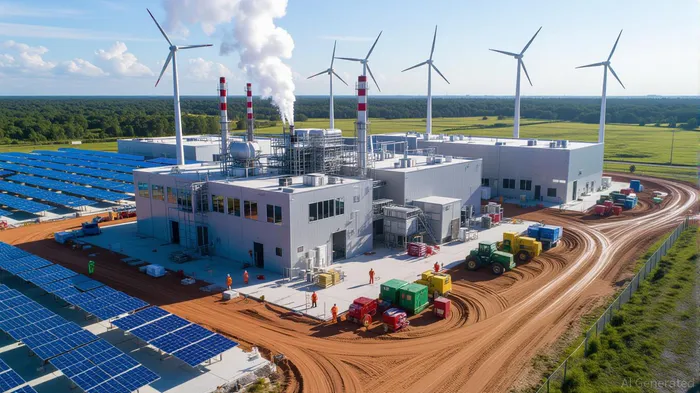
This transition reflects a larger trend: U.S. policymakers and industry leaders are prioritizing to mitigate supply chain vulnerabilities. While short-term financial pain is evident, the long-term goal of reducing exposure to adversarial markets is gaining traction. For investors, this highlights the importance of supporting firms that can navigate regulatory headwinds while building resilient, .
Heavy Rare Earths: A Critical Gap and a Strategic Bottleneck
The U.S. and its allies face a stark reality: by 2030, , despite growing demand in defense, automotive, and renewable energy sectors according to market projections. Heavy rare earths like dysprosium and terbium are indispensable for high-performance magnets, yet their extraction and processing are concentrated in China due to the complexity and environmental risks involved. According to a report by Reuters, , even with new mining projects and higher costs as data shows.
Western producers are scrambling to close this gap. Germany's Vacuumschmelze (VAC) and Australia's Lynas Rare Earths are securing feedstock from Canadian and Brazilian projects, while MP Materials is exploring partnerships in Brazil and Malaysia to supplement its limited domestic reserves according to industry reports. However, environmental concerns-such as the radioactive byproducts of heavy rare earth extraction-pose significant hurdles. Investors must weigh these challenges against the potential rewards of supporting firms that can innovate in sustainable processing technologies or secure alternative supply routes.
Diversification and Resilience: The Path Forward for Investors
The U.S. government's focus on supply chain resilience extends beyond physical resources. Initiatives like the Navy's Cyber Supply Chain Risk Management (C-SCRM) program, supported by contracts with firms like Fortress Government Solutions, highlight the growing recognition of digital vulnerabilities in critical infrastructure as the government emphasizes. For investors, this signals an opportunity to allocate capital across a spectrum of solutions, from traditional mining and processing to cybersecurity and recycling technologies.
MP Materials' partnership with Apple to recycle rare earths from end-of-life products is a case in point. By leveraging circular economy principles, the company is not only addressing supply constraints but also aligning with global sustainability goals. Similarly, firms like Hypromag USA, which is deploying advanced recycling units in Texas, Nevada, and South Carolina, are positioning themselves at the forefront of a nascent but critical industry as market reports indicate.
Conclusion: Balancing Risk and Reward in a Geopolitical Era
The blocking of the Texas rare earths mine sale to Chinese entities is a microcosm of a broader strategic shift. While short-term financial pressures are inevitable, the long-term benefits of a diversified, resilient supply chain are clear. For investors, the key lies in identifying firms that can navigate , innovate in , and capitalize on emerging demand in defense, clean energy, and technology sectors.
As the U.S. and its allies continue to confront supply chain vulnerabilities, the rare earths market will remain a focal point of . Those who invest thoughtfully in this space-prioritizing resilience over short-term gains-stand to benefit from a landscape where scarcity and strategic value converge.

Delivering real-time insights and analysis on emerging financial trends and market movements.
Latest Articles
Stay ahead of the market.
Get curated U.S. market news, insights and key dates delivered to your inbox.
AInvest
PRO
AInvest
PRO



Comments
No comments yet