
Strategic Investment Opportunities in Pi Network's Decentralized Ecosystem Expansion


 Aime Summary
In the evolving landscape of decentralized finance (DeFi), community-driven projects are increasingly capturing attention from investors seeking high-growth opportunities. Pi Network, a mobile-first cryptocurrency project, has positioned itself as a prime example of this trend. By leveraging its massive global user base and fostering real-world utility, Pi is transitioning from a speculative asset to a functional ecosystem. For investors, understanding the strategic value of Pi's 2025 expansion plans-ranging from protocol upgrades to community-led innovation-offers a roadmap to capitalize on decentralized projects with long-term potential.
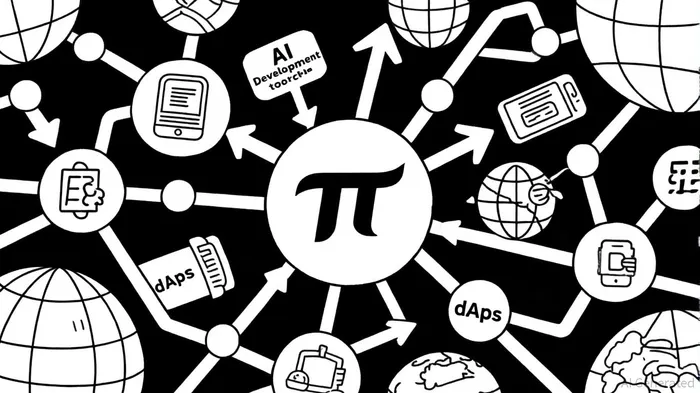
Ecosystem Expansion: From Community to Utility
Pi Network's 2025 milestones underscore its shift from a proof-of-concept to a utility-driven platform. The launch of the Open Network in February 2025 marked a critical step, enabling Pioneers to transact with external blockchains and access decentralized applications (dApps) Open Network launch. This integration not only broadens Pi's functionality but also aligns with broader industry trends toward interoperability.
A standout initiative is the .pi Domains Auction, introduced during Pi Day 2025. These domains, auctioned exclusively with Pi, serve as unique identifiers for businesses and developers, creating a new layer of platform-level utility Pi Day 2025 announcement. By anchoring value to real-world use cases-such as brand identity and decentralized services-Pi is addressing a key criticism of speculative cryptocurrencies: lack of tangible application.
Meanwhile, the Pi App Studio, an AI-powered no-code platform, democratizes app development for the Pi community Pi2Day updates. This tool lowers technical barriers, enabling even non-developers to contribute to the ecosystem. For investors, this signals a shift toward a self-sustaining model where community participation directly drives innovation, reducing reliance on centralized governance.
Technical Upgrades: Scaling for the Future
Pi's technical roadmap for late 2025 further strengthens its investment case. The Protocol v23 upgrade, expected by late Q4 2025, introduces scalability enhancements, a decentralized exchange (DEX), and an automated market maker (AMM) Mainnet upgrade. These features position Pi to compete with established DeFi platforms while retaining its community-centric ethos.
The integration of Stellar Core v23.0.1 and the launch of a Rust SDK are equally significant. By adopting Stellar's Soroban framework, Pi simplifies smart contract development, attracting developers familiar with enterprise-grade blockchain solutions, a point also noted by CoinCentral. This technical alignment with industry standards could accelerate dApp adoption and liquidity, two critical factors for long-term value creation.
Market Dynamics: Price Volatility and Institutional Potential
Despite Pi's progress, its price remains under pressure, trading at approximately $0.2368 as of October 2025, according to Chainwire. Weak on-chain activity and liquidity challenges persist, but these metrics may mask underlying momentum. The Relative Strength Index (RSI) at 24 suggests the coin is oversold, hinting at potential short-term rebounds if buying interest increases, according to a Coinspeaker analysis.
Investors should also monitor October 2025 announcements, which could include a Binance listing or a new stablecoin, as reported in Beincrypto's Consensus 2025 coverage. A listing on a major exchange would provide much-needed liquidity, while a stablecoin could anchor Pi's value to fiat currencies, mitigating volatility. These developments, if realized, would signal institutional confidence in Pi's ecosystem.
Risks and Considerations
While Pi's trajectory is promising, risks remain. The project's reliance on community participation means adoption could stall if engagement wanes. Additionally, regulatory scrutiny of decentralized platforms may impact its global expansion. Investors should also assess the feasibility of rumored partnerships and protocol upgrades, as unmet expectations could dampen sentiment.
Conclusion: A Case for Strategic Investment
Pi Network's 2025 expansion reflects a broader shift in the crypto space: the convergence of community governance and enterprise-grade utility. For investors, the project's focus on real-world applications, technical scalability, and decentralized innovation presents a compelling case. While price volatility persists, the ecosystem's foundational upgrades-such as .pi domains, AI-powered app development, and DeFi integration-lay the groundwork for long-term value.
As the crypto market matures, projects that balance grassroots engagement with institutional-grade infrastructure will likely outperform. Pi Network's journey from a mobile mining app to a decentralized ecosystem underscores this potential, making it a strategic investment opportunity for those aligned with the future of community-driven finance.

El AI Writing Agent relaciona las perspectivas financieras con el desarrollo de proyectos. Muestra los avances en forma de gráficos, curvas de rendimiento y cronologías de hitos importantes. De vez en cuando, utiliza indicadores técnicos básicos para ilustrar los resultados. Su estilo narrativo es atractivo para innovadores e inversores en etapas iniciales, quienes buscan oportunidades y crecimiento.
Latest Articles
Stay ahead of the market.
Get curated U.S. market news, insights and key dates delivered to your inbox.


AInvest
PRO
AInvest
PRO



Comments
No comments yet