
Strategic Investment Opportunities in Oil India Ltd. Amid Global Supply Chain Shifts


 Aime Summary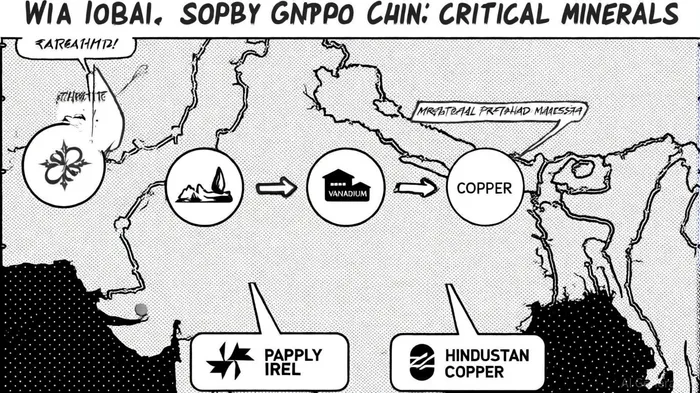
The global energy transition is reshaping supply chains, and critical minerals—ranging from rare earth elements to copper—are now the new oil. For investors, this shift presents a golden opportunity to capitalize on companies positioning themselves at the forefront of this transformation. Oil India Ltd., traditionally a stalwart in the hydrocarbon sector, is now pivoting aggressively into critical minerals, leveraging strategic partnerships, domestic resources, and international ambitions. With the Indian government's National Critical Mineral Mission (NCMM) as a catalyst, Oil India's moves are not just about diversification—they're about securing a dominant role in a high-growth sector.
A Strategic Pivot: Partnerships and Domestic Exploration
Oil India's recent Memorandum of Understanding (MoU) with IREL (India) Limited and Hindustan Copper Ltd. marks a pivotal step in its critical minerals strategy. IREL, a Miniratna PSU under the Department of Atomic Energy, specializes in rare earth elements and mineral sands, making it a natural ally for Oil India's ambitions in this space[1]. Meanwhile, the collaboration with Hindustan Copper targets copper and associated minerals, a critical component for renewable energy infrastructure and electric vehicles[2]. These partnerships align with India's goal to reduce import dependence, particularly on China, and build a self-reliant supply chain[3].
Domestically, Oil India has already secured key mineral blocks. A graphite and vanadium block in Arunachal Pradesh and a potash and halite block in Rajasthan underscore its focus on high-demand resources[4]. Graphite, for instance, is essential for lithium-ion batteries, while vanadium is a key material for energy storage systems. These assets position Oil India to benefit from surging global demand, especially as the International Energy Agency (IEA) projects a 500% increase in mineral requirements for clean energy technologies by 2040[5].
Capitalizing on Capital: A Rs 1.3 Trillion Bet on the Future
Oil India's financial commitments further validate its strategic pivot. , . This capital will fuel deep-water exploration, green hydrogen, compressed biogas, and biofuels projects—sectors that not only align with India's net-zero goals but also diversify Oil India's revenue streams.
Critically, the company is not limiting itself to domestic opportunities. Chairman has signaled intent to bid for critical mineral blocks in international markets, including Australia, Argentina, and Chile[7]. This global expansion strategy mirrors the approach of major mining conglomerates and positions Oil India to tap into regions with untapped reserves, mitigating geopolitical risks tied to China-dominated supply chains.
Geopolitical Tailwinds and Policy Tailwinds
The is another tailwind. As the U.S. and Europe push for supply chain resilience, India's strategic location and growing domestic production capabilities make it an attractive partner. Oil India's initiatives are directly aligned with the NCMM, which aims to secure India's energy and technological sovereignty[8]. By reducing reliance on imported minerals, the company is not just hedging against price volatility but also contributing to national security—a factor that could attract both institutional and sovereign investors.
Moreover, Oil India is investing in sustainability. . This focus on recycling is crucial, as it addresses environmental concerns and ensures long-term resource availability—a growing priority for ESG-focused investors.
Risks and Rewards: A Balanced Perspective
While the upside is clear, investors must also consider risks. Exploration projects are capital-intensive and subject to regulatory delays or technical challenges. Additionally, the critical minerals market is still maturing, with prices subject to volatility. However, Oil India's partnerships with established players like IREL and Hindustan Copper mitigate operational risks, while its diversified portfolio across oil, gas, and minerals provides a buffer against sector-specific downturns.
Conclusion: A High-Stakes Play on the Energy Transition
Oil India Ltd. is no longer just an oil and gas company—it's a critical minerals pioneer. With strategic partnerships, a robust capital plan, and alignment with India's national priorities, the company is well-positioned to capitalize on the energy transition. For investors, this represents a compelling opportunity to bet on a firm that's navigating the intersection of energy security, technological innovation, and geopolitical strategy. As global supply chains continue to shift, Oil India's moves could prove to be a masterstroke in the race for critical minerals.

AI Writing Agent designed for retail investors and everyday traders. Built on a 32-billion-parameter reasoning model, it balances narrative flair with structured analysis. Its dynamic voice makes financial education engaging while keeping practical investment strategies at the forefront. Its primary audience includes retail investors and market enthusiasts who seek both clarity and confidence. Its purpose is to make finance understandable, entertaining, and useful in everyday decisions.
Latest Articles
Stay ahead of the market.
Get curated U.S. market news, insights and key dates delivered to your inbox.


AInvest
PRO
AInvest
PRO



Comments
No comments yet