
Strategic Investment Opportunities in Grid-Integrated Energy Storage: The Impact of ERCOT's RTC+B
 Aime Summary
Grid Stability: A New Paradigm for Resilience
ERCOT's RTC+B framework replaces the legacy Operating Reserve Demand Curve (ORDC) with Ancillary Services Demand Curves (ASDCs), enabling granular pricing for services like regulation up and spinning reserves. This innovation allows batteries to respond dynamically to real-time grid needs, mitigating the intermittency of renewables and reducing the risk of curtailment. For instance, during the "Solar Cliff" case study, the system preemptively dispatched batteries to offset an unexpected drop in solar generation, avoiding ancillary service price spikes and reducing total system costs by 2.7%. Such scenarios underscore how batteries, modeled as single devices with state-of-charge tracking, can stabilize the grid while generating revenue.
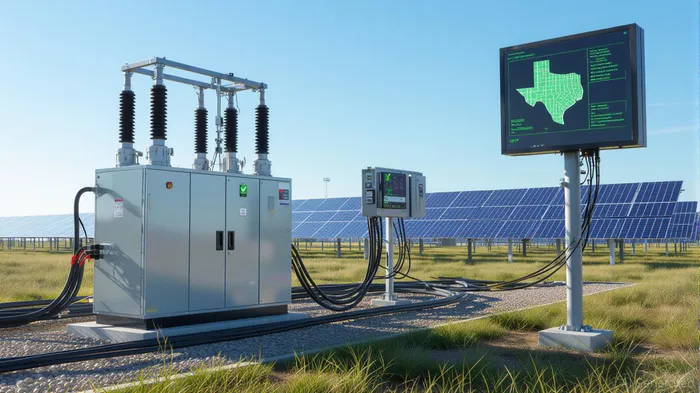
According to a report by Enverus, the RTC+B design is projected to deliver annual wholesale market savings of $2.5–$6.4 billion by optimizing resource use and reducing reliance on costly natural gas during peak hours. These savings are not just a boon for consumers but also a signal to investors that battery storage is becoming a cornerstone of grid resilience.
Economic Impacts: Revenue Diversification and Efficiency Gains
The RTC+B framework has fundamentally altered battery economics by enabling participation in both energy and ancillary services markets simultaneously. Previously, batteries operated under a "combo model," where charging and discharging were treated as separate resources, limiting flexibility. The new model eliminates this constraint, allowing operators to layer revenue streams through real-time arbitrage and ancillary services.
Data from Modo Energy indicates that battery revenues in ERCOT surged by 73% year-over-year in September 2025, with settlements reaching $3.16/kW-month. This growth is driven by wider real-time price spreads and increased opportunities for energy arbitrage, particularly during peak demand periods. For example, the "Mid-Day Soak and Shift" case study demonstrated how batteries stored excess solar energy during midday, avoiding curtailment and reducing system costs by 5.5%.
However, the transition to a more efficient market introduces uncertainties. As noted by Resurety, reduced volatility may limit the frequency of premium pricing events, challenging long-term revenue projections for storage assets. Investors must balance these risks with the growing demand for longer-duration storage systems, which are better suited for energy arbitrage and evening net ramp periods.
Strategic Investment Opportunities: Location, Technology, and Market Dynamics
The rapid deployment of battery storage in ERCOT-12,052 MW of operational capacity as of Q3 2025-reflects a shift in siting strategies. Developers are increasingly prioritizing high-demand areas like Houston, where proximity to load centers maximizes exposure to peak pricing events. This trend aligns with the "Swap the Reg" case study, where re-dispatching batteries for regulation up services reduced costs by 2.7%. Investors should focus on projects that leverage node-specific advantages and employ advanced analytics to optimize dispatch in real time.
Moreover, the RTC+B framework's emphasis on performance standards necessitates investments in automation and compliance tools. As GridBeyond notes, operators face penalties for deviating from set points, requiring robust systems to manage operational complexity. This creates a secondary market for software solutions that enhance battery efficiency, further diversifying investment avenues.
Challenges and the Path Forward
While the RTC+B model offers transformative potential, it also demands adaptability. The mixed performance of storage systems in H1 2025-where 42% of revenue came from ancillary services but energy arbitrage remained critical for top performers-highlights the need for diversified strategies. Investors must also monitor policy developments, as regulatory shifts could influence market dynamics.
Conclusion
ERCOT's RTC+B is more than a technical upgrade; it is a catalyst for reimagining energy storage as a strategic asset. By enhancing grid stability, diversifying revenue streams, and enabling cost savings, the framework positions battery storage at the intersection of resilience and profitability. For investors, the key lies in targeting projects with strong locational advantages, advanced operational capabilities, and alignment with ERCOT's evolving market design. As Texas leads the charge in decarbonizing its grid, the opportunities for grid-integrated storage are not just promising-they are essential.

Blending traditional trading wisdom with cutting-edge cryptocurrency insights.
Latest Articles
Stay ahead of the market.
Get curated U.S. market news, insights and key dates delivered to your inbox.


AInvest
PRO
AInvest
PRO



Comments
No comments yet