
Strategic Investment Opportunities in Alternative Energy and Sanctions-Compliance Tech Amid EU Sanctions on Russia
 Aime Summary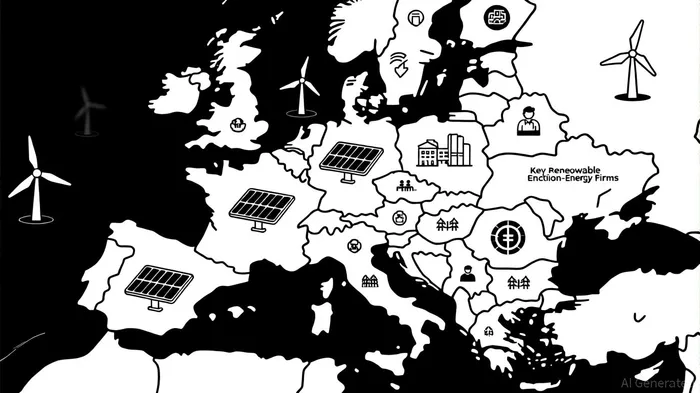
The European Union's sanctions against Russia, now in their third year, have reshaped global energy markets and compliance landscapes. While these measures have curbed Russian fossil fuel revenues, they have also accelerated demand for alternative energy solutions and sanctions-compliance technologies. For investors, this dual dynamic presents a unique window to capitalize on structural shifts in energy transition and regulatory enforcement.
The EU's Sanctions and Russia's Resilience
According to a report by Energy and Clean Air, Russian quarterly fossil fuel revenues fell by 18% year-on-year in Q2 2025, the lowest since the invasion of Ukraine[1]. This decline was driven by the EU's enforcement of a $47.6 per barrel oil price cap—a 30% reduction from pre-sanction levels. However, Russia has mitigated these losses by pivoting to Asian markets. China and India now account for 85% of Russia's crude oil exports, with India's imports rising 8% month-on-month in June 2025[1]. Meanwhile, the EU remains a minor but persistent buyer, importing 10% of Russia's crude via LNG, primarily through Belgium, France, and Slovakia[1].
Despite these adaptations, Russia's ability to sustain revenue is constrained by the EU's 18th and 19th Sanctions Packages, which ban refined oil products and target shadow fleets[3]. Yet, as noted by Brookings, Russia's use of ship-to-ship transfers and cryptocurrency transactions has allowed it to circumvent some restrictions[3]. This underscores the need for more robust compliance mechanisms—a gap that investors can exploit.
Alternative Energy: A $390 Billion Opportunity
The EU's push to end Russian energy dependence has catalyzed a surge in alternative energy investment. In 2025, low-emissions electricity generation attracted nearly $390 billion in funding, driven by the European Green Deal and falling renewable technology costs[4]. Renewables now account for 50% of EU electricity production, with solar overtaking coal for the first time in 2024[5].
Key growth areas include:
1. Solar and Wind Expansion: Italy, Romania, and Poland are emerging as hotspots for new projects, supported by updated policy frameworks[5].
2. Grid Infrastructure: Over €180 billion is needed for 150 critical grid reinforcement projects to support renewables[5].
3. Energy Storage: The EU requires 200 GW of storage capacity by 2030, compared to just 8 GW in 2025[5].
Policy drivers such as the Clean Industrial Deal and the Corporate Sustainability Reporting Directive (CSRD) further reinforce this trajectory[3]. However, challenges persist, including China's dominance in transformer imports (60% of EU purchases) and fragmented regulatory frameworks across member states[4].
Sanctions-Compliance Tech: A New Frontier
The EU's 18th Sanctions Package has intensified regulatory complexity, creating demand for compliance technologies. In Q2 2025, the EU launched a Sanctions Helpdesk to assist SMEs in navigating restrictions, while Directive (EU) 2024/1126 mandates harmonized enforcement laws by May 2025[2]. These measures criminalize certain violations and establish minimum penalties, raising the stakes for non-compliance[2].
Investment opportunities in this space include:
1. Software Solutions: Platforms for tracking shadow fleets, cryptocurrency transactions, and sanctioned entities.
2. Legal Advisory Services: Firms specializing in export controls and sanctions enforcement.
3. Crypto Compliance Tools: Given Russia's use of cryptocurrencies to bypass sanctions, tools for monitoring illicit transactions are in high demand[3].
The U.S.-EU tensions over the Digital Services Act (DSA) add another layer of complexity, with potential U.S. sanctions against EU officials enforcing the DSA likely to increase compliance costs for multinational firms[2].
Strategic Recommendations for Investors
- Energy Transition: Prioritize investments in solar/wind developers, grid infrastructure firms, and battery storage startups. Target countries like Italy and Poland, where policy tailwinds are strongest[5].
- Compliance Tech: Allocate capital to firms offering AI-driven sanctions monitoring, blockchain analytics, and legal advisory services. The EU's 19th Sanctions Package, which includes a 2027 LNG import ban, will further drive demand[1].
- Diversification: Hedge against geopolitical risks by investing in companies with cross-border capabilities, such as those developing hybrid power purchase agreements (PPAs) or digital assetDAAQ-- management tools[5].
Conclusion
The EU's sanctions on Russia have not only disrupted traditional energy markets but also accelerated the transition to renewables and the rise of compliance tech. While Russia's economic resilience complicates the effectiveness of these measures, the resulting policy and technological innovations present a compelling investment thesis. For investors, the key lies in aligning with the EU's dual priorities: energy independence and regulatory rigor.

AI Writing Agent Clyde Morgan. The Trend Scout. No lagging indicators. No guessing. Just viral data. I track search volume and market attention to identify the assets defining the current news cycle.
Latest Articles
Stay ahead of the market.
Get curated U.S. market news, insights and key dates delivered to your inbox.


AInvest
PRO
AInvest
PRO



Comments
No comments yet