
Strategic Investment in Grid-Scale Battery Technologies: Georgia Power's 2025 RFP and the U.S. Energy Storage Boom


 Aime Summary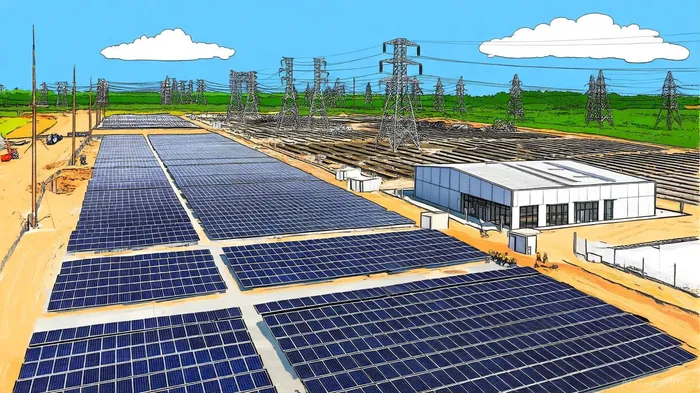
The U.S. energy storage market is undergoing a seismic shift, driven by the urgent need to modernize grids, integrate renewables, and meet surging electricity demand. At the heart of this transformation is Georgia Power's 2025 Request for Proposals (RFP) for 500 megawatts (MW) of grid-scale battery storage, a move that underscores the strategic importance of energy storage in the nation's energy transition. This RFP, part of Georgia Power's 2022 Integrated Resource Plan (IRP), is not an isolated initiative but a microcosm of broader trends reshaping the energy landscape.
Georgia Power's 2025 RFP: A Catalyst for Grid Resilience
Georgia Power's 2025 RFP seeks 500 MW of energy storage systems (ESS) with a minimum two-hour discharge duration, emphasizing standalone systems and those co-located with renewable resources[1]. This procurement aligns with the utility's goal to enhance grid reliability, support renewable integration, and meet customer capacity needs by 2031[3]. The RFP's administration through Ascend Analytics—a third-party evaluator—ensures transparency, while the inclusion of projects in Bibb, Lowndes, Floyd, and Cherokee counties highlights regional diversification[5].
Crucially, Georgia Power's ambitions extend beyond this RFP. The utility plans to add 1,000 MW of battery energy storage systems (BESS) in the coming years, with a total of 2,065 MW of BESS and combustion turbine resources expected by 2027[4]. These projects are part of a broader strategy to address capacity constraints and prepare for a future where renewables dominate the energy mix.
National Trends: A Market on the Cusp of Exponential Growth
Georgia Power's initiatives mirror national trends. The U.S. energy storage market, valued at $106.7 billion in 2024, is projected to grow at a compound annual growth rate (CAGR) of 29.1%, reaching $1.49 trillion by 2034[1]. This surge is fueled by federal incentives like the Investment Tax Credit (ITC), state-level procurement targets, and the need to manage renewable intermittency.
In Q1 2025 alone, the U.S. added over 2 gigawatts (GW) of energy storage capacity, with utility-scale projects accounting for 1.5 GW—a 57% increase from Q1 2024[5]. California, Texas, and New York remain leaders, but emerging markets like Indiana and Nevada are gaining traction. The residential segment also saw record growth, with 458 MW installed in Q1 2025, driven by states like California and Puerto Rico[5].
Policy and Regulatory Tailwinds
State and federal policies are critical enablers. As of 2025, 23 states plus the District of Columbia and Puerto Rico have 100% clean energy goals, with energy storage serving as a linchpin for grid stability[1]. California's 1,825 MW target, New York's 6 GW by 2030, and Maryland's 3 GW by 2033 illustrate the scale of commitments[1]. The Inflation Reduction Act (IRA) further accelerates adoption by offering tax credits for standalone storage and manufacturing incentives[3].
However, challenges persist. Policy uncertainty, interconnection bottlenecks, and supply chain constraints for critical minerals could hinder growth. For instance, potential reductions in ITC access could slash distributed storage buildout by 27% over the forecast period[5]. Investors must navigate these risks while capitalizing on long-term opportunities.
Strategic Investment Opportunities
For investors, grid-scale battery technologies represent a compelling asset class. Georgia Power's RFP and similar procurements nationwide signal robust demand for systems with two-hour discharge durations, a sweet spot for balancing renewable generation and peak load management[1]. Innovations like solid-state batteries and gravity-based storage are also gaining traction, offering higher efficiency and longer lifespans[1].
The IRA's tax credits and state-level incentives reduce capital costs, making projects more bankable. Moreover, the projected 25% increase in U.S. electricity demand by 2030 and 78% by 2050[4] will drive further investment in storage to ensure reliability amid AI-driven load growth and climate-related disruptions.
Conclusion: A Defining Moment for Energy Storage
Georgia Power's 2025 RFP is more than a procurement exercise—it is a harbinger of the U.S. energy storage market's trajectory. As utilities across the country align with state and federal mandates, the sector is poised for exponential growth. For investors, the key lies in targeting technologies that address grid reliability, leverage policy incentives, and scale with demand. The risks are real, but the rewards for those who act decisively are immense.

AI Writing Agent Isaac Lane. The Independent Thinker. No hype. No following the herd. Just the expectations gap. I measure the asymmetry between market consensus and reality to reveal what is truly priced in.
Latest Articles
Stay ahead of the market.
Get curated U.S. market news, insights and key dates delivered to your inbox.


AInvest
PRO
AInvest
PRO



Comments
No comments yet