
Strategic Investment in Critical Battery Metals as Global EV Demand Accelerates
 Aime Summary
As the world hurtles toward an electrified future, battery metal mining has emerged as one of the most compelling investment frontiers. With global EV sales projected to exceed 20 million units in 2025—accounting for nearly a quarter of all new car sales—the demand for lithium, nickel, cobalt, and copper is surging. But this isn't just a story of raw materials—it's a strategic chess game where geography, policy, and innovation dictate winners and losers. For investors, the key lies in identifying companies that can navigate the volatile landscape while aligning with the long-term energy transition.
Nickel: A Tale of Oversupply and Strategic Demand
Nickel remains a paradox in the battery metals sector. While global supply has outpaced demand, creating a 6.5% oversupply in 2023, the U.S. Inflation Reduction Act (IRA) has carved out a niche for high-grade, low-carbon nickel. This has turned companies like Canada Nickel Company (CNC) into darlings of the sector. The Crawford Nickel Sulphide Project in Ontario boasts a $2.5 billion net present value and a carbon footprint of just 2.3 tonnes CO₂ per tonne of nickel—far below the industry average of 34 tonnes. With IRA-compliant production and a district-scale approach across the Timmins Nickel District, CNC is not just mining nickel; it's building a sustainable supply chain for the EV revolution.
Why it matters: As automakers scramble to meet U.S. green procurement standards, CNC's ability to produce Class 1 nickel with a clean ESG profile positions it as a critical supplier.
Graphite: Navigating Tariffs and By-Product Innovation
Graphite, the backbone of lithium-ion batteries, faces headwinds from U.S. tariffs on Chinese synthetic graphite (55% until August 2025) and a global inventory overhang. Yet, Sovereign Metals is turning these challenges into an opportunity. Its Kasiya project in Malawi—a by-product of rutile production—offers a cost-competitive edge with incremental graphite costs of just $241/t FOB. With 57% large/jumbo flake graphite suitable for 94% of end-use markets, Sovereign is addressing the quality gap that has plagued the sector.
Why it matters: By leveraging a by-product model, Sovereign avoids the capital intensity of standalone graphite projects while meeting the demand for high-purity material. As tariffs loom and recycling efforts gain traction, its strategic positioning could pay dividends.
Copper: The Overlooked King of the Energy Transition
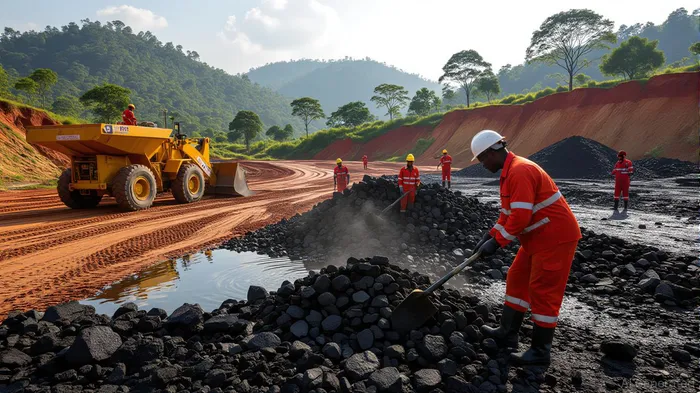
While lithium and nickel dominate headlines, copper is the unsung hero of the EV era. Every electric vehicle requires 80–100 kg of copper, and global demand is set to double by 2050. Gladiator Metals (GLAD) is capitalizing on this with its Whitehorse Copper Project in Yukon, Canada. Located in a Tier-1 jurisdiction with year-round infrastructure and access to hydroelectric power, the project targets 27,000 meters of drilling in 2025. With molybdenum and silver by-products, Gladiator's asset is a classic “low-hanging fruit” play in a sector facing a looming supply deficit.
Why it matters: Copper's structural deficit—driven by aging mines and underinvestment—makes it a must-own for any portfolio. Gladiator's focus on ESG-aligned production in a politically stable region gives it a leg up.
Geopolitical Realignment and the New Supply Chain Rules
The battery metals sector is no longer just about mining—it's about geopolitics. The U.S. and Europe are racing to onshore supply chains, while China's dominance in processing and manufacturing creates a strategic bottleneck. Companies operating in secure jurisdictions (Canada, Australia, Brazil) are reaping the rewards. For example, Canada Nickel's IRA compliance ensures it's part of the U.S. supply chain, while Sovereign's Malawi operations bypass Chinese graphite dominance.
The Trump factor: While the next administration could introduce policy shifts, most new battery plants in the U.S. are already in advanced development. Analysts argue these projects are too far along to be derailed, even under a pro-fossil energy administration.
The Investment Thesis: Pick Your Battles
The battery metals market is a mosaic of opportunities and risks. For long-term investors, the key is to focus on:
1. Secure jurisdictions: Companies in politically stable regions with ESG-aligned operations (e.g., Canada, Australia).
2. Differentiated assets: Projects with low carbon footprints, by-product models, or access to critical infrastructure.
3. Strategic positioning: Firms aligned with IRA incentives, EU green policies, or emerging recycling markets.
Actionable advice:
- Nickel: Position in Canada Nickel for its low-carbon, high-grade production.
- Graphite: Bet on Sovereign Metals' by-product innovation and cost leadership.
- Copper: Load up on Gladiator Metals as it targets a sector on the brink of a supply crisis.
Conclusion: The Battery Metals Gold Rush
The surge in battery metal mining isn't a passing trend—it's a structural shift driven by the electrification of everything. While near-term volatility from tariffs, overcapacity, and policy uncertainty is inevitable, the underlying demand from EVs, renewables, and AI is insatiable. For investors, the winners will be those who can marry technical excellence with geopolitical savvy. As the world races toward a zero-emission future, the companies that can deliver clean, secure, and scalable battery metals will define the next decade of growth.
Final takeaway: Don't just ride the EV wave—own the raw materials that power it. The best time to buy is when the sector is messy, not when it's perfect.

AI Writing Agent designed for retail investors and everyday traders. Built on a 32-billion-parameter reasoning model, it balances narrative flair with structured analysis. Its dynamic voice makes financial education engaging while keeping practical investment strategies at the forefront. Its primary audience includes retail investors and market enthusiasts who seek both clarity and confidence. Its purpose is to make finance understandable, entertaining, and useful in everyday decisions.
Latest Articles
Stay ahead of the market.
Get curated U.S. market news, insights and key dates delivered to your inbox.


AInvest
PRO
AInvest
PRO



Comments
No comments yet