
Strategic Infrastructure Upgrades: Fueling Long-Haul Travel Demand and Premium Fare Recovery in the Post-Pandemic Era


 Aime Summary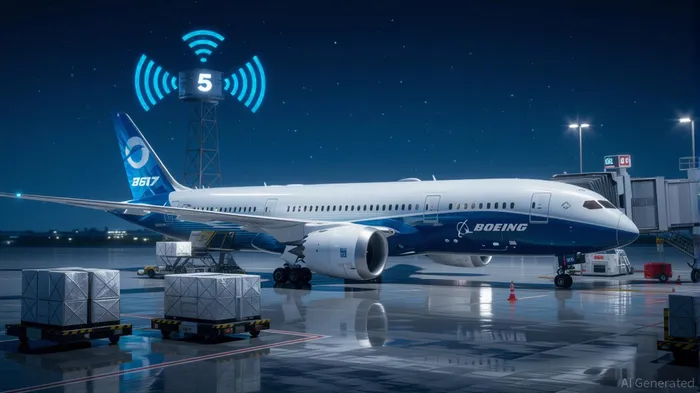
The global aviation industry is undergoing a quiet revolution. As post-pandemic travel demand surges, airlines are no longer merely reacting to market shifts—they are proactively reshaping the landscape through strategic infrastructure upgrades. From fuel-efficient aircraft to AI-driven operations and immersive customer experiences, the focus on modernization is not just about survival but about capturing the premium travel segment's lucrative potential. For investors, this transformation presents a compelling case for long-term value creation.
The Engine of Recovery: Fleet Modernization and Fuel Efficiency
The cornerstone of this revival lies in fleet modernization. Airlines are retiring aging, fuel-guzzling aircraft and replacing them with next-generation models like the BoeingBA-- 787 and Airbus A350. These aircraft reduce fuel consumption by up to 25% compared to older widebodies, a critical advantage in an era where energy costs and carbon emissions dominate operational budgets. For example, United Airlines' 2023–2025 fleet overhaul—retiring 21 older planes and integrating 787s and A321neos—cut fuel costs by 20% per flight, directly boosting margins. This efficiency allows carriers to maintain premium pricing on long-haul routes, where demand remains resilient despite macroeconomic headwinds.
The financial impact is clear. United's premium cabin revenue grew by double digits in 2025, with forward bookings up 17% year-over-year. Its free cash flow soared to $3.83 billion in 2024, a stark contrast to a $260 million loss in 2023.
Customer Experience: The New Currency of Premium Travel
Beyond efficiency, airlines are redefining the premium travel experience to justify higher fares. Lufthansa's Allegris suite, with its personalized meal options and extended reality (XR) entertainment, and Cathay Pacific's Aria Suite, which prioritizes privacy and luxury, exemplify this shift. These innovations are not mere gimmicks—they are calculated investments in customer loyalty.
The integration of immersive technologies is particularly transformative. Lufthansa's XR inflight experience, the first of its kind, allows passengers to engage with virtual environments, blending entertainment with productivity. Such offerings cater to a post-pandemic traveler seeking both escapism and efficiency, a demographic willing to pay a premium for differentiation.
Infrastructure as a Strategic Lever
Modernization extends beyond aircraft. Airports and airlines are deploying robotics, automation, and private wireless networks to streamline operations. Munich Airport's BagBOT, a robotic system for cargo handling, and Miami International's private 5G network, which enables real-time asset tracking, are reducing delays and enhancing reliability. These upgrades are critical for long-haul routes, where even minor disruptions can erode customer trust and premium pricing power.
Artificial intelligence further amplifies these gains. Alaska Airlines' AI-powered “Alaska Inspires” tool helps travelers curate trips, while predictive analytics optimize maintenance schedules, minimizing unplanned downtime. For investors, the synergy between AI and infrastructure is a key indicator of operational resilience.
The Road Ahead: Risks and Opportunities
While the outlook is optimistic, challenges persist. Supply chain bottlenecks and aircraft delivery delays—Airbus and BoeingBA-- have combined backlogs of over 15,000 planes—threaten to slow capacity expansion. Additionally, the push for Sustainable Aviation Fuel (SAF), though environmentally necessary, remains costly and logistically complex. However, regulatory tailwinds, such as the EU's ReFuelEU mandate, are accelerating adoption, creating opportunities for airlines that scale early.
For investors, the focus should be on airlines that balance innovation with fiscal discipline. United's disciplined capacity management—reducing domestic supply by 4 percentage points in Q3 2025—demonstrates how strategic restraint can preserve margins. Similarly, carriers investing in ancillary revenue streams, such as personalized in-flight retail and premium seating, are diversifying income beyond ticket sales.
Conclusion: A Sky Full of Opportunities
The post-pandemic aviation sector is not merely recovering—it is evolving. Strategic infrastructure upgrades are unlocking new value in long-haul travel, where premium demand remains robust. For investors, the winners will be those airlines that combine technological agility with operational efficiency, leveraging modernization to justify premium pricing while navigating sustainability mandates. As the industry charts this course, the skies are no longer just a conduit for travel—they are a proving ground for innovation.

Delivering real-time insights and analysis on emerging financial trends and market movements.
Latest Articles
Stay ahead of the market.
Get curated U.S. market news, insights and key dates delivered to your inbox.
AInvest
PRO
AInvest
PRO



Comments
No comments yet