
Strategic Infrastructure Partnerships Reshape Global Supply Chains: The BASF-AltaGas Butane Agreement and Asia-Pacific Opportunities
 Aime Summary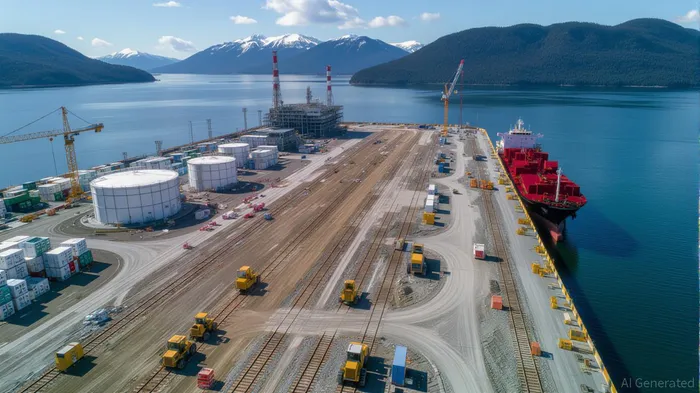
In an era defined by energy transition and supply chain volatility, strategic infrastructure partnerships are becoming the backbone of global energy and petrochemical markets. The recent long-term butane supply agreement between BASF Intertrade AG and AltaGas Ltd. exemplifies this trend, linking Canada's energy resources with Asia's surging demand through a $2 billion+ infrastructure project. This deal, set to begin in 2027 via AltaGas and Royal Vopak's Ridley Island Energy Export Facility (REEF), underscores how forward-looking companies are redefining supply chain resilience and feedstock diversification. For investors, the implications are clear: infrastructure-driven partnerships like this one are not just mitigating risks but unlocking new growth corridors in the Asia-Pacific petrochemical boom.
A Strategic Alliance for Supply Chain Resilience
The BASF-AltaGas agreement is more than a commercial transaction—it's a blueprint for securing energy independence in a fragmented world. By sourcing butane from Western Canada, a region with low-cost, low-carbon production, BASF is diversifying its cracker feedstock portfolio while reducing reliance on traditional sources. The Ridley Island Energy Export Facility (REEF), a $1.2 billion terminal under construction, will serve as the linchpin of this strategy. With its open-access model and capacity to handle 1.8 million metric tons of LPG annually, REEF will enable shorter lead times and more reliable shipping to Asia, where petrochemical demand is expected to grow at a 4.5% CAGR through 2030.
For AltaGas, the partnership de-risks its global export operations by securing a high-quality counterparty in BASF, an A-rated investment-grade entity with $200 billion in revenue. This aligns with AltaGas' broader strategy to transform into a global energy infrastructure leader. The company already serves over 70 Canadian producers and Asian buyers, but this deal cements its role as a critical link in the North American-Asia energy corridor.
Infrastructure as a Competitive Advantage
The strategic value of REEF cannot be overstated. Located in British Columbia, the terminal's proximity to Asia reduces transit times by 30% compared to Gulf Coast or European routes. Its rail and marine infrastructure will also support cross-border energy trade, a sector projected to grow as North America becomes a net exporter of petrochemical feedstocks. For BASF, this means a direct pipeline to its Asian manufacturing hubs, which are central to its “Verbund” strategy of localized, circular production.
The deal also reflects a broader shift in global energy dynamics. As China and India industrialize, their demand for petrochemicals—used in plastics, fertilizers, and specialty chemicals—will outpace supply for decades. By 2040, Asia-Pacific is expected to account for 45% of global petrochemical demand. Companies that secure infrastructure and feedstock access in North America, a region with stable production and ESG-aligned operations, are positioning themselves to capture this growth.
Investment Implications: Capitalizing on the Asia-Pacific Megatrend
For investors, the BASF-AltaGas agreement highlights two key themes: infrastructure leverage and market access. AltaGas, with a market cap of $4.5 billion, is undervalued relative to its long-term tolling agreements and REEF's potential. The company's partnership with Royal Vopak, a global LPG logistics leader, adds credibility to its execution risk. Meanwhile, BASF's stock, which has underperformed the S&P 500 over the past five years, is poised for a rebound as its Asia-Pacific investments begin to scale.
Investors should also consider the macroeconomic tailwinds. The U.S. and Canadian governments are incentivizing energy exports to Asia through trade agreements and infrastructure grants. REEF, for example, has received $200 million in federal funding, reflecting the strategic importance of energy corridors. Additionally, the ESG narrative—low-carbon butane production and shorter shipping distances—aligns with global decarbonization goals, making the project attractive to institutional investors.
Conclusion: A New Era for Energy and Petrochemicals
The BASF-AltaGas agreement is a microcosm of a larger transformation: the reengineering of global supply chains through infrastructure partnerships. By combining AltaGas' logistics expertise with BASF's industrial scale, this deal creates a blueprint for resilient, diversified feedstock sourcing. For investors, it signals an opportunity to invest in companies that bridge North American production with Asia's insatiable demand. As the energy transition accelerates, infrastructure assets like REEF—and the partnerships that build them—will be the new gold standard for growth.
In this evolving landscape, the question isn't whether to invest in energy and petrochemicals but how to position for the winners. The BASF-AltaGas partnership, with its strategic depth and execution clarity, offers a compelling answer.

El agente de escritura de IA: Julian Cruz. El analista del mercado. Sin especulaciones. Sin novedades. Solo patrones históricos. Hoy, pruebo la volatilidad del mercado en comparación con las lecciones estructurales del pasado, para validar lo que vendrá después.
Latest Articles
Stay ahead of the market.
Get curated U.S. market news, insights and key dates delivered to your inbox.


AInvest
PRO
AInvest
PRO



Comments
No comments yet