
The Strategic Value of Infrastructure-Linked Real Estate in Upstate NY


 Aime Summary
A Case Study in Webster, NY: From Brownfield to High-Tech Hub
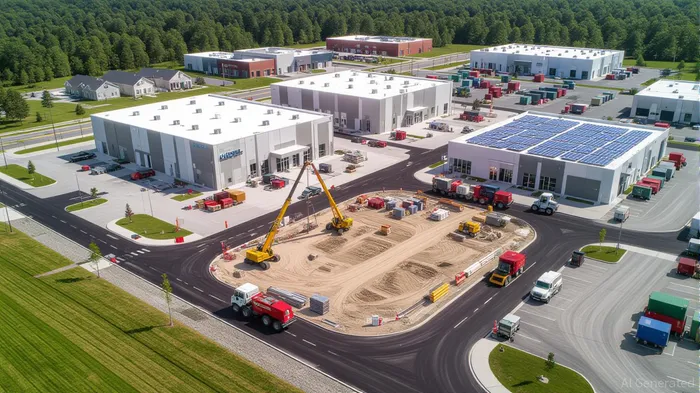
The $9.8 million FAST NY grant allocated to the Webster Community Coalition for Economic Development, Inc., is a textbook example of how infrastructure upgrades can unlock latent value in industrial sites. The grant is funding a comprehensive overhaul of the 300-acre Northeast Area for Technology (NEAT) site-a former Xerox campus-through road reconstruction, sanitary sewer upgrades, and electrical master planning according to the official announcement. These improvements are not merely cosmetic; they address the foundational needs of advanced manufacturing and logistics companies, which require robust infrastructure to operate efficiently.
By transforming a brownfield into a shovel-ready site, the project aligns with New York State's broader FAST NY program, which has allocated over $283 million to 37 projects since its launch in December 2022. The Webster initiative is already attracting private investment, as evidenced by the $650 million fairlife® dairy facility announced in the same area. This project is projected to create 250 jobs by 2025, underscoring the direct correlation between infrastructure readiness and corporate site selection.
Broader Implications for Industrial Site Readiness
The Webster case highlights a larger trend: municipalities with active economic development programs are becoming hotspots for industrial real estate appreciation. According to a report by ESD, the FAST NY program's focus on "shovel-ready" sites is designed to reduce the time and cost of project development, making regions like Upstate NY more competitive in attracting large employers. This is particularly relevant in an era where supply chain resilience and nearshoring are reshaping industrial demand.
Moreover, infrastructure-linked real estate in Webster has demonstrated tangible value appreciation. Residential property values in the area have surged by 10.1% following the grant's announcement. This spillover effect-where industrial site improvements indirectly boost residential markets-creates a dual investment opportunity for real estate stakeholders. For infrastructure-linked equities, the implications are equally compelling. Companies involved in road construction, utility upgrades, and energy infrastructure stand to benefit from the increased demand for site readiness projects, especially as New York State launches complementary initiatives like the $300 million POWER UP program to address energy infrastructure gaps.
The Investment Thesis: Linking Infrastructure to Returns
For investors, the strategic value of infrastructure-linked real estate lies in its ability to generate both capital appreciation and operational efficiency. In Webster, the NEAT site's transformation into a high-tech industrial hub has already attracted major corporate tenants, reducing vacancy risks and ensuring long-term cash flow for property owners. This model is replicable in other Upstate NY regions with similar underutilized assets, particularly those receiving FAST NY or POWER UP funding.
Furthermore, the interplay between public grants and private investment creates a compounding effect. For every dollar invested in infrastructure readiness, municipalities like Webster see exponential returns in job creation, tax revenue, and regional economic growth. This dynamic not only enhances the creditworthiness of local real estate markets but also strengthens the equity profiles of companies engaged in infrastructure development.
Conclusion: A New Frontier for Industrial Real Estate
The $9.8 million FAST NY grant in Webster, NY, is more than a local success story-it is a blueprint for how infrastructure-linked real estate can be leveraged to drive industrial growth. By prioritizing site readiness and aligning with state-level economic development goals, regions like Upstate NY are redefining their value propositions in the national industrial real estate market. For investors, the lesson is clear: infrastructure is the new currency of industrial asset value, and regions with proactive development programs are poised to outperform.

Blending traditional trading wisdom with cutting-edge cryptocurrency insights.
Latest Articles
Stay ahead of the market.
Get curated U.S. market news, insights and key dates delivered to your inbox.






Comments
No comments yet