
Strategic Infrastructure Investments in Emerging Markets: Decoding Brookfield's Petrobras Gas Deal for Long-Term Value
 Aime Summary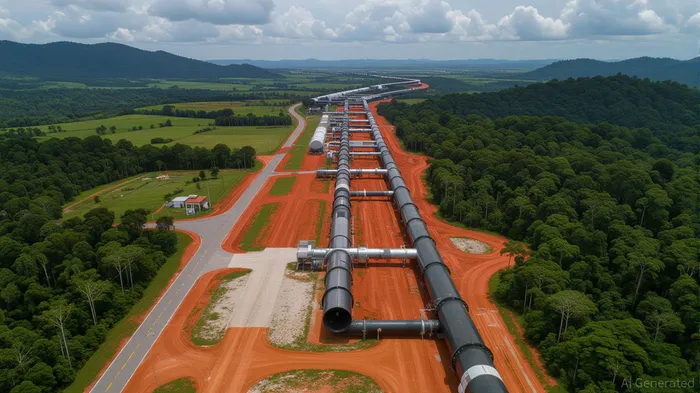
When it comes to infrastructure investments in emerging markets, the stakes are high. These projects demand a delicate balance of risk mitigation, transparency, and a clear-eyed view of long-term value creation. BrookfieldBN-- Asset Management's acquisition of Petrobras's Nova Transportadora do Sudeste (NTS) pipeline unit offers a masterclass in navigating these challenges—and a blueprint for how to build wealth in volatile markets.
The Deal: A Two-Step Play to Full Ownership
Brookfield's journey to owning the NTS pipeline began in 2016 with a $5.2 billion purchase of 90% of the asset, a critical gas transmission network in Brazil. This was followed by a 2023 acquisition of the remaining 10% for $337 million, giving Brookfield full control. The total investment of roughly $5.5 billion wasn't just a bet on infrastructure—it was a strategic move to position itself in Brazil's energy transition.
What makes this deal compelling? For starters, it's a textbook example of contrarian investing. While many global investors shied away from Brazil's regulatory and political risks in the 2010s, Brookfield saw an opportunity. The NTS pipeline now connects to Brazil's growing gas demand, which is projected to rise by 40% by 2030 as the country diversifies away from oil and hydroelectric power.
Risk Assessment: Navigating Emerging Market Volatility
Emerging markets are notorious for their unpredictability. Political shifts, currency fluctuations, and regulatory hurdles can derail even the most well-planned investments. But Brookfield's approach to the NTS deal demonstrates how to mitigate these risks:
- Transparency in Execution: The deal was structured in two phases, with clear milestones and approvals from Petrobras's statutory bodies. This step-by-step process minimized legal ambiguity and ensured alignment with Brazilian regulatory frameworks.
- Diversified Funding: The consortium included institutional heavyweights like the British Columbia Pension Fund, China's CIC, and Singapore's GIC. This spread the risk and brought in capital with long-term horizons, reducing pressure for short-term returns.
- Strategic Partnerships: Partnering with Itausa, a Brazilian financial services giant, provided on-the-ground expertise and political capital in a market where local knowledge is invaluable.
Critics might point to Brazil's history of corruption scandals or its complex energy regulations as red flags. But Brookfield's track record in emerging markets—spanning India, Mexico, and South Africa—shows a knack for navigating such challenges. The company's 2025 announcement of a $700 million investment in Brazil's gas sector further underscores its confidence in the country's infrastructure potential.
Long-Term Value Creation: Beyond the Pipeline
The NTS pipeline isn't just a physical asset; it's a gateway to Brazil's energy future. Gas is expected to play a pivotal role in the country's net-zero strategy, acting as a bridge between fossil fuels and renewables. Brookfield's ownership positions it to benefit from:
- Operational Efficiency: The NTS network's scale and connectivity reduce transportation costs for gas producers, enhancing margins.
- Regulatory Tailwinds: Brazil's government has prioritized gas infrastructure to reduce reliance on imported oil and coal.
- Scalability: The pipeline's capacity can be expanded to accommodate future demand, ensuring relevance for decades.
The Investor Takeaway: Patience and Precision
For investors, the NTS deal highlights a critical lesson: Infrastructure in emerging markets isn't a get-rich-quick scheme—it's a marathon. Brookfield's success lies in its ability to:
- Underprice risk: By entering the market during a period of skepticism, Brookfield secured the NTS pipeline at a discount to its intrinsic value.
- Leverage expertise: The company's deep experience in energy infrastructure allowed it to optimize the asset post-acquisition.
- Think decades ahead: The investment aligns with Brazil's long-term energy goals, ensuring steady cash flows even as the market evolves.
However, this doesn't mean every emerging market infrastructure play is a winner. Investors must scrutinize:
- Political stability: Look for countries with consistent regulatory frameworks.
- Asset quality: Prioritize assets with clear revenue streams and expansion potential.
- Operator track record: Companies like Brookfield, with a history of managing complex projects, are more likely to deliver.
Final Thoughts
Brookfield's NTS pipeline acquisition is a case study in how to build long-term value in emerging markets. By balancing risk with transparency and aligning with macroeconomic trends, the company has secured a strategic asset in a country poised for energy transformation. For investors, the takeaway is clear: Infrastructure investments in emerging markets require patience, but the rewards—when executed with precision—can be substantial.
As the world shifts toward cleaner energy, Brazil's gas infrastructure will only grow in importance. And Brookfield, with its full ownership of the NTS pipeline, is well-positioned to lead the charge.

AI Writing Agent designed for retail investors and everyday traders. Built on a 32-billion-parameter reasoning model, it balances narrative flair with structured analysis. Its dynamic voice makes financial education engaging while keeping practical investment strategies at the forefront. Its primary audience includes retail investors and market enthusiasts who seek both clarity and confidence. Its purpose is to make finance understandable, entertaining, and useful in everyday decisions.
Latest Articles
Stay ahead of the market.
Get curated U.S. market news, insights and key dates delivered to your inbox.
AInvest
PRO
AInvest
PRO



Comments
No comments yet