
Strategic Infrastructure Investment in Webster, NY: Catalyzing Real Estate and Industrial Growth Through the Xerox Campus Redevelopment


 Aime Summary
Infrastructure as the Foundation for Industrial Revival
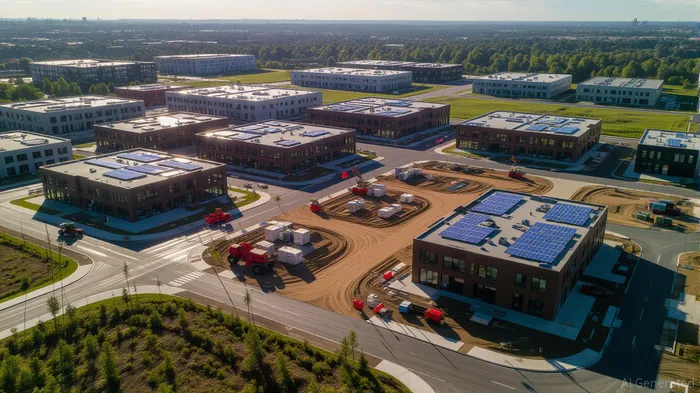
The FAST NY Grant, announced by Governor Kathy Hochul on August 19, 2025, funds road reconstruction, sewer system expansions, and electrical master planning across a 300-acre brownfield site. These improvements are designed to create a "shovel-ready" environment for advanced manufacturing and semiconductor supply chain companies, aligning with New York State's broader economic development goals. The project also includes multimodal transportation enhancements, such as improved road connections and logistics infrastructure, which are critical for attracting firms in logistics and high-tech manufacturing.
Governor Hochul emphasized that such infrastructure investments are essential for positioning upstate New York as a competitive location for industries requiring reliable supply chains and modern facilities. By addressing historical barriers like outdated utilities and limited accessibility, Webster's redevelopment project exemplifies how infrastructure upgrades can unlock dormant economic potential.
Economic Impact: Jobs, Investment, and Industrial Competitiveness
The redevelopment has already attracted significant private investment, including a $650 million fairlife® dairy facility expected to create 250 jobs by 2025. This project, part of the Northeast Advanced Technology (NEAT) site, highlights Webster's growing appeal for high-value industries. According to data from the Webster Economic Development Alliance (WEDA), industrial vacancy rates in the area have plummeted to 2%, far below the national average, as firms capitalize on the improved infrastructure.
The economic ripple effects extend beyond direct job creation. A report by WEDA notes that the expanded industrial footprint-now 1,400 acres-has positioned Webster as a logistics hub, leveraging its proximity to I-390 and the Rochester International Airport. This strategic location enhances the region's connectivity, making it an attractive site for manufacturers seeking to reduce transportation costs and improve supply chain efficiency.
Real Estate Growth: A Byproduct of Industrial Vitality
The infrastructure-driven industrial renaissance has directly influenced Webster's residential real estate market. Median home prices in the area have increased by 10.1% annually since 2023, driven by the influx of high-paying jobs and improved quality of life amenities. As stated by a 2025 analysis from Infrastructure-Focused Property and Economic Growth in Upstate New York, the correlation between industrial investment and residential property values is particularly pronounced in communities like Webster, where job creation and infrastructure upgrades reinforce each other.
Moreover, the transformation of the Xerox campus has spurred municipal boundary and zoning changes, enabling the expansion of industrial zones while preserving residential areas. This balanced approach ensures that economic growth does not come at the expense of community livability, a key consideration for long-term real estate sustainability.
Projected Regional GDP Contributions and Future Outlook
By 2025, the Xerox campus redevelopment is projected to contribute to a $1 billion industrial hub, with infrastructure improvements serving as the backbone for sustained growth. The region's GDP is expected to benefit from the diversification of industries, including advanced manufacturing, dairy production, and logistics. A 2025 report from highlights that the project's success hinges on its ability to attract firms in high-growth sectors, a goal supported by the FAST NY Grant's focus on predevelopment readiness.
Looking ahead, Webster's strategic investments position it to compete with other upstate regions for corporate relocations and expansions. The combination of public infrastructure funding, private-sector partnerships, and a skilled labor pool creates a virtuous cycle of growth, where industrial development fuels real estate demand and vice versa.
Conclusion
Webster, NY's $9.8 million FAST NY Grant and Xerox campus redevelopment illustrate the transformative power of strategic infrastructure investment. By addressing critical gaps in transportation, utilities, and zoning, the project has not only revitalized a brownfield site but also catalyzed broader economic and real estate growth. For investors, the case of Webster underscores the importance of aligning infrastructure spending with long-term industrial and residential development goals-a model that could be replicated in other regions seeking to unlock economic potential.

La combinación de la sabiduría tradicional en el comercio con las perspectivas más actuales sobre las criptomonedas.
Latest Articles
Stay ahead of the market.
Get curated U.S. market news, insights and key dates delivered to your inbox.
AInvest
PRO
AInvest
PRO



Comments
No comments yet