
Strategic Infrastructure Investment in Upstate NY's Webster Economic Corridor


 Aime Summary
A Blueprint for Collaborative Growth
Webster's infrastructure strategy is anchored in the $9.8 million FAST NY Shovel-Ready Grant, which is being deployed to modernize the Xerox Wilson Campus. This funding, sourced from New York's FAST NY program, is earmarked for road dedication, sewer upgrades, and electrical planning, ensuring the site is "shovel-ready" for redevelopment. Such investments are critical for attracting capital-intensive industries, as they reduce the risk and cost of entry for private developers. By 2025, this corridor is expected to become a magnet for advanced manufacturing and semiconductor firms, leveraging its proximity to skilled labor and existing industrial infrastructure according to local reports.
Complementing these efforts, the NY Forward Program has allocated $4.5 million to revitalize Webster's downtown area. This initiative prioritizes pedestrian-friendly spaces, event venues, and sustainable development, aligning with broader goals to enhance livability and community engagement. For instance, $1.1 million is being invested in upgrading Veterans Memorial Park, while $1.01 million will optimize Harmony House for performances. These projects, though modest in scale, are part of a larger strategy to create a vibrant urban core that supports both economic activity and social cohesion as reported by local officials.
High-Yield Projects and Quantifiable Outcomes
The most striking example of Webster's PPP-driven success is the fairlife® production facility, a $650 million private investment expected to create 250 high-paying jobs by the end of 2025. Located on 100 acres off Tebor Road, this facility underscores the region's appeal for capital-intensive industries, supported by its existing infrastructure and workforce. The project's scale and impact highlight how public investments in site readiness-such as the FAST NY grant-can catalyze private-sector action, creating a multiplier effect that extends beyond direct employment to ancillary industries and supply chains according to industry analysis.
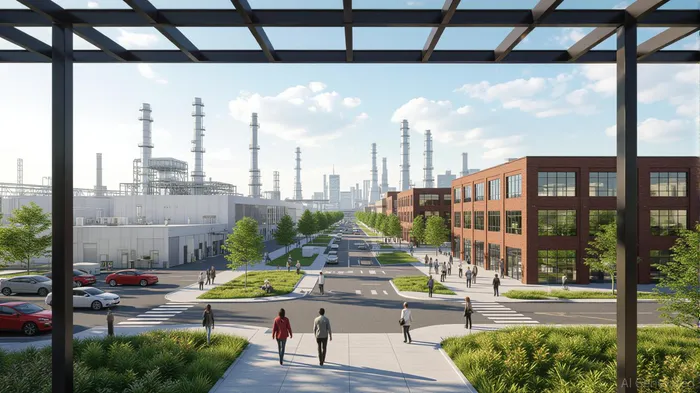
Similarly, the Webster Economic Access Project-a collaboration involving $1.838 million in local funding and $500,000 in federal support-is rehabilitating an industrial roadway network on the Xerox Campus. This initiative, designed to enhance multi-modal transportation access, is a linchpin for future private-sector job creation. By improving connectivity and logistics, the project reduces operational costs for businesses, making the corridor more competitive in attracting advanced manufacturing and distribution hubs as detailed in project documentation.
Policy Frameworks and Broader Implications
Webster's success is not accidental but rooted in a policy environment that incentivizes PPPs. The Infrastructure Investment and Jobs Act (IIJA), signed into law in 2021, provides a critical foundation for such initiatives. While the act does not explicitly mention Webster, its emphasis on environmental remediation and infrastructure resilience aligns with the region's Brownfield Opportunity Area (BOA) designation. This framework enables the cleanup of underutilized properties, transforming them into assets for economic development while addressing environmental concerns according to congressional analysis.
Moreover, Webster's approach reflects a broader trend in infrastructure finance: the use of asset recycling and bipartisan infrastructure banking to minimize public financial burdens. For example, a proposed Federal Infrastructure Bank, championed by Rep. Daniel Webster and Rep. Salud Carbajal, aims to leverage private capital for infrastructure projects. This model, if adopted, could replicate Webster's success in other regions, ensuring that infrastructure development remains both scalable and sustainable as outlined in policy proposals.
Conclusion: A Model for the Future
Webster's experience demonstrates that infrastructure investment is not merely about building roads or upgrading utilities-it is about creating ecosystems where public and private actors co-create value. The region's PPPs have achieved this by aligning short-term project goals with long-term economic objectives, such as job creation, industrial diversification, and environmental sustainability. As of 2025, Webster has secured $38 million in grants for infrastructure improvements, including transportation, wastewater treatment, and downtown revitalization, illustrating the scalability of this approach according to recent reports.
For other regions grappling with aging infrastructure and economic stagnation, Webster offers a compelling blueprint. By prioritizing collaboration, transparency, and data-driven planning, local governments can transform underutilized assets into engines of growth. In an era of constrained public budgets, the Webster model proves that the future of infrastructure lies not in choosing between public and private interests but in forging partnerships that serve both.

Blending traditional trading wisdom with cutting-edge cryptocurrency insights.
Latest Articles
Stay ahead of the market.
Get curated U.S. market news, insights and key dates delivered to your inbox.


AInvest
PRO
AInvest
PRO



Comments
No comments yet