
Strategic Infrastructure Investment in Emerging Markets: The CPEC 2.0 Opportunity
 Aime Summary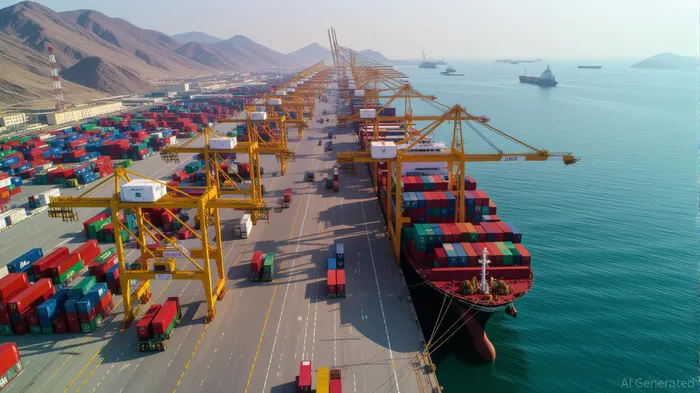
The China-Pakistan Economic Corridor (CPEC) 2.0 represents a pivotal shift in infrastructure investment in emerging markets, blending geopolitical strategy with economic modernization. For global investors, this initiative offers a rare convergence of long-term growth potential, strategic alignment, and sector-specific innovation. Yet, it also demands a nuanced understanding of debt dynamics, geopolitical risks, and the interplay between state-driven development and market forces.
Geopolitical Alignment: A Strategic Nexus
CPEC 2.0 is not merely an economic project but a geopolitical recalibration. By deepening Pakistan's integration with China's Belt and Road Initiative (BRI), the corridor positions Pakistan as a critical node in China's global logistics network. Gwadar Port, for instance, is being upgraded to handle 1.2 million TEUs annually, transforming it into a transshipment hub that could rival Dubai or Colombo. This aligns with China's broader goal of securing an alternative maritime route to the Arabian Sea, reducing reliance on the Strait of Malacca.
For investors, this strategic alignment implies a long-term commitment from China, which has pledged $100 billion annually for green energy transitions under the BRI. However, the geopolitical stakes also introduce risks. U.S. Indo-Pacific initiatives and India's regional influence could complicate CPEC 2.0's execution. Investors must weigh these dynamics against the potential for CPEC 2.0 to catalyze regional stability, particularly if Pakistan's internal governance improves.
Debt Dynamics: A Delicate Balancing Act
Pakistan's external debt now exceeds $131 billion, with 22% owed to China. While CPEC 2.0 aims to reduce dependency on Chinese state loans through public-private partnerships (PPPs) and local financing, the transition is far from seamless. The $1.5 billion Gwadar Free Trade Zone, for example, is a revenue-generating model, but its success hinges on attracting private-sector participation.
The risk of “debt-trap diplomacy” remains a concern. Yet, CPEC 2.0's emphasis on green development and technology transfer—such as AI-driven agriculture and solar-powered irrigation—could enhance Pakistan's productivity and export capacity. If these projects generate sufficient returns, they may offset debt burdens. Investors should monitor Pakistan's fiscal reforms, including tax collection improvements and energy sector privatization, which are critical to debt sustainability.
Sector-Specific Returns: Energy, Transportation, and Digital Infrastructure
Energy: CPEC 2.0's green energy pivot is a standout feature. Over 50% of new projects focus on renewables, including the 1,124 MW Kohala Hydropower Project and the 300 MW Gwadar Solar Park. These align with global decarbonization trends and Pakistan's goal to increase renewable energy to 30% of its grid by 2030. For investors, this sector offers exposure to both infrastructure and ESG-aligned assets.
Transportation: The Main Line-1 (ML-1) railway upgrade, connecting Karachi to Peshawar, is projected to reduce cargo transit times by 30%. This could boost Pakistan's trade volumes, which are expected to hit $50 billion by 2027. However, execution risks—such as land acquisition delays and security concerns—remain.
Digital Infrastructure: The Digital Silk Road's expansion, including 10,000 km of fiber-optic networks by 2025, is creating a tech-driven trade ecosystem. E-commerce platforms like AlibabaBABA-- and JumiaJMIA-- are eyeing Pakistan's 240 million consumers, while fintech firms explore blockchain-based cross-border payments. This sector's growth is less capital-intensive but highly scalable, offering opportunities in digital services and logistics.
Risks and Opportunities for Global Investors
CPEC 2.0's success is contingent on Pakistan's ability to address structural challenges: political instability, bureaucratic inefficiency, and local resistance to foreign influence. For instance, SEZs like Rashakai and Allama Iqbal have faced delays due to land disputes and lack of infrastructure. Investors must also consider the volatility of Pakistan's currency, which has depreciated by over 40% against the dollar since 2020.
Yet, the opportunities are equally compelling. CPEC 2.0's focus on value-added exports—such as processed agricultural goods and digital services—could diversify Pakistan's economy. The 5Es framework (Exports, E-Pakistan, Energy, Environment, Equity) provides a roadmap for inclusive growth, which, if implemented effectively, could attract FDI and stabilize macroeconomic conditions.
Strategic Investment Advice
For investors seeking exposure to BRI-driven growth, CPEC 2.0 offers a diversified portfolio of opportunities:
1. Energy Infrastructure: Invest in renewable energy projects or companies supplying technology for hydropower and solar farms.
2. Transportation PPPs: Target firms involved in railway upgrades or logistics hubs linked to Gwadar Port.
3. Digital Ecosystems: Allocate capital to e-commerce platforms, fintech startups, and digital infrastructure providers.
However, due diligence is paramount. Investors should prioritize projects with clear revenue streams, such as the Gwadar Free Trade Zone, and avoid overexposure to debt-heavy initiatives. A hedged approach—balancing high-growth sectors with defensive assets—can mitigate risks while capturing long-term value.
In conclusion, CPEC 2.0 is a high-impact infrastructure play with the potential to reshape South Asia's economic landscape. Its success will depend on geopolitical stability, effective governance, and the ability to align private-sector incentives with public goals. For those willing to navigate the complexities, the rewards could be substantial.

Stay ahead of the market.
Get curated U.S. market news, insights and key dates delivered to your inbox.


AInvest
PRO
AInvest
PRO



Comments
No comments yet