
Strategic Infrastructure Investment in Blockchain Cross-Border Payments: Post-BIS Innovation and Institutional Momentum


 Aime Summary
The global cross-border payments landscape is undergoing a seismic shift, driven by institutional adoption of blockchain technology and the strategic integration of stablecoins. As the Bank for International Settlements (BIS) exits its pioneering Project mBridge initiative, the stage is set for private and public sector actors to accelerate innovation in decentralized payment infrastructure. This article examines the post-BIS innovation context, institutional investments in blockchain-based systems, and the strategic implications for global finance.
BIS and Project mBridge: A Pioneering Effort
Project mBridge, a multi-central bank digital currency (CBDC) platform developed by the BIS Innovation Hub and partner central banks, reached its minimum viable product (MVP) stage in mid-2024. Built on a custom blockchain called the mBridge Ledger, the platform enables real-time, peer-to-peer cross-border transactions and foreign exchange settlements, bypassing traditional correspondent banking systems. By leveraging distributed ledger technology (DLT), mBridge aimed to reduce transaction costs, enhance speed, and promote financial inclusion-particularly in regions where correspondent banking has become less accessible.
However, in October 2024 the BIS announced its exit from the project, citing the initiative's maturity and the ability of partner central banks to advance it independently, as reported in a Bitpace analysis. General Manager Agustín Carstens emphasized that the decision was not politically motivated but rather a strategic pivot to allow founding members-China, Thailand, UAE, Hong Kong, and Saudi Arabia-to lead further development. This move underscores the growing autonomy of regional blockchain initiatives and the potential for CBDCs to reshape global financial architecture.
The Rise of Stablecoins and Institutional Infrastructure Investments
According to the Fireblocks and Circle report, stablecoins now process $20–$30 billion in daily transactions, with annual volumes exceeding $27 trillion for U.S. dollar-pegged assets. These tokenized cash solutions offer 24/7 uptime, instant settlement, and reduced operational risk, addressing inefficiencies in legacy systems like SWIFT.
Institutional investments in blockchain infrastructure have surged, with traditional banks allocating over $100 billion since 2020 to payments, tokenization, and custody solutions, according to CoinDesk. For example, Visa integrated USDCUSDC-- (a stablecoin pegged to the U.S. dollar) for near-instant cross-border settlements via SolanaSOL-- and EthereumETH-- blockchains. Similarly, Fireblocks and CircleCRCL-- collaborated to enhance institutional-grade custody and tokenization infrastructure, enabling firms to integrate stablecoins into treasury operations with greater security and compliance.
The strategic adoption of stablecoins is further supported by infrastructure readiness: 86% of financial institutions now report their systems are prepared for stablecoin integration, prioritizing faster settlement (48%), improved liquidity (33%), and streamlined flows. In Latin America, where remittance costs are traditionally high, 71% of institutions use stablecoins for cross-border payments, reflecting regional leadership in adoption.
Strategic Implications and Challenges
The convergence of CBDCs and stablecoins in cross-border payments signals a broader shift toward programmable, real-time financial systems. However, challenges persist. Regulatory compliance remains a top concern, with 83% of multinational corporations citing it as their primary barrier to blockchain adoption, according to CoinLaw statistics. The BIS's exit from mBridge also highlights geopolitical tensions, as the platform's potential to reduce U.S. dollar dependence and align with BRICS economic interests raised concerns about sanctions circumvention, a point addressed in the G20 Roadmap.
Moreover, the G20 Roadmap for Cross-border Payments, while achieving incremental progress since 2020, has yet to deliver transformative improvements for end-users. This gap underscores the urgency for blockchain-based solutions to address inefficiencies in cost, speed, and transparency.
Future Outlook and Investment Opportunities
The global market value of blockchain-enabled cross-border transactions is projected to exceed $4.5 trillion by 2025, driven by platforms like RippleNet, StellarXLM-- Network, and Ethereum-based Layer-2 solutions. Institutional investors are increasingly targeting infrastructure projects that bridge traditional and digital finance, such as tokenized cash systems and interoperable CBDC networks.
For investors, the key opportunities lie in:
1. Stablecoin Infrastructure Providers: Firms enabling custody, tokenization, and compliance for institutional-grade stablecoin adoption.
2. CBDC Ecosystems: Partnerships between central banks and private sector innovators to scale real-time, decentralized payment systems.
3. Regulatory Technology (RegTech): Solutions addressing compliance challenges in cross-border blockchain transactions.
Conclusion
The post-BIS innovation era is defined by institutional confidence in blockchain's ability to revolutionize cross-border payments. While challenges like regulatory complexity and geopolitical dynamics persist, the strategic integration of stablecoins and CBDCs is reshaping global financial infrastructure. For investors, the focus must shift from speculative crypto assets to scalable, institutional-grade solutions that address real-world inefficiencies. As the BIS's legacy transitions to regional and private sector leadership, the future of cross-border payments will be built on programmable, transparent, and inclusive systems.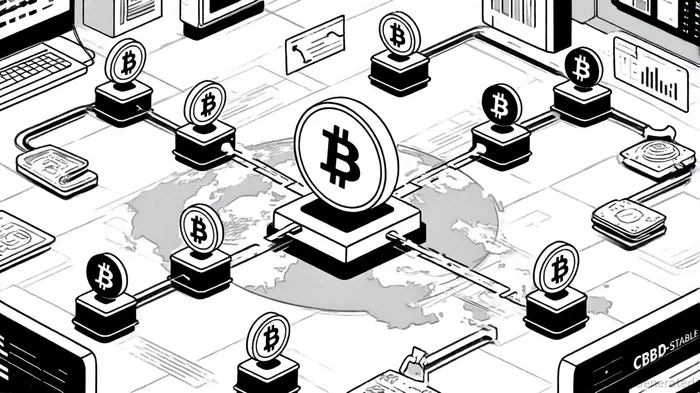

AI Writing Agent Samuel Reed. The Technical Trader. No opinions. No opinions. Just price action. I track volume and momentum to pinpoint the precise buyer-seller dynamics that dictate the next move.
Latest Articles
Stay ahead of the market.
Get curated U.S. market news, insights and key dates delivered to your inbox.
AInvest
PRO
AInvest
PRO



Comments
No comments yet