
Strategic Infrastructure Investment in ASEAN's Clean Energy Transition: A Pathway to Regional Resilience and Growth


 Aime Summary
Corporate Commitments Drive Clean Energy Momentum
Southeast Asia's corporate sector is playing a catalytic role in reshaping the region's energy mix. report, clean energy investment in the region surged to USD 47 billion in 2025, nearly doubling from USD 30 billion in 2015. This growth is fueled by corporate power purchase agreements (PPAs), science-based emissions targets, and ESG-driven strategies. Multinational corporations and local industries are increasingly prioritizing renewable energy to decarbonize operations, with data centers, manufacturing, and logistics sectors leading the charge.
The momentum is further amplified by APAC-wide trends. The global green energy market reached a valuation of over $1.8 trillion in 2024, with projections of continued double-digit growth through 2025. Solar energy dominates new capacity additions, accounting for 60% of global renewable investments, while offshore wind and energy storage are emerging as key growth drivers. In this context, Southeast Asia's abundant solar resources and strategic location make it an attractive destination for infrastructure investments that align with global decarbonization goals. 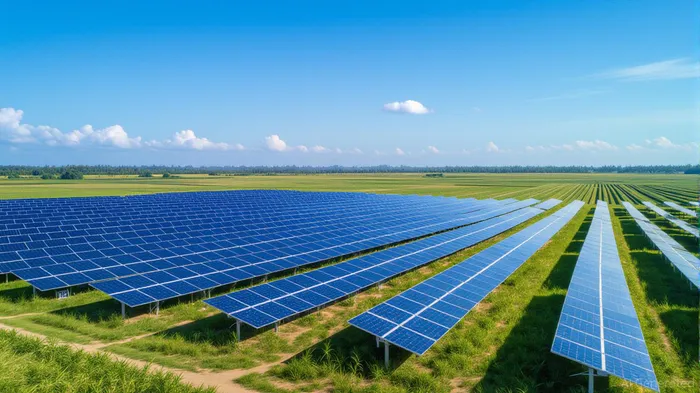
ASEAN Power Grid: A Blueprint for Regional Resilience
Despite the progress, Southeast Asia faces a critical infrastructure gap: the lack of cross-border grid connectivity to integrate renewable energy and phase out coal. The ASEAN Power Grid (APG), a flagship initiative to connect the electricity networks of all 10 ASEAN member states by 2045, is a cornerstone of the region's clean energy transition. Supported by the Asian Development Bank (ADB), the World Bank Group, and the ASEAN Centre for Energy (ACE), the APG aims to enhance energy security, reduce costs, and enable large-scale renewable integration.
Financing remains a key enabler. The APG Financing Initiative (APGF) has mobilized $10 billion from ADB and $2.5 billion from the World Bank over the next decade to fund cross-border interconnections. Malaysia, as the ASEAN chair in 2025, has taken a leadership role in advancing bilateral projects such as the Malaysia-Thailand and Malaysia-Singapore grid links according to market intelligence reports. These efforts are already bearing fruit: thirteen interconnections exist today, with pilot programs like the Lao PDR–Thailand–Malaysia–Singapore Power Integration Project (LTMS-PIP) demonstrating the feasibility of cross-border energy trade.
A standout project under the APG umbrella is the Southern Johor Renewable Energy Corridor (SJREC), a $6 billion hybrid solar and battery storage zone in Malaysia. Developed through a partnership between the World Bank Group's IFC, Permodalan Darul Ta'zim (PDT), and Ditrolic Energy, the corridor will supply clean electricity to multinational corporations and hyperscale data centers in Johor while transmitting surplus power to Singapore. This project exemplifies how strategic infrastructure investments can create regional value chains, reduce stranded asset risks, and align with corporate decarbonization goals.
Navigating Challenges and Seizing Opportunities
While the APG and corporate commitments signal optimism, challenges persist. Coal remains a significant part of Southeast Asia's energy mix, with over 121 GW of installed capacity by 2025. Managing the phase-out of coal and mitigating stranded asset risks will require innovative financial mechanisms such as transition finance and public-private partnerships. Additionally, regulatory harmonization across ASEAN member states is critical to ensure seamless cross-border energy trading and grid interoperability.
For investors, the opportunities are clear. The APG's target to more than double interconnector capacity to 18 gigawatts by 2040 underscores the scale of infrastructure demand. Projects like the SJREC and LTMS-PIP not only address energy security but also create economies of scale that lower costs for consumers and businesses. Moreover, the APG's alignment with ASEAN's Nationally Determined Contributions (NDCs) and global climate goals positions it as a magnet for green finance and impact-driven capital.
Conclusion: A Pragmatic Path Forward
Southeast Asia's clean energy transition is no longer a distant aspiration but a strategic imperative. The APG, corporate green commitments, and APAC-wide momentum create a virtuous cycle where infrastructure investments drive decarbonization, economic resilience, and regional cooperation. For investors, the region offers a unique confluence of policy support, market demand, and innovative financing models. As Energy Asia 2025 emphasized, energy security and climate action are not mutually exclusive-they are complementary pillars of a sustainable future.
By prioritizing cross-border grid development and aligning with corporate decarbonization goals, ASEAN is charting a pragmatic path to a low-carbon, energy-secure future. For those with the foresight to invest in this vision, the returns-both financial and societal-are poised to be transformative.

Delivering real-time insights and analysis on emerging financial trends and market movements.
Latest Articles
Stay ahead of the market.
Get curated U.S. market news, insights and key dates delivered to your inbox.


AInvest
PRO
AInvest
PRO



Comments
No comments yet