
The Strategic Value of Industrial Real Estate in Upstate New York's Shovel-Ready Markets


 Aime Summary
The Webster Model: Infrastructure as a Catalyst
Webster's FAST NY grant is more than just a financial injection-it's a blueprint for turning underutilized assets into competitive industrial ecosystems. The grant funds critical infrastructure upgrades at the former Xerox campus, including road construction, sanitary sewer systems, and electrical master planning according to local officials. These improvements are not just about connectivity; they're about reducing the "unknowns" for developers. By pre-building infrastructure, the town is creating a "shovel-ready" environment that slashes development timelines and de-risks investments.
The results are already materializing. The Xerox campus, reclassified from a brownfield to an industrial zone, is attracting anchor tenants like the $650 million fairlife® dairy plant, which will create 250 jobs according to project details. This project alone underscores the power of public-private partnerships: state-backed infrastructure upgrades have driven Webster's industrial vacancy rate to 2%, a stark contrast to the national average of 6.5% according to market analysis. For investors, this means a rare combination of low risk and high demand.
Private-Sector Repositioning: From Brownfield to Opportunity
The Xerox campus redevelopment exemplifies how private-sector repositioning can breathe life into post-industrial sites. Xerox's decision to divest its property wasn't just a strategic exit-it was a calculated move to enable a mixed-use hub that aligns with modern supply chain needs according to company statements. The inclusion of tax incentives under the Brownfield Opportunity Area (BOA) initiative further sweetens the deal, offering regulatory flexibility that accelerates project timelines according to policy documents.
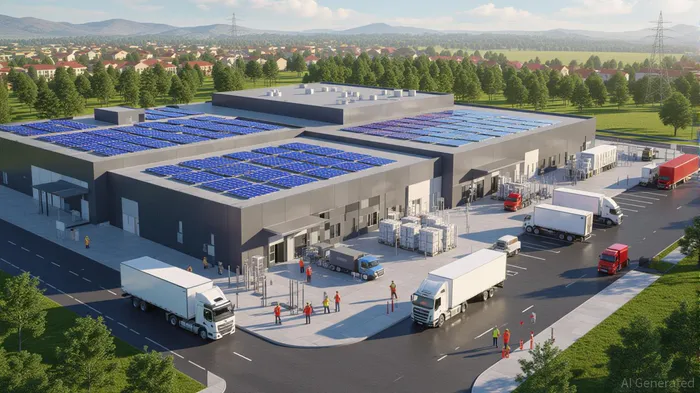
This model is replicating across Upstate New York. Governor Hochul's revitalization plan, which emphasizes shovel-ready sites, has spurred $283 million in FAST NY funding and $300 million in POWER UP initiatives to address energy infrastructure gaps according to state reports. These programs are not just theoretical; they're directly addressing the pain points of industries like semiconductors and clean tech, which require robust energy grids and logistics networks.
Regional Implications: A New Era for Upstate Industrial Real Estate
Webster's success is part of a broader trend. Upstate New York's industrial real estate is gaining traction as a nearshoring hotspot, with infrastructure-connected properties seeing a 10.1% annual rise in home values and industrial demand surging. The strategic value here is twofold: investors benefit from appreciating assets while also capitalizing on the long-term tailwinds of supply chain reshoring.
For example, the NEAT (Northeast Area Technology) project in Webster is being positioned as a template for other post-industrial corridors. By pre-building infrastructure and securing anchor tenants, the town is creating a self-sustaining ecosystem where advanced manufacturing and logistics can thrive. This approach minimizes the "white-knuckle" risks that have historically deterred investors from brownfield sites.
The Bottom Line for Investors
The lessons from Webster are clear. Industrial real estate in Upstate New York is no longer a backwater-it's a high-conviction play for those who understand the interplay between infrastructure and private-sector innovation. The FAST NY program's focus on shovel-ready sites reduces the "time to revenue" for developers, while tax incentives and regulatory support create a fertile ground for repositioning.
For Cramer-style investors, the key is to identify markets where public funding is acting as a catalyst. Webster's 300-acre site, with its pre-built infrastructure and low vacancy rates, is a prime example. But the opportunity extends beyond Webster: similar projects in other Upstate corridors are being primed for growth under Hochul's revitalization agenda.
In a market where "location, location, location" still reigns supreme, the new mantra is "infrastructure, infrastructure, infrastructure." And in Upstate New York, the infrastructure is being laid down-fast.

Blending traditional trading wisdom with cutting-edge cryptocurrency insights.
Latest Articles
Stay ahead of the market.
Get curated U.S. market news, insights and key dates delivered to your inbox.


AInvest
PRO
AInvest
PRO



Comments
No comments yet