
The Strategic Value of Industrial Real Estate in Shovel-Ready Markets


 Aime Summary
Public Infrastructure Grants: Enabling Shovel-Ready Industrial Hubs
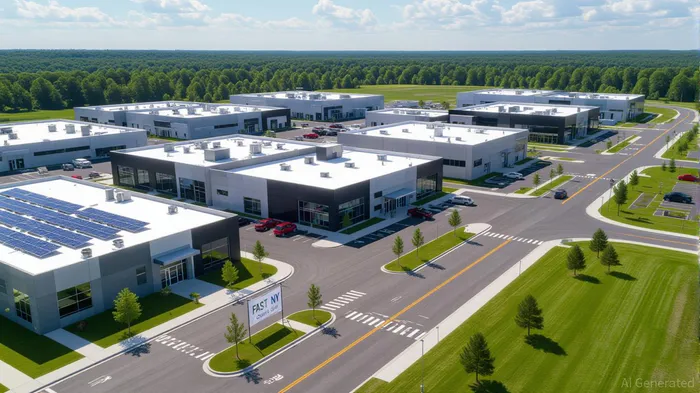
Governments are increasingly prioritizing infrastructure grants to accelerate site readiness for advanced manufacturing and logistics. The FAST NY program, administered by Empire State Development, allocates up to $400 million for pre-development activities and infrastructure upgrades, aiming to reduce barriers for industrial investors according to the program. In Webster, the $9.8 million grant is being deployed to modernize roads, sanitary sewer systems, and electrical infrastructure at the former Xerox campus and the 600 Ridge Road site according to local reports. These improvements are designed to create over one million square feet of industrial space by 2025, aligning with Governor Hochul's vision for sustainable economic growth.
The significance of such grants lies in their ability to de-risk investments. By addressing environmental remediation-such as groundwater treatment and controlled blasting at the Xerox site-the program ensures that brownfields become viable for high-value tenants. This reduces the time and cost typically associated with site preparation, making these locations attractive for industries like semiconductors, clean-tech, and dairy manufacturing according to local economic data.
Corporate Divestitures: Strategic Alignment with Public Investment
Corporate restructuring is another key driver. Xerox's decision to divest parts of its Webster campus aligns with broader trends of legacy companies shedding underutilized assets to focus on core operations. The timing of this divestiture is critical: infrastructure upgrades are expected to be completed by 2025, creating a synchronized pipeline for private-sector repurposing. For instance, the $650 million fairlife® dairy facility, an anchor project for the site, is projected to generate 250 jobs and leverage the newly upgraded infrastructure according to the governor's office.
This synergy between corporate strategy and public investment is not accidental. Xerox's redevelopment plan includes road redesigns (e.g., Orchard Street, Panama Road) and electrical master planning, ensuring that the subdivided parcels meet the demands of advanced manufacturing according to local planning documents. Such alignment reduces transaction costs and accelerates project timelines, making the site a magnet for industries seeking scalability and regulatory certainty.
Public-Private Partnerships: Incentives and Capital Catalysis
The FAST NY grant's terms further amplify its impact by incorporating mechanisms to attract private capital. While the program does not explicitly mention tax incentives, its focus on shovel-ready sites inherently reduces the need for upfront developer contributions. For example, the grant covers sanitary sewer upgrades and multimodal connectivity at the Northeast Area for Technology (NEAT) site, enabling developers to bypass costly pre-development hurdles according to local officials. This approach mirrors national trends where infrastructure grants act as "matchmakers," connecting underutilized assets with industries poised for growth according to industry analysis.
Moreover, the Webster project underscores the role of environmental remediation in de-risking investments. The EPA brownfield grant allocated for soil assessments at the 600 Ridge Road site ensures that redevelopment proceeds without unexpected liabilities according to environmental reports. Such layered support-combining state and federal funding-creates a robust framework for private-sector participation, particularly in high-capital industries like renewable energy and life sciences according to economic forecasts.
Investment Potential: Metrics and Market Dynamics
The financial implications for investors are compelling. Webster's industrial vacancy rate stands at 2%, a stark contrast to the national average of 7.5%. This scarcity, coupled with a 10.1% annual increase in home prices, signals strong demand for both residential and industrial assets according to real estate data. The fairlife® dairy facility alone is expected to inject $650 million into the local economy, creating a multiplier effect that extends beyond direct employment according to the governor's office.
For real estate investors, the adaptive-use potential of the Xerox campus is particularly noteworthy. The 300-acre site, once a symbol of corporate legacy, is being reimagined as a mixed-use hub with logistics, manufacturing, and commercial components according to local development plans. This diversification mitigates sector-specific risks while capitalizing on the growing demand for flexible industrial spaces.
Conclusion: A Blueprint for Future-Proof Investment
The Webster case study illustrates a broader paradigm shift in industrial real estate. Shovel-ready markets, supported by infrastructure grants and corporate divestitures, offer a unique confluence of risk mitigation, scalability, and long-term appreciation. As industries pivot toward localized production and sustainable practices, locations like Webster-where public and private interests are harmonized-will become increasingly attractive.
For investors, the lesson is clear: prioritize markets where infrastructure investment precedes development, where corporate restructuring aligns with public policy, and where environmental remediation is proactively managed. In such ecosystems, capital not only generates returns but also contributes to the resilience of regional economies.

Blending traditional trading wisdom with cutting-edge cryptocurrency insights.
Latest Articles
Stay ahead of the market.
Get curated U.S. market news, insights and key dates delivered to your inbox.
AInvest
PRO
AInvest
PRO



Comments
No comments yet