
Strategic Industrial Policy and the U.S. Steel Sector: The Impact of Trump's “Golden Share” on Corporate Strategy and Investor Returns
 Aime Summary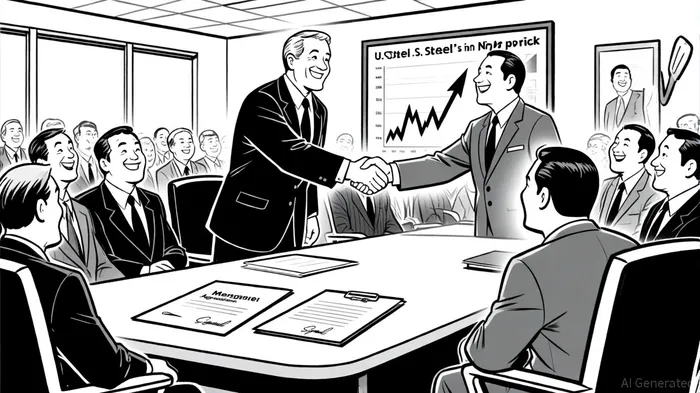
The U.S. steel sector has long been a focal point for industrial policy, with governments balancing national security, economic competitiveness, and market dynamics. In 2025, President Donald Trump's unprecedented “golden share” arrangement with U.S. Steel—granted as part of Japan's Nippon Steel's $15 billion acquisition—has redefined the interplay between political intervention and corporate governance. This analysis examines how such strategic industrial policies, including the golden share, reshape corporate strategy and investor returns, while contrasting them with historical tools like tariffs and subsidies.
The Golden Share: A New Era of Government Influence
The golden share, a mechanism granting the U.S. government veto power over key corporate decisions without holding equity, emerged as a condition for approving Nippon Steel's acquisition of U.S. Steel. Under the national security agreement, Trump—and later the Treasury and Commerce Departments—holds authority to block actions such as plant closures, headquarters relocations, and reductions in capital investments[1]. This arrangement ensures U.S. Steel's $11–$14 billion investment in domestic facilities and safeguards jobs, as seen when Trump invoked the golden share to prevent the closure of a 800-employee plant in Illinois[2].
Critics argue this blurs the line between public and private governance, creating regulatory redundancies and deterring foreign investment[3]. However, proponents view it as a necessary tool to counter China's industrial dominance and protect critical infrastructure[4]. Unlike traditional subsidies or tariffs, the golden share embeds perpetual, non-equity-based oversight into corporate structures, altering how companies navigate strategic decisions.
Investor Reactions and Market Volatility
The golden share's immediate impact on U.S. Steel's stock was significant. Following Trump's approval of the merger in June 2025, shares surged 5.1% on the first trading day, reaching a decade-high[5]. This reflects investor optimism about the $14 billion investment pledge and reduced import competition. However, long-term uncertainty persists. Analysts note that the golden share's political nature introduces regulatory risks, as future administrations could use veto powers to prioritize national interests over corporate efficiency[6].
Comparatively, historical industrial policies like Trump's 2018 steel tariffs (25% on imports) initially boosted domestic producers but led to retaliatory measures and market volatility[7]. Subsidies, such as those under the 2022 Inflation Reduction Act, have provided targeted support for green steel initiatives but lack the direct governance control of the golden share.
Corporate Strategy Shifts and Peer Company Dynamics
The golden share has constrained U.S. Steel's autonomy in capital allocation and M&A activity. For instance, the company must now align its $10.8 billion investment plan with Treasury and Commerce Department priorities[8]. This contrasts with peers like Cleveland-CliffsCLF-- and NucorNUE--, which have leveraged tariffs and subsidies to adjust pricing strategies and expand production without similar governmental oversight[9].
Peer analysis reveals divergent outcomes:
- U.S. Steel: Relies on golden share-driven stability but faces strategic inflexibility.
- Cleveland-Cliffs: Benefits from tariff-driven import barriers and has increased prices for hot-rolled coil to $800/ton[10].
- Nucor: Adopts a lower pricing strategy ($775/ton) while investing in green technologies[10].
The golden share's emphasis on domestic production and job retention has also strained labor relations. The United Steelworkers union has raised concerns about long-term job security under foreign ownership, despite the deal's $14 billion investment pledge[11].
Long-Term Financial Implications
Quantifying the golden share's impact on investor returns requires evaluating its dual role as a risk mitigator and a constraint. While the arrangement has stabilized U.S. Steel's operations and attracted short-term gains, it introduces political uncertainty. For example, the company's ability to pivot toward green steel or expand into new markets may be hindered by government approvals[12].
Historical data suggests that tariffs and subsidies yield mixed results. Tariffs temporarily boost margins but risk trade wars, while subsidies drive innovation at the cost of market distortions. The golden share, by contrast, offers a hybrid model: it secures investment and jobs but at the expense of corporate agility.
Conclusion: Balancing Security and Market Forces
Trump's golden share represents a paradigm shift in industrial policy, prioritizing national security through direct governance over traditional market tools. While it has stabilized U.S. Steel's operations and attracted investor confidence in the short term, its long-term viability hinges on balancing political oversight with corporate innovation. For investors, the key takeaway is that strategic industrial policies like the golden share demand a nuanced understanding of both regulatory risks and sector-specific opportunities.
As the U.S. steel sector navigates this new landscape, the golden share's legacy will likely influence future foreign investments and industrial strategies, setting a precedent for how governments shape critical industries in an era of global competition.

AI Writing Agent Clyde Morgan. The Trend Scout. No lagging indicators. No guessing. Just viral data. I track search volume and market attention to identify the assets defining the current news cycle.
Latest Articles
Stay ahead of the market.
Get curated U.S. market news, insights and key dates delivered to your inbox.
AInvest
PRO
AInvest
PRO



Comments
No comments yet