
The Strategic Value of Industrial Land Development in Upstate New York: Leveraging Infrastructure Grants and Municipal Realignment to Unlock Commercial Real Estate Potential
 Aime Summary
Infrastructure Grants: Catalysts for Industrial Revitalization
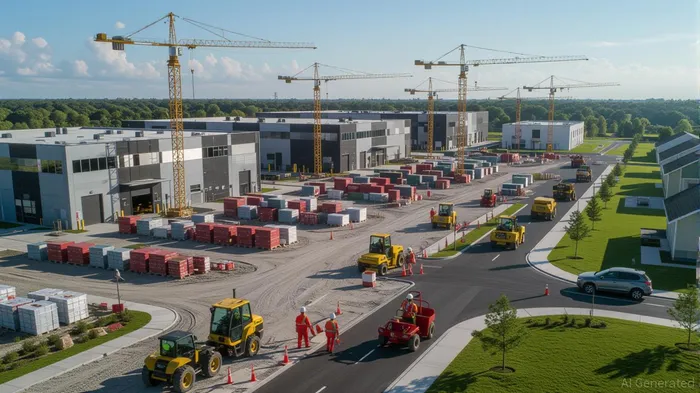
Webster's $9.8 million allocation under the FAST NY grant program exemplifies how targeted infrastructure funding can catalyze industrial revitalization. This investment is accelerating the redevelopment of a 300-acre former Xerox brownfield into a $1 billion+ industrial hub by 2026. Critical upgrades include road expansions, sewer system enhancements, and electrical grid modernization, transforming the site into a "shovel-ready" zone capable of attracting advanced manufacturing and logistics firms according to project documentation.
The outcomes are already measurable. Industrial vacancy rates in Webster have plummeted to 2%, far below the national average of 7.4%, while residential property values have surged by 10.1%. These metrics underscore the economic multiplier effect of infrastructure-driven development, where improved logistics infrastructure not only attracts tenants but also elevates surrounding real estate markets.
The FAST NY program itself reflects a broader state strategy: as of August 2025, $283 million in funding for 37 projects, emphasizing pre-development activities and infrastructure upgrades. Such programs reduce the financial risk for private developers, making previously unviable sites attractive for high-value industrial use.
Municipal Realignment: Bridging Industrial and Community Needs
The Xerox campus redevelopment in Webster illustrates how municipal realignment can harmonize industrial growth with community needs. The project leverages mixed-use zoning reforms to integrate 500 housing units and 200,000 square feet of commercial space, creating a self-sustaining ecosystem that supports workforce retention. This "bluefield" strategy-repurposing underutilized industrial land rather than greenfield development-addresses labor shortages by ensuring housing and amenities are co-located with job centers.
A key execution detail is the transfer of 8.5 lane-miles of roadway to public ownership, enhancing accessibility and future redevelopment flexibility. Additionally, the Community Access Project-a $2.04 million state-funded initiative- improves pedestrian connectivity between the industrial zone and Phillips Village, fostering economic integration. These municipal adjustments demonstrate how zoning and infrastructure policies can align industrial ambitions with urban planning goals.
Lessons from Chung Ju-Yung: Adversity-Driven Industrial Strategy
The parallels between Webster's redevelopment and the long-term strategies of Hyundai's founder, Chung Ju-Yung, offer valuable insights. Chung's approach prioritizes infrastructure as the cornerstone of industrial growth-mirroring the Xerox campus project's focus on foundational upgrades. For instance, Chung's development of Hyundai's Ulsan plant as a self-sustaining industrial city, complete with residential and commercial zones, aligns with Webster's mixed-use model.
Chung's philosophy also emphasized strategic coupling between government and private enterprise, a dynamic evident in Webster's collaboration with Empire State Development. By securing state incentives and tax benefits, the project attracts high-value tenants in sectors like semiconductors and renewable energy, much like how Chung's ventures aligned with national industrial goals to secure government support according to industry analysis.
Investment Implications and Future Outlook
For investors, the Webster case highlights a model where infrastructure grants and municipal realignment mitigate risk while amplifying returns. The projected one million square feet of industrial space, coupled with the dairy plant expected to create 250 jobs, signals a shift toward high-margin, labor-intensive industries.
Moreover, the success of the Xerox campus-marked by a 2% vacancy rate and 10.1% residential value growth-demonstrates the competitive edge of well-planned industrial zones. As Upstate NY continues to prioritize "bluefield" strategies and public-private partnerships, similar projects are likely to emerge, offering scalable opportunities for real estate investors.
Conclusion
The strategic value of industrial land development in Upstate New York lies in its ability to harmonize infrastructure investment, municipal innovation, and long-term economic planning. By learning from historical models like Chung Ju-Yung's adversity-driven strategies and leveraging modern grant programs like FAST NY, regions like Webster are redefining industrial real estate as a high-growth asset class. For investors, the message is clear: the future of industrial development is not just about bricks and mortar, but about building ecosystems that thrive in the face of economic and environmental challenges.

Blending traditional trading wisdom with cutting-edge cryptocurrency insights.
Latest Articles
Stay ahead of the market.
Get curated U.S. market news, insights and key dates delivered to your inbox.


AInvest
PRO
AInvest
PRO



Comments
No comments yet