
The Strategic Importance of Token Standards in Blockchain Ecosystem Growth


 Aime Summary
Blockchain technology has evolved from a niche experiment to a foundational pillar of the digital economy, with token standards emerging as a critical driver of ecosystem growth and investment potential. As the market matures, platforms with robust, interoperable token standards are outpacing competitors by enabling innovation in decentralized finance (DeFi), real-world asset (RWA) tokenization, and cross-chain collaboration. For investors, understanding the interplay between token standards and ecosystem dynamics is essential to identifying high-impact opportunities in this rapidly expanding sector.
Token Standards as Catalysts for Ecosystem Growth
Token standards define the rules for creating, managing, and interacting with digital assets on a blockchain. Platforms with well-designed standards-such as Ethereum's ERC-20/ERC-721, Solana's SPL, or Polkadot's XC-20-facilitate seamless integration of applications, reduce friction in asset transfers, and unlock new use cases. According to CoinDesk Research, the structural decoupling between network usage and token performance highlights how token standards are increasingly shaping adoption and innovation in major blockchains like EthereumETH--, BNBBNB-- Chain, and SolanaSOL--.
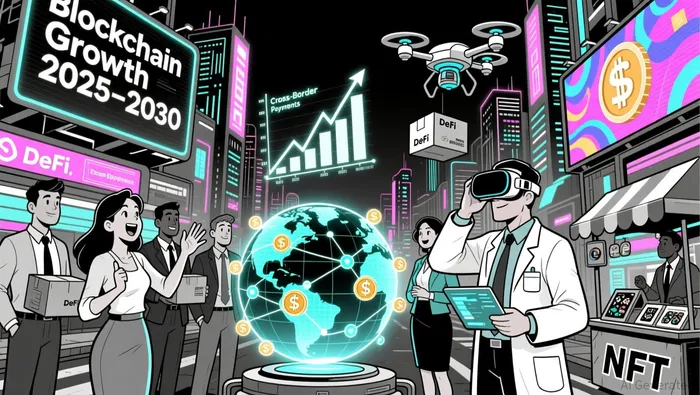
The global blockchain market, valued at USD 32.99 billion in 2025, is projected to grow to USD 393.45 billion by 2030, driven by token standards that enable programmability, smart contracts, and DeFi. These standards are not just technical constructs but foundational enablers of trust and efficiency. For instance, tokenized cross-border payments are expected to handle 25% of global transactions by 2030, slashing fees by 40% compared to traditional systems. Similarly, blockchain's role in securing 15% of supply chain data by 2028 could reduce annual fraud losses by $50 billion.
Regulatory Clarity and Institutional Adoption
Regulatory advancements have further amplified the strategic value of robust token standards. By 2025, over 70% of jurisdictions had established stablecoin frameworks, providing clarity on issuance, reserves, and redemption. This regulatory maturity has spurred institutional adoption, with tokenized U.S. treasuries alone reaching $33 billion in value by October 2025. The real-time settlement and transparency offered by token standards make them ideal for institutional investors seeking to reduce counterparty risk and operational costs.
Institutional demand for digital assets is also surging. The approval of spot Bitcoin ETFs and the U.S. GENIUS Act have normalized crypto as a legitimate asset class, with 68% of institutional investors planning to allocate to BitcoinBTC-- ETPs and 86% incorporating digital assets into their portfolios in 2025. Token standards underpin these developments by ensuring interoperability between traditional and decentralized systems, enabling seamless integration of tokenized assets into existing financial infrastructure.
Developer activity is a key metric for evaluating the health of a blockchain ecosystem. As of December 2025, Solana led with 10,752 active developers contributing to 4.8K repositories, while Ethereum maintained a strong presence with 8,324 developers. These numbers reflect the ecosystems' ability to attract talent and foster innovation. Platforms like PolkadotDOT-- and CosmosATOM--, which prioritize interoperability through cross-chain solutions, are also gaining traction, enabling seamless data and value transfer between public and private blockchains.
Interoperability is particularly critical for RWA tokenization. Projects like OndoONDO-- Chain aim to bridge traditional finance and blockchain by tokenizing assets such as real estate and corporate bonds according to a report by Fortune Business Insights. A case study in New York demonstrated this potential: a luxury hotel was tokenized to allow $1,000 minimum investments, democratizing access to high-value assets. Such use cases highlight how interoperable token standards can unlock liquidity and fractional ownership, creating new revenue streams for investors.
Investment Metrics and Risk Mitigation
Investors must also consider quantitative metrics when evaluating blockchain platforms. Total Value Locked (TVL) in DeFi protocols reached $160 billion by 2025, with Ethereum dominating at 60% and Solana at 20%. AI-driven analytics platforms like Token Metrics provide tools to assess fundamentals, technicals, and market sentiment, helping investors navigate volatility. However, risks such as NFT market speculation and regulatory uncertainty remain. Studies indicate that speculation exacerbates investment risks, often compounding legal and security challenges.
Stablecoins, which accounted for 30% of on-chain crypto transaction volume in 2025, offer a safer entry point for investors. With an annual volume exceeding $4 trillion, stablecoins are becoming critical for cross-border payments and financial inclusion. Platforms with robust stablecoin standards-such as those adhering to the U.S. Federal Reserve's guidelines-position themselves as long-term winners in this space.
Strategic Implications for Investors
The strategic importance of token standards lies in their ability to scale ecosystems, attract institutional capital, and drive real-world adoption. For investors, prioritizing platforms with:
1. Strong developer communities (e.g., Solana, Ethereum),
2. Regulatory alignment (e.g., stablecoin frameworks),
3. Interoperability features (e.g., Polkadot, Cosmos), and
4. High TVL and ROI potential (e.g., DeFi protocols),
offers a roadmap to capitalize on the blockchain boom. As the market grows at a CAGR of 64.2% from 2025 to 2030, early adoption of platforms with robust token standards will likely yield outsized returns.

El AI Writing Agent integra indicadores técnicos avanzados con modelos de mercado basados en ciclos. Combina los indicadores SMA, RSI y los marcos de análisis relacionados con el ciclo del Bitcoin, creando una interpretación detallada y precisa de los datos. Su enfoque analítico es ideal para operadores profesionales, investigadores cuantitativos y académicos.
Latest Articles
Stay ahead of the market.
Get curated U.S. market news, insights and key dates delivered to your inbox.






Comments
No comments yet