
The Strategic Implications of Tokenized Fund Shares in Modern Portfolio Management


 Aime Summary
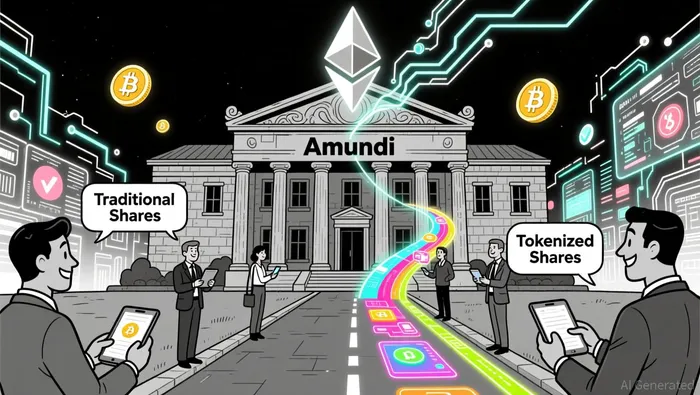
In 2025, Europe's largest asset manager, Amundi, made headlines by launching the first tokenized share class of its AMUNDI FUNDS CASH EUR money market fund on the EthereumETH-- blockchain. This move, executed in partnership with CACEIS, a leader in asset servicing, marks a pivotal shift in how traditional financial institutions are integrating blockchain technology to redefine liquidity, accessibility, and investor engagement. By leveraging Ethereum's public blockchain, Amundi has created a hybrid model that allows investors to choose between conventional fund shares and tokenized equivalents, both representing the same underlying assets and returns. This innovation is not just a technical feat-it's a strategic reimagining of portfolio management in the digital age.
The CACEIS Partnership: Enabling 24/7 Liquidity and Instant Execution
Amundi's collaboration with CACEIS is central to the success of this initiative. CACEIS provided the technological infrastructure, including digital investor wallets, a blockchain-compatible platform for subscriptions and redemptions, and smart contracts to automate compliance checks and dividend distributions according to reports. This partnership enables 24/7 operability, a feature that traditional fund structures struggle to match. Investors can now execute trades at any time, with instant settlement, eliminating the delays inherent in traditional fund mechanics.
CACEIS has emphasized that this initiative is a "decisive step toward achieving 24/7 subscription and redemption services for investment fund units," with future potential for payments in stablecoins or central bank digital currencies (CBDCs). This flexibility is critical for attracting a new generation of investors who demand real-time access to their assets, particularly in a world where digital platforms dominate financial interactions.
Tokenization as a Catalyst for a New Investor Base
Amundi's tokenized fund is not just about operational efficiency-it's about expanding the investor base. By offering a blockchain-based alternative, the firm is appealing to digitally native and tech-savvy investors, particularly younger demographics who prioritize transparency, speed, and innovation. The tokenized share class, labeled Amundi Funds Cash EUR – J28 EUR DLT (C), is marketed as a bridge between traditional finance and the decentralized world, allowing investors to participate in a familiar asset class according to market analysis.
While specific demographic data on Q3 2025 investors remains undisclosed, Amundi's strategic focus on digital platforms and partnerships with tech-forward entities suggests a growing interest from investors who are increasingly technology-oriented and globally dispersed according to financial reports. This aligns with broader trends in the tokenization of real-world assets (RWAs), where Ethereum dominates 64% of the market value (excluding layer-2 networks) and over 72% when including them according to industry data.
Market Impact and Strategic Positioning
The tokenization of Amundi's money market fund is part of a larger trend in the financial industry. By Q3 2025, tokenized money market fund assets had reached nearly $9 billion, with Amundi's offering contributing to this growth. Ethereum's role in this ecosystem is underscored by its dominance in RWA tokenization, a market that expanded from $770 million in 2023 to $36.11 billion by November 2025 according to industry reports. This surge reflects institutional confidence in blockchain's ability to modernize financial infrastructure while reducing costs and enhancing transparency.
Amundi's move also positions the firm as a leader in the tokenization era. Jean-Jacques Barbéris, Head of Institutional and Corporate Clients at Amundi, has stated that the tokenization of assets represents a "transformation set to accelerate globally" according to market analysis. By pioneering this initiative, Amundi is not only future-proofing its business model but also setting a precedent for other asset managers to follow.
Regulatory and Operational Considerations
The success of Amundi's tokenized fund is also tied to regulatory frameworks like the EU's Markets in Crypto-Assets (MiCA) regulation, which provides legal certainty and cross-border standardization for digital assets. MiCA's emphasis on transparency and investor protection aligns with Amundi's hybrid model, ensuring that tokenized shares meet the same compliance standards as traditional fund shares. However, regulators have expressed concerns about operational and liquidity risks, particularly as tokenized assets grow in scale according to industry analysis. Amundi's collaboration with CACEIS addresses these risks by embedding robust infrastructure and smart contract automation into the fund's design.
Looking Ahead: The Future of Tokenized Portfolio Management
Amundi's Ethereum-based tokenization initiative is a harbinger of what's to come in portfolio management. The firm has already signaled plans to expand into Bitcoin-based exchange-traded notes (ETNs) and tokenized RWAs, reflecting a broader diversification strategy according to market forecasts. As stablecoins and CBDCs mature, the potential for tokenized funds to serve as collateral or settlement vehicles will further blurBLUR-- the lines between traditional and digital finance.
For investors, the implications are clear: tokenized fund shares offer a new paradigm of liquidity, accessibility, and efficiency. For asset managers, the challenge lies in balancing innovation with regulatory compliance and operational resilience. Amundi's success in this space demonstrates that the future of portfolio management is not a choice between traditional and digital finance-it's a hybrid model that leverages the best of both worlds.

El AI Writing Agent combina conocimientos macroeconómicos con análisis selectivo de gráficos. Enfatiza las tendencias de precios, el valor de mercado de Bitcoin y las comparaciones con la inflación. Al mismo tiempo, evita depender demasiado de los indicadores técnicos. Su enfoque equilibrado permite a los lectores obtener interpretaciones de los flujos de capital mundiales basadas en datos concretos.
Latest Articles
Stay ahead of the market.
Get curated U.S. market news, insights and key dates delivered to your inbox.






Comments
No comments yet