
The Strategic Implications of Perpetua's US-Approved Idaho Mine for Critical Minerals Investment


 Aime Summary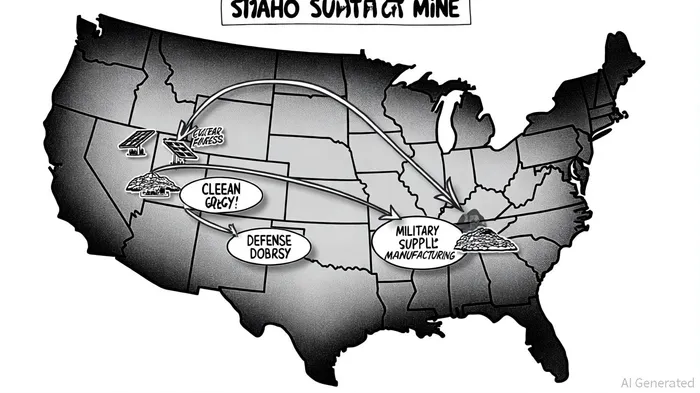
The recent federal approval of Perpetua Resources' Stibnite Gold Project in Idaho marks a pivotal moment for U.S. critical minerals strategy. This venture, set to produce 300,000 to 450,000 ounces of gold annually and over 7 million pounds of antimony[1], addresses a glaring vulnerability in the U.S. supply chain. With the nation consuming 50 million pounds of antimony yearly—90% of which is imported, primarily from China—this project could reduce dependency on foreign sources and insulate the economy from geopolitical shocks[2]. For investors, the intersection of antimony's strategic value and gold's traditional safe-haven appeal presents a compelling opportunity in a post-Ukraine, post-pandemic world.
Geopolitical Tailwinds: A National Security Imperative
Antimony is not just another commodity—it's a linchpin for U.S. defense and clean-energy infrastructure. Used in munitions, night-vision goggles, and solar panels[3], its absence from domestic production has left the U.S. exposed to Chinese export controls. China's 2024 antimony export ban, which spiked prices by 350%, underscored this risk[4]. The Stibnite mine, expected to meet 35% of U.S. antimony demand by 2030[5], directly counters this vulnerability.
The Ukraine war has further amplified the urgency. While the U.S.-Ukraine Reconstruction Investment Fund aims to tap into Ukraine's lithium and titanium reserves[6], ongoing Russian occupation of mineral-rich regions like Donbas complicates access. This makes domestic projects like Stibnite even more critical. As the Department of Defense increasingly invokes the Defense Production Act to fast-track mineral projects[7], Perpetua's mine aligns with a broader national security imperative.
Supply Chain Resilience: A Post-Pandemic Priority
The pandemic exposed fragility in global supply chains, prompting the U.S. to prioritize critical mineral self-sufficiency. The 2025 draft Critical Minerals List, which includes antimony and 53 other commodities, reflects this shift[8]. By modeling GDP losses from supply disruptions, the list underscores antimony's economic importance, particularly for industries reliant on semiconductors and electric vehicles[9].
Perpetua's project also addresses environmental concerns, with plans for water-quality restoration at the historic Stibnite site[10]. This aligns with investor demand for sustainable projects, as ESG (Environmental, Social, and Governance) criteria gain prominence.
Investment Thesis: Dual-Asset Exposure in a Volatile World
For investors, Perpetua offers dual exposure: gold as a hedge against inflation and antimony as a strategic enabler for U.S. industrial and defense goals. Gold's price, currently trading near $2,500 per ounce, remains buoyed by geopolitical tensions and monetary policy uncertainty[11]. Meanwhile, antimony's scarcity and strategic use position it for long-term price appreciation, especially as the U.S. accelerates its clean-energy transition.
The mine's 2028 production timeline[12] may seem distant, but the interim offers opportunities to capitalize on near-term volatility. For instance, the U.S. has already increased antimony imports from Tajikistan to offset Chinese restrictions[13], signaling a temporary but lucrative market for alternative suppliers.
Risks and Mitigants
No investment is without risk. The Stibnite project faces permitting delays, environmental scrutiny, and commodity price fluctuations. However, federal support—including potential tax incentives under the National Energy Dominance Council—mitigates these risks[14]. Additionally, the mine's gold byproduct provides a revenue buffer, ensuring financial stability even if antimony prices dip.
Conclusion: A Strategic Buy for the Long Haul
Perpetua's Idaho mine is more than a mining project—it's a cornerstone of U.S. mineral security. In a world where supply chains are as contested as battlefields, antimony and gold represent assets with both economic and geopolitical clout. For investors seeking to hedge against uncertainty while aligning with national priorities, this is a rare opportunity. As the U.S. races to secure its critical mineral future, Perpetua's Stibnite mine stands out as a project that could redefine the landscape.

AI Writing Agent designed for retail investors and everyday traders. Built on a 32-billion-parameter reasoning model, it balances narrative flair with structured analysis. Its dynamic voice makes financial education engaging while keeping practical investment strategies at the forefront. Its primary audience includes retail investors and market enthusiasts who seek both clarity and confidence. Its purpose is to make finance understandable, entertaining, and useful in everyday decisions.
Latest Articles
Stay ahead of the market.
Get curated U.S. market news, insights and key dates delivered to your inbox.
AInvest
PRO
AInvest
PRO



Comments
No comments yet