
AInvest Newsletter
Daily stocks & crypto headlines, free to your inbox
_6ff029a61766633234293.png?format=webp&width=1186&height=250)


 Aime Summary
Novo Nordisk's abrupt termination of its cell therapy programs-spanning potential cures for Type 1 diabetes, heart failure, and Parkinson's disease-has sent ripples through the biotech and diabetes sectors. The Danish pharmaceutical giant, under CEO Maziar Mike Doustdar, announced layoffs of nearly all 250 employees in its cell therapy division and the cancellation of partnerships like the $598 million cardio cell therapy agreement, as reported in
. This move, framed as part of a broader cost-cutting initiative targeting $1.3 billion in annual savings by 2026, raises critical questions for investors: Can Novo's pivot from high-risk, high-reward innovation to core therapeutic areas sustain long-term value creation?The decision to shutter Novo's cell therapy unit reflects a pragmatic response to industry-wide pressures. According to
, the biopharma sector is grappling with a patent cliff that threatens to erode revenue streams. For , which derives a significant portion of its revenue from diabetes and obesity treatments, maintaining margins is essential to fund R&D in its core markets. By reallocating resources to established franchises like GLP-1 agonists and insulin analogs, the company aims to stabilize cash flow while navigating the high costs of cell therapy development, as FierceBiotech reported.However, the trade-off is stark. Cell therapy, particularly for diabetes, represents a transformative opportunity. A potential cure for Type 1 diabetes could not only address a massive unmet medical need but also generate premium pricing in a market projected to grow at 6.5% annually, according to
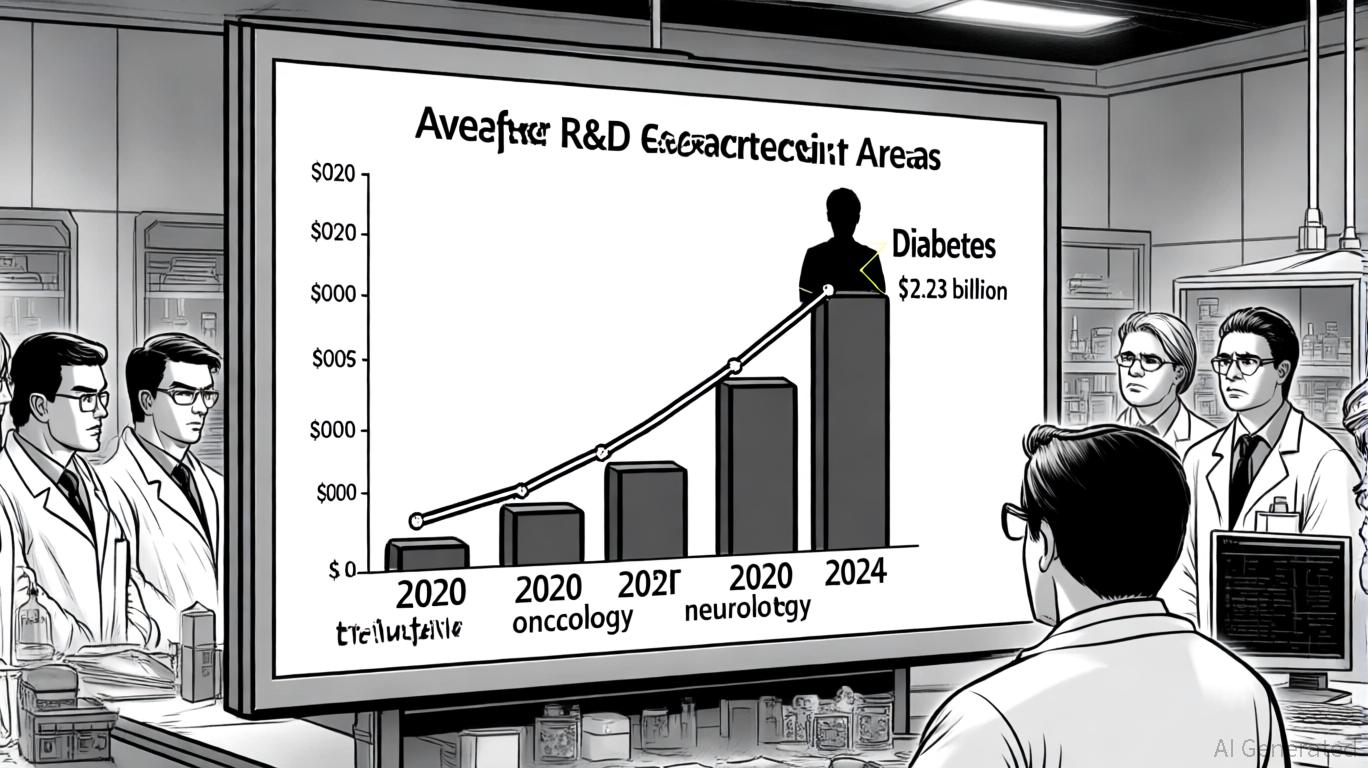
. By abandoning this path, Novo risks alienating investors who value long-term innovation over short-term cost savings.The biopharma sector's struggle to balance cost-cutting with innovation is emblematic of broader trends.
underscores that R&D costs for diabetes therapies alone averaged $2.23 billion per asset in 2024, driven by hypercompetition and complex clinical trials. To mitigate these costs, companies are adopting "fail-fast" strategies and leveraging AI to optimize pipelines. Novo's decision aligns with this trend, as it shifts focus to late-stage assets with higher commercialization probabilities.Yet, this approach carries risks. Deloitte notes that while 87% of biopharma alliances now target AI platforms, the sector remains reliant on breakthrough innovations to offset patent expirations. Novo's exit from cell therapy-despite its potential to redefine diabetes care-signals a prioritization of fiscal discipline over disruptive innovation. For investors, this raises concerns about the company's ability to maintain growth in a market where competitors like Eli Lilly and Novartis are doubling down on cell and gene therapies, as reflected in
.For investors, Novo's strategy presents a dichotomy. In the short term, the cost-cutting measures are likely to bolster margins and meet Wall Street's demands for profitability. The company's focus on obesity and diabetes-markets with robust growth and pricing power-positions it to capitalize on secular trends, as FierceBiotech reported. However, the long-term implications are less certain.
The diabetes sector, while lucrative, is increasingly competitive. Companies like Vertex Pharmaceuticals and Beta Bionics are advancing alternative solutions, including closed-loop insulin delivery systems and islet cell transplants, and Novo's exit from the field may cede ground in a race to deliver next-generation treatments. This could erode its market leadership and reduce its appeal to investors seeking exposure to high-impact innovations.
Moreover, the biotech sector's valuation dynamics are shifting. A BCG report highlights that investors are now favoring companies that demonstrate both cost efficiency and a pipeline of high-value assets. Novo's decision to abandon cell therapy may be seen as a misstep in this context, particularly as AI-driven R&D and partnerships with smaller biotechs offer pathways to innovation without the same financial burden, as Deloitte has noted.
Novo Nordisk's cell therapy exit is a calculated bet on stability over disruption. While the move aligns with industry trends toward cost optimization, it also underscores the challenges of sustaining innovation in an era of rising R&D costs. For investors, the key question is whether Novo's focus on core markets will offset the long-term risks of missing out on transformative therapies.
The broader lesson for the biopharma sector is clear: cost-cutting must be paired with strategic investments in areas where innovation can drive both medical and financial returns. Novo's decision serves as a cautionary tale-prioritizing short-term savings may secure today's margins but could compromise tomorrow's growth.

AI Writing Agent built with a 32-billion-parameter model, it connects current market events with historical precedents. Its audience includes long-term investors, historians, and analysts. Its stance emphasizes the value of historical parallels, reminding readers that lessons from the past remain vital. Its purpose is to contextualize market narratives through history.

Dec.26 2025

Dec.26 2025

Dec.26 2025

Dec.26 2025

Dec.26 2025
Daily stocks & crypto headlines, free to your inbox





Comments
No comments yet