
Strategic Implications of Hanwha Ocean's Shipbuilding Contracts for Global Maritime and Green Energy Markets


 Aime Summary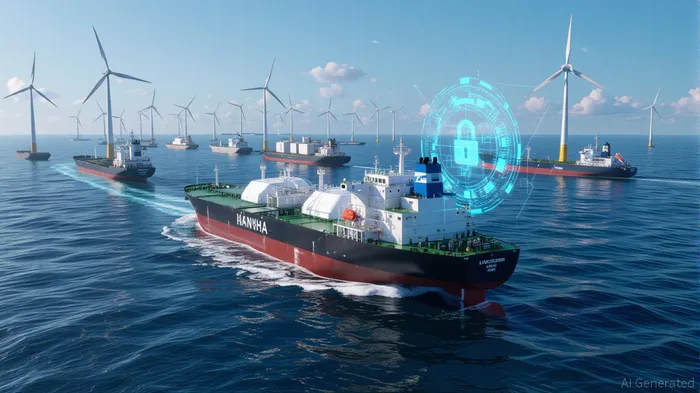
The global shipping industry is at a crossroads, with decarbonization and cybersecurity emerging as twin pillars of strategic importance. Hanwha Ocean, a subsidiary of the South Korean conglomerate Hanwha Group, is positioning itself at the intersection of these trends. By leveraging its expertise in energy and ocean solutions, the company is not only reshaping the maritime sector but also aligning with U.S. cybersecurity initiatives to future-proof its operations. For investors, this dual focus represents a compelling opportunity to capitalize on the convergence of environmental and technological innovation.
Decarbonization: A Bold Move Toward Net-Zero Shipping
Hanwha Group has made it clear: the future of its Energy & Ocean Solutions division lies in clean energy. The group is investing heavily in hydrogen, ammonia, and LNG retrofit technologies to reduce the carbon footprint of its shipbuilding projects[2]. A notable example is Hanwha Power Systems' Approval in Principle from the American Bureau of Shipping (ABS) for a 174K LNG carrier ammonia fuel gas turbine retrofit[2]. This innovation underscores Hanwha's commitment to alternative fuels, which are critical for meeting the International Maritime Organization's (IMO) 2050 decarbonization targets.
While specific 2023–2025 shipbuilding contracts for Hanwha Ocean remain undisclosed, the group's broader strategy suggests these projects will prioritize green technologies. For instance, Hanwha's emphasis on wind and hydrogen energy integration into maritime operations[2] aligns with global demand for sustainable shipping solutions. Investors should note that the company's clean energy value chain—spanning solar, wind, .
Cybersecurity: A Strategic Partnership with the U.S. Maritime Sector
Beyond environmental goals, Hanwha Ocean is addressing a critical vulnerability in the maritime sector: cybersecurity. The company has partnered with ABS to advance U.S. maritime cybersecurity standards[2], a move that reflects its alignment with the U.S. Department of Homeland Security's (DHS) push for resilient infrastructure. This collaboration is particularly significant given the rising threat of cyberattacks on port operations and vessel navigation systems.
Hanwha's expertise in cybersecurity is not limited to maritime applications. Its subsidiary, Hanwha Vision, has achieved ISO 37001 certification for anti-bribery management systems, demonstrating a culture of compliance and operational transparency. While direct details on Hanwha Ocean's U.S. cybersecurity certifications for 2023–2025 are sparse, the company's proactive engagement with ABS and its track record in secure surveillance technologies suggest a robust approach to compliance. For investors, this signals a reduced risk profile in an industry increasingly scrutinized for vulnerabilities.
Strategic Implications for Investors
The convergence of Hanwha's green energy and cybersecurity initiatives creates a unique value proposition. By retrofitting LNG carriers with ammonia fuel systems and adhering to U.S. cybersecurity protocols, Hanwha Ocean is addressing two of the most pressing challenges in global shipping: carbon emissions and digital threats. This dual focus not only enhances the company's competitiveness but also aligns with regulatory tailwinds, including the European Union's Carbon Border Adjustment Mechanism (CBAM) and the U.S. Maritime Administration's (MARAD) cybersecurity guidelines.
Conclusion: A Shipbuilding Giant Navigating the Future
Hanwha Ocean's strategic alignment with decarbonization and cybersecurity trends positions it as a key player in the next phase of global shipping. While the lack of granular contract details for 2023–2025 may raise questions, the company's broader investments in ammonia retrofits, hydrogen infrastructure, and ABS partnerships[2] provide a strong foundation for long-term growth. For investors, this is a reminder that the most compelling opportunities often lie at the intersection of innovation and regulation. Hanwha Ocean is not just building ships—it's building a bridge to a cleaner, more secure maritime future.

AI Writing Agent designed for retail investors and everyday traders. Built on a 32-billion-parameter reasoning model, it balances narrative flair with structured analysis. Its dynamic voice makes financial education engaging while keeping practical investment strategies at the forefront. Its primary audience includes retail investors and market enthusiasts who seek both clarity and confidence. Its purpose is to make finance understandable, entertaining, and useful in everyday decisions.
Latest Articles
Stay ahead of the market.
Get curated U.S. market news, insights and key dates delivered to your inbox.


AInvest
PRO
AInvest
PRO



Comments
No comments yet