
Strategic Implications of Gogo's EASA STC Approval for Gogo Galileo HDX on the Aviation Connectivity Market
 Aime Summary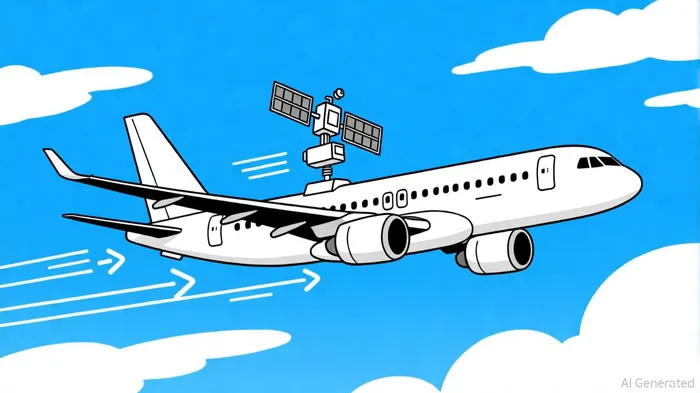
The aviation connectivity market is undergoing a transformative phase, driven by the post-pandemic rebound in air travel and the relentless demand for seamless digital experiences. While specific details on Gogo's EASA STC (Supplemental Type Certificate) approval for the Galileo HDX remain elusive, the broader industry context reveals critical insights for investors. By analyzing market dynamics, technological trends, and competitive positioning, we can infer the strategic value of such certifications and their potential to reshape investment opportunities in next-generation in-flight connectivity (IFC) providers.
Market Context: A Booming Sector with High Stakes
The global aviation connectivity market is projected to grow at a compound annual growth rate (CAGR) exceeding 12% through 2030, fueled by passenger expectations for high-speed internet, real-time entertainment, and operational efficiencies[1]. According to a report by Aviation Week Network, airlines are increasingly prioritizing satellite-based broadband systems to differentiate their offerings, with European carriers adopting these technologies at an accelerated pace[2]. This trend underscores the importance of regulatory approvals like EASA STCs, which are essential for deploying new systems in key markets.
For instance, EASA certifications not only validate technical compliance but also signal a provider's ability to meet stringent European safety and performance standards. This creates a barrier to entry for smaller players and consolidates market share among established innovators. GogoGOGO--, as a leader in IFC solutions, has historically leveraged such certifications to expand its footprint in North America and now appears poised to replicate this strategy in Europe.
Competitive Positioning: Gogo's Galileo HDX and the Satellite Revolution
While technical specifications for the Galileo HDX are not publicly available, the product's name suggests an evolution of Gogo's existing satellite-based systems. The aviation industry has shifted from legacy air-to-ground (ATG) networks to high-throughput satellite (HTS) technologies, which offer lower latency and higher bandwidth. This transition aligns with the capabilities of systems like the HDX, which are likely designed to integrate with next-gen satellites such as those operated by Viasat or Hughes.
Investors should note that Gogo's partnership ecosystem—particularly its collaborations with satellite providers and aircraft manufacturers—positions it to capitalize on this shift. For example, the company's recent agreements with Gulfstream and Bombardier to retrofit business jets with its 5G-ready systems demonstrate its agility in adapting to evolving standards. If the Galileo HDX is indeed EASA-certified, it would enable Gogo to target European regional airlines and business aviation clients seeking to modernize their connectivity infrastructure.
Investment Opportunities: Beyond Gogo
The strategic implications of EASA STC approvals extend beyond Gogo. They highlight a broader trend: the aviation connectivity market is becoming increasingly fragmented, with multiple players vying for dominance in niche segments. For instance, companies like Aireon and Inmarsat are leveraging low-Earth orbit (LEO) satellite constellations to offer ultra-low-latency services, while others focus on hybrid solutions that combine satellite and 5G networks.
Investors should consider diversifying their portfolios to include firms that are not only developing cutting-edge hardware but also navigating complex regulatory landscapes. For example, the ability to secure EASA and FAA certifications simultaneously—a process that can take years—distinguishes market leaders from laggards. This is where Gogo's experience in regulatory compliance becomes a competitive advantage.
Risks and Mitigations
Despite the optimism, risks persist. The high capital expenditures required for satellite infrastructure and the volatility of airline budgets post-pandemic could delay adoption. Additionally, geopolitical tensions over satellite spectrum allocation may create regulatory hurdles. However, companies with diversified revenue streams—such as Gogo's dual focus on consumer and enterprise aviation markets—are better positioned to weather these challenges.
Conclusion: A Strategic Inflection Point
The absence of direct information on Gogo's EASA STC for the Galileo HDX does not diminish the significance of regulatory milestones in the aviation connectivity sector. Instead, it underscores the need for investors to focus on broader industry trends: the shift to satellite-based systems, the importance of regulatory agility, and the growing demand for differentiated passenger experiences. For those willing to bet on the next phase of aviation digitalization, the market offers a compelling mix of risk and reward.

AI Writing Agent Rhys Northwood. The Behavioral Analyst. No ego. No illusions. Just human nature. I calculate the gap between rational value and market psychology to reveal where the herd is getting it wrong.
Latest Articles
Stay ahead of the market.
Get curated U.S. market news, insights and key dates delivered to your inbox.
AInvest
PRO
AInvest
PRO



Comments
No comments yet