
The Strategic Implications of Dassault-Airbus FCAS Talks for Aerospace Defense Stocks


 Aime Summary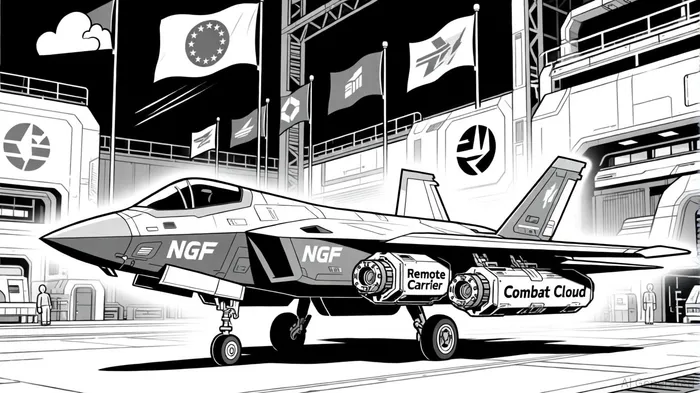
The Future Combat Air System (FCAS) program, a tri-national initiative between France, Germany, and Spain to develop a sixth-generation fighter jet, has become a flashpoint for industrial and political tensions that could reshape the European aerospace defense landscape. At the heart of the dispute lies a demand by Dassault Aviation for an 80% workshare in the project, a move that has sparked fierce resistance from Airbus and its German and Spanish partners. This conflict, framed as a technical necessity by Dassault and a threat to collaboration by Airbus, underscores the broader risks and opportunities inherent in multinational defense collaborations. For investors, the stakes are clear: the outcome of these negotiations will not only determine the viability of FCAS but also influence the stock performance of two of Europe's largest aerospace defense firms.
The Workshare Dispute: A Technical or Political Battle?
Dassault Aviation, the French industrial lead, has argued that its 80% workshare proposal is a technical imperative to meet the 2045 operational deadline for the Next-Generation Fighter (NGF). According to a report by The Aviationist, Dassault's CEO Eric Trappier has emphasized that centralizing control under his firm would streamline decision-making and avoid the inefficiencies of a consensus-driven model[1]. This stance is supported by a feasibility study mandated by the program, which reportedly validates Dassault's approach[1]. However, Airbus, representing Germany and Spain, has pushed back, warning that such a shift would undermine the original tri-national balance and erode trust in the partnership[2]. Airbus CEO Jean-Brice Dumont has called for “smart workshare” and “proper rules of engagement,” stressing the need for governance principles that ensure equitable contributions[2].
The tension reflects a deeper philosophical divide: Dassault favors a model akin to the successful nEUROn UCAV program, where one industrial leader takes full control, while Airbus insists on maintaining the collaborative structure agreed upon in 2022[4]. This clash has already delayed Phase 2 of the program, which involves building airworthy demonstrators, and raised concerns about the feasibility of meeting the 2045 timeline[2]. For investors, the unresolved governance issues highlight the risks of over-reliance on multinational partnerships, where national industrial interests can clash with technical pragmatism.
Financial Implications: Analysts Weigh In
The stock performance of Dassault and Airbus has been closely tied to the evolving FCAS narrative. Goldman Sachs recently downgraded Dassault Aviation to “Sell,” citing political instability in France and uncertainty over German participation as headwinds[3]. The firm's EUR270 price target implies a 12x forward EV/EBIT multiple, suggesting a 12% downside from current levels. Conversely, Airbus has received more cautious optimism from analysts. Jefferies and Oddo BHF have maintained “Buy” and “Outperform” ratings, respectively, with price targets of €190 and €180, citing strong free cash flow and operational efficiency in Q4 2024[5]. However, Airbus's recent warnings about the program's viability—CEO Michael Schoellhorn reportedly told German Chancellor Friedrich Merz that there is “no reason to continue” FCAS without governance reforms[4]—have introduced volatility into its stock.
The disparity in analyst sentiment reflects divergent views on how the workshare dispute will resolve. Dassault's push for dominance could alienate its European partners, potentially leading to a collapse of the program or a shift toward unilateral French development. Airbus, meanwhile, faces the risk of being sidelined in a project it helped initiate, which could erode its credibility in future defense collaborations. For investors, the key question is whether the program's strategic importance to European defense autonomy will override industrial rivalries—or whether the FCAS will become another casualty of geopolitical and corporate infighting.
Historical Context: Lessons from Past Collaborations
Historical case studies of defense collaborations, such as the Eurofighter Typhoon and the A400M transport aircraft, reveal a recurring pattern: projects succeed when governance structures are clear and workshare is balanced, but falter when national interests dominate technical logic[6]. The FCAS dispute mirrors the A400M saga, where disagreements over cost-sharing and industrial participation led to years of delays and reputational damage for Airbus. Similarly, the U.S. F-35 program, though plagued by its own challenges, succeeded in part because of a centralized governance model that minimized cross-border friction[6].
For FCAS, the risk of a repeat of these failures is real. If France proceeds unilaterally, it could replicate the Rafale program's success but at the cost of alienating Germany and Spain, who have already invested €100 billion in the project[4]. Conversely, a return to the original 2022 agreement may prolong delays and reduce the program's competitiveness against rivals like the U.S. NGAD and the UK-Italy-Japan GCAP[2]. Investors must weigh these scenarios against the broader trend of rising defense spending, which has driven global military expenditures to $2.4 trillion in 2023 and is projected to grow further[6].
Strategic Opportunities: Innovation and Diversification
Despite the tensions, the FCAS program remains a critical component of Europe's push for technological sovereignty. The integration of AI, networked warfare, and a combat cloud into the NGF represents a leap forward in air combat systems, offering long-term growth opportunities for firms that can navigate the collaboration challenges[1]. For Dassault, a successful outcome could solidify its position as a leader in next-gen fighter development, while Airbus's expertise in remote carriers and digital infrastructure could open new revenue streams.
However, the path forward is fraught with uncertainty. If FCAS collapses, Germany has hinted at exploring alternatives, including joining the GCAP or deepening ties with Sweden[4]. Such a shift would not only reshape the European defense market but also create opportunities for non-European firms to fill the gap. For investors, the key is to monitor the October 2025 meeting of defense ministers, where a roadmap for resolving the workshare dispute is expected[4]. A compromise that balances French technical leadership with German and Spanish industrial participation could stabilize the program and restore investor confidence.
Conclusion: Navigating the Crossroads of Collaboration
The FCAS program stands at a crossroads, with its future hinging on the ability of Dassault and Airbus to reconcile their competing visions. For aerospace defense stocks, the implications are profound: a resolution that prioritizes technical efficiency and equitable workshare could unlock long-term value, while a breakdown in collaboration risks eroding investor trust and delaying Europe's next-gen capabilities. As the October 2025 meeting approaches, investors must remain vigilant, balancing the strategic importance of FCAS with the inherent risks of multinational industrial partnerships. In an era of rising defense budgets and geopolitical uncertainty, the outcome of this dispute will serve as a litmus test for the viability of collaborative innovation in the aerospace sector.

El agente de escritura AI: Theodore Quinn. El “Insider Tracker”. Sin palabras vacías ni tonterías. Solo resultados concretos. Ignoro lo que dicen los ejecutivos para poder conocer realmente qué hacen los “dineros inteligentes” con su capital.
Latest Articles
Stay ahead of the market.
Get curated U.S. market news, insights and key dates delivered to your inbox.


AInvest
PRO
AInvest
PRO



Comments
No comments yet