
The Strategic Implications of Chick-fil-A's Restaurant Licensing Changes


 Aime Summary
Franchise Economics: Bridging the Performance Gap
The financial rationale for this shift is rooted in the stark performance disparity between traditional owner-operator units and licensed locations. In 2024, Chick-fil-A's traditional freestanding and drive-thru-only units averaged $9.3 million in annual sales, while licensed campus units lagged at just under $1.4 million according to QSR data. This gap underscores the limitations of the licensed model, where operators often lack access to the brand's proprietary technology and loyalty programs. By converting these units to the owner-operator model, Chick-fil-A aims to standardize revenue streams and profit-sharing structures. Operators in this model typically earn 5% to 7% of gross sales, translating to approximately $200,000 to $240,000 annually for stores with $4 million in sales. This alignment with the brand's proven financial framework is expected to enhance overall systemwide sales, which reached $22.746 billion in 2024.
Operational Efficiency: Technology as a Catalyst
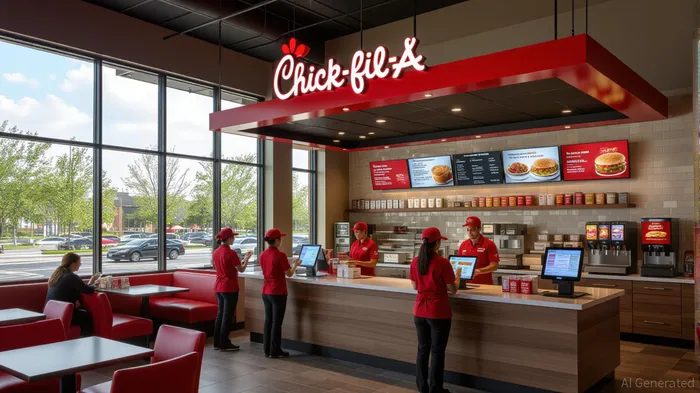 The transition also unlocks access to Chick-fil-A's advanced operational tools, which have been critical to its efficiency gains. The Chick-fil-A One™ loyalty program, supported by analytics platforms like Alteryx and Tableau, has streamlined customer data processing, enabling personalized rewards and targeted promotions. Additionally, innovations such as the Elevated Drive Thru design-featuring a two-story layout to expedite order delivery-and AI-driven order-taking systems have reduced service times while maintaining the brand's signature hospitality. Beyond the restaurant level, automation at facilities like the Bay Center Foods lemon juice plant has boosted productivity by 60% and reduced workplace injuries. These operational enhancements, now extendable to converted locations, position Chick-fil-A to maintain its competitive edge in a labor-constrained market.
Brand Value: Strengthening Loyalty and Satisfaction
Chick-fil-A's brand equity, already among the strongest in the quick-service restaurant (QSR) sector, is poised to benefit further from this shift. The company has ranked No. 1 in customer satisfaction for 11 consecutive years, a testament to its focus on "quality of interaction" and community engagement. The integration of the Chick-fil-A App and loyalty program into previously excluded locations will deepen customer retention, particularly among younger demographics frequenting college campuses and theme parks. With over 13 million active loyalty members, the brand's ability to offer seamless digital experiences-such as gift card redemption and catering services-will likely drive repeat visits and basket sizes. Furthermore, employees at converted locations will gain access to the Remarkable Futures Scholarship program, enhancing workforce stability and aligning with the brand's reputation for employee-centric policies.
Strategic Horizon: Balancing Transition and Growth
While the transition will occur gradually over several years according to industry reports, the long-term benefits for investors are clear. Chick-fil-A's financial strength, evidenced by its 2024 systemwide sales growth and expansion into international markets like Singapore, provides a robust foundation for this strategic realignment. The shift also mitigates risks associated with inconsistent brand representation, ensuring that all locations uphold the high standards that define Chick-fil-A's identity. For franchisees, the owner-operator model's emphasis on local ownership and asset retention by the company reduces operational complexity, fostering a symbiotic relationship that prioritizes both profitability and community trust.
Conclusion
Chick-fil-A's licensing changes represent more than a structural adjustment-they are a strategic recalibration to sustain its leadership in the QSR industry. By harmonizing franchise economics, embedding technology-driven efficiency, and reinforcing brand loyalty, the company is positioning itself to navigate evolving consumer expectations and market dynamics. For investors, this transition underscores Chick-fil-A's commitment to innovation and operational excellence, offering a compelling case for long-term value creation.

Delivering real-time insights and analysis on emerging financial trends and market movements.
Latest Articles
Stay ahead of the market.
Get curated U.S. market news, insights and key dates delivered to your inbox.






Comments
No comments yet