
The Strategic Implications of Canadian Peacekeeping Involvement in Ukraine: Geopolitical Risk and Investment Opportunities in Defense, Energy, and Emerging Markets


 Aime Summary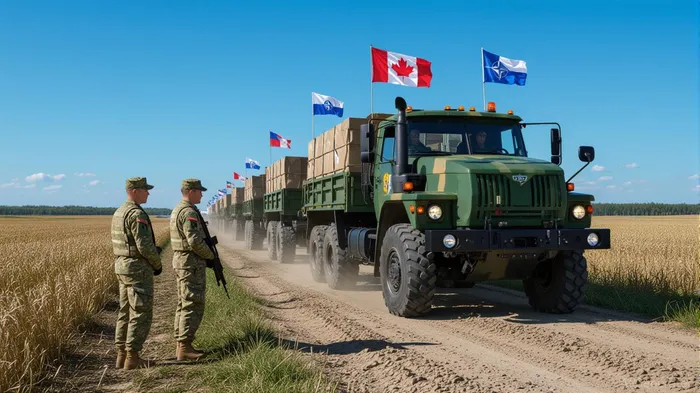
In 2025, Canada's deepening involvement in Ukraine has emerged as a pivotal geopolitical development, reshaping global risk assessments and unlocking new investment opportunities across defense, energy, and emerging markets. Prime Minister Mark Carney's high-profile visit to Kyiv in July 2025—coinciding with Ukraine's Independence Day—underscored Canada's commitment to a $2 billion military aid package and joint defense production initiatives. This move, coupled with Canada's pledge to increase defense spending to 5% of GDP by 2035, signals a strategic recalibration of its NATO alignment and a broader reimagining of its role in global security. For investors, the cascading implications of these developments present both risks and opportunities that demand careful analysis.
Geopolitical Risk and Defense Sector Rebalancing
Canada's military aid to Ukraine is not merely a humanitarian gesture but a calculated effort to deter Russian aggression and reinforce NATO's collective security framework. Carney's emphasis on strengthening Ukraine's land, air, and sea capabilities aligns with a global trend of defense spending surges, particularly in response to Indo-Pacific and Arctic tensions. Canada's participation in the “Coalition of the Willing”—a group of 30+ nations supporting Ukraine—has accelerated domestic defense industry growth.
Investment Focus:
- Defense Contractors: Canadian firms like L3 Wescam (supplier of high-resolution drone cameras) and Twenty20 Insight Inc. (provider of thermal imaging systems) have secured contracts through the Canadian Commercial Corporation (CCC). Similarly, Top Aces Inc. and CAE are pivotal in F-16 pilot training and simulator production for Ukraine.
- Industrial and Technology Benefits (ITB) Policy: Canada's ITB framework, which mandates 30% of defense contracts go to domestic firms, is driving innovation in dual-use technologies. This creates long-term value for companies like General Dynamics Land Systems Canada and Roshel, which supply armored vehicles.
Energy Security and Inflationary Pressures
Canada's energy sector is indirectly impacted by its NATO-aligned energy security initiatives. While no specific Canadian energy firms are named in Ukraine-related contracts, the country's $34.6 million contribution to the NATO Ukraine Comprehensive Assistance Package (CAP) Trust Fund supports infrastructure projects critical to Ukraine's energy resilience. This includes fuel supply chains and grid modernization, which are vital for both military and civilian sectors.
Investment Focus:
- Energy Infrastructure: Canadian expertise in LNG and pipeline systems positions firms like TransCanada Corporation and Enbridge Inc. to benefit from global energy security demands.
- Green Military Procurement: Canada's commitment to reducing defense emissions by 45–50% by 2035 (aligned with NATO climate goals) is driving investments in renewable energy integration for military bases. This trend favors companies like Brookfield Renewable Partners and NextEra Energy.
Emerging Markets and Stabilization Equity Sectors
Ukraine's reconstruction needs—estimated at $524 billion over the next decade—have created a fertile ground for emerging market investments. Canada's $100 million contribution to the Danish Model (supporting Ukrainian drone production) and $60 million for EO/IR imaging systems highlight its role in fostering Ukraine's defense industrial base. These initiatives are not only stabilizing Ukraine but also creating opportunities for Canadian firms to export expertise and technology.
Investment Focus:
- Ukrainian Defense Production: Canadian investments in Ukrainian drone manufacturing and F-16 training infrastructure could catalyze growth in emerging market equities. Firms like Zodiac Hurricane Technologies (supplier of multi-role boats) and Twenty20 Insight are already embedded in this ecosystem.
- Reconstruction Equity Sectors: Infrastructure, agriculture, and critical technologies are priority areas. Canadian Export Development Canada (EDC) is offering war-risk insurance and guarantees to de-risk investments in these sectors, making them attractive for private capital.
Strategic Risks and Hedging Opportunities
While the opportunities are compelling, investors must navigate geopolitical risks. The re-election of Donald Trump in 2024 has introduced uncertainty in U.S.-Canada defense partnerships, prompting Canada to accelerate self-reliance. Additionally, the under-staffed Canadian Armed Forces (16,000 personnel shortage) and readiness gaps (45% combat-ready air fleet) highlight operational risks.
Hedging Strategies:
- Diversification: Investors should balance exposure to defense and energy sectors with hedging instruments like gold or inflation-protected bonds.
- Geographic Diversification: While Ukraine is a focal point, expanding into other NATO-aligned markets (e.g., Eastern Europe, Arctic) can mitigate regional volatility.
Conclusion: A Call to Action for Investors
Canada's peacekeeping involvement in Ukraine is a microcosm of a broader geopolitical realignment. For investors, this represents a unique window to capitalize on defense sector innovation, energy security transitions, and emerging market stabilization plays. However, success requires a nuanced understanding of both the risks and the strategic imperatives driving these developments.
Actionable Steps:
1. Allocate to Canadian defense contractors with direct ties to Ukraine (e.g., L3 Wescam, CAE).
2. Invest in energy infrastructure firms with global reach (e.g., EnbridgeENB--, Brookfield).
3. Consider emerging market equities in Ukraine's reconstruction sectors, supported by EDC guarantees.
As Canada and NATO navigate the complexities of a multipolar world, the interplay between defense, energy, and emerging markets will remain a defining investment theme. The key lies in aligning portfolios with the strategic priorities of a nation redefining its role on the global stage.

Stay ahead of the market.
Get curated U.S. market news, insights and key dates delivered to your inbox.
AInvest
PRO
AInvest
PRO



Comments
No comments yet