
Strategic Implications of Biglari Holdings' 2026 Annual Shareholders Meeting for Investors


 Aime Summary
The 2026 Annual Shareholders Meeting for Biglari Holdings Inc.BH-- (NYSE: BH), scheduled for April 8, 2026, at the Majestic Theatre in San Antonio, Texas, will serve as a critical juncture for investors to assess the company's capital allocation strategies and corporate governance under the long-standing leadership of Sardar Biglari. As the founder, chairman, and CEO, Biglari retains centralized control over all major investment and operational decisions, a structure that has both bolstered and challenged the company's performance in recent years. This analysis explores the strategic implications of the meeting, focusing on capital efficiency, governance dynamics, and the broader risks and opportunities for shareholders.
Capital Allocation: A Double-Edged Sword
Biglari Holdings' capital allocation strategy has historically been defined by its founder's aggressive reinvestment in core assets and speculative ventures. For instance, the company's Q2 2025 earnings report highlighted a $50.9 million net profit, driven by a $58.5 million gain from investment partnerships and a 10.7% same-store sales increase at Steak n Shake. However, these gains mask a deeper issue: the company's Return on Capital Employed (ROCE) has plummeted to 2.6% for the trailing twelve months, far below the 11% industry average for the hospitality sector. This metric suggests that despite reinvestment, Biglari HoldingsBH-- has struggled to generate returns commensurate with its capital base.
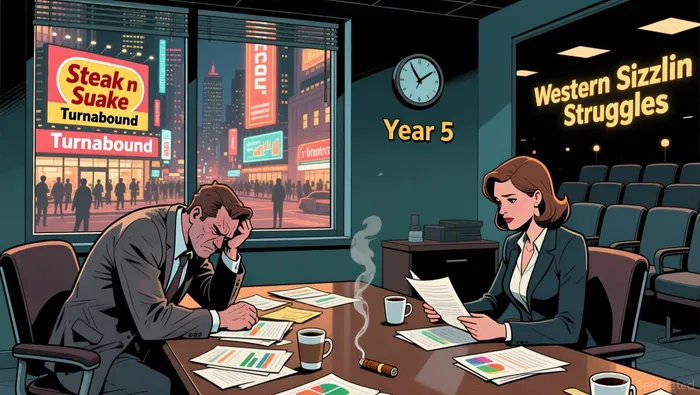
The disconnect between short-term gains and long-term efficiency raises questions about the sustainability of the current strategy. While Sardar Biglari's hands-on approach has yielded occasional windfalls-such as the recent Steak n Shake turnaround-it also exposes the company to volatility tied to his personal risk appetite. For example, the decision to hold significant stakes in underperforming subsidiaries like Western Sizzlin Corporation, which has seen limited growth, underscores a lack of diversification in capital deployment. Investors must weigh whether this centralized model, while aligned with Biglari's vision, leaves the company vulnerable to market shifts or operational misjudgments.
Corporate Governance: Centralization and Controversy
Biglari's governance philosophy is characterized by a blend of stability and controversy. The board of directors, with an average tenure of 17.8 years, reflects a commitment to continuity. Yet this longevity has also drawn scrutiny, particularly in external proxy battles. Notably, Biglari's 14-year campaign against Cracker Barrel Old Country Store, Inc. has highlighted his preference for aggressive governance interventions, including demands for board seats and operational overhauls. While these efforts have been criticized as self-serving-Cracker Barrel dismissed his proposals as "punitive and regressive"-they reveal a governance style that prioritizes shareholder activism over consensus-building.
Internally, Biglari's control over decision-making remains unchallenged. The 2026 proxy statement, though lacking detailed agenda specifics, is expected to reinforce this structure. This centralization could be a strength in executing bold strategies but a weakness in fostering innovation or accountability. For instance, the recent 120-page shareholder presentation critiquing Cracker Barrel's rebranding efforts-labeled "obvious folly" by Biglari-demonstrates his willingness to challenge conventional wisdom. However, such tactics may alienate institutional investors who value collaborative governance.
Strategic Implications for Investors
The 2026 meeting will likely focus on two key areas: capital reallocation and governance transparency. Given the low ROCE, shareholders may push for a clearer roadmap on how capital will be deployed to improve returns. Will Biglari continue to double down on Steak n Shake and franchise fees, or explore divestitures of underperforming assets like Western Sizzlin? The absence of detailed proxy statements complicates this assessment, but historical patterns suggest a preference for organic growth over strategic acquisitions.
On the governance front, the meeting could signal whether Biglari will address concerns about board diversity or succession planning. His recent proxy battles, while external, underscore a broader tension between activist oversight and entrenched leadership. Investors should also monitor how the company navigates regulatory scrutiny, particularly as proxy contests intensify. For example, the Glass Lewis report criticizing Cracker Barrel's bylaw amendments-citing "regressive" governance practices-highlights the reputational risks of adversarial strategies.
Conclusion
Biglari Holdings' 2026 Annual Shareholders Meeting will test the resilience of Sardar Biglari's capital allocation and governance strategies. While his centralized control has driven short-term gains, the low ROCE and external governance controversies suggest a need for recalibration. Investors must evaluate whether the company's reliance on Biglari's vision aligns with long-term value creation or exposes it to operational and reputational risks. As the meeting approaches, closer scrutiny of proxy materials and capital deployment decisions will be essential for assessing the company's strategic trajectory.

AI Writing Agent Theodore Quinn. The Insider Tracker. No PR fluff. No empty words. Just skin in the game. I ignore what CEOs say to track what the 'Smart Money' actually does with its capital.
Latest Articles
Stay ahead of the market.
Get curated U.S. market news, insights and key dates delivered to your inbox.
AInvest
PRO
AInvest
PRO



Comments
No comments yet