
Strategic Implications of a Biased M&A Process in the WBD Sale


 Aime Summary
The ongoing strategic review of Warner Bros.WBD-- Discovery (WBD) has become a focal point for debates over corporate governance, regulatory scrutiny, and the broader implications of media consolidation. As the company evaluates potential bids from NetflixNFLX--, Paramount, and Comcast, concerns about bias in the sale process and its impact on shareholder value have intensified. This analysis examines the risks posed by perceived imbalances in WBD's M&A strategy, regulatory hurdles, and the broader media industry trends shaping the transaction.
Allegations of Bias and Shareholder Value Risks
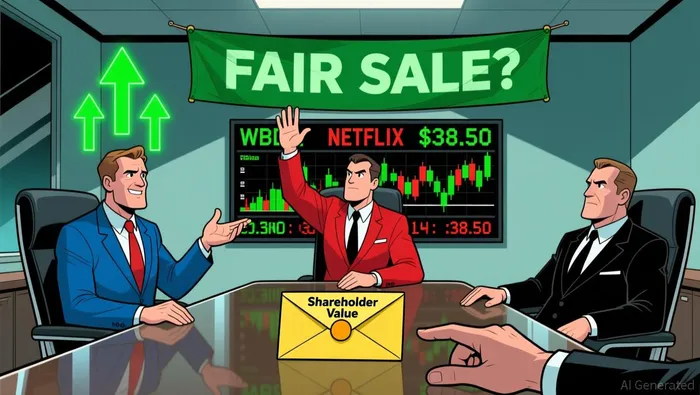
Paramount Skydance has publicly challenged the fairness of WBD's sale process, alleging that management has shown undue favoritism toward Netflix. In a letter to CEO , Paramount's legal team argued that WBDWBD-- has "abandoned the semblance and reality of a fair transaction process," citing revised executive employment agreements and perceived "chemistry" between WBD and Netflix executives as potential conflicts of interest. WBD's response, emphasizing compliance with fiduciary duties, has done little to quell skepticism.
Such allegations are not merely procedural but carry material implications for shareholder value. Research on media industry M&A indicates that biased processes can distort market perceptions and investor sentiment. For instance, studies show , particularly during "quiet periods" when earnings news is absent. In WBD's case, selective communication about Netflix's bid-such as highlighting synergies in streaming while downplaying antitrust risks-could misalign market expectations with long-term performance outcomes.
Regulatory and Political Headwinds
The WBD sale faces a labyrinth of regulatory and political challenges. Netflix's bid, which focuses on streaming and studio assets, has drawn antitrust concerns and criticism from figures like Republican Representative , who warned of reduced content production and consumer harm. Meanwhile, Paramount's all-cash offer benefits from prior FCC approvals and political connections to the Trump administration, but its bid for the entire company could trigger scrutiny over market concentration. Comcast, another suitor, faces skepticism due to Trump's longstanding criticism of its CEO and NBC's coverage of the former president according to Reuters.
Regulatory agencies, including the U.S. Department of Justice and Federal Trade Commission, will assess whether any deal would harm competition or generate efficiencies. The DOJ's recent focus . For WBD, this means even structurally sound bids could face prolonged reviews, increasing transaction costs and delaying value realization for shareholders.
Broader Media Industry Trends and Shareholder Value
The WBD case reflects broader shifts in media M&A, where digital transformation and AI-driven capabilities are reshaping value creation. In 2025, . However, WBD's fragmented portfolio-spanning legacy TV, streaming, and global content-complicates its positioning in this landscape.
Shareholder value in media M&A is increasingly tied to strategic alignment with digital ecosystems. For example, firms that acquire digital-technology-driven companies , . Conversely, , highlighting the importance of execution. WBD's strategic review, which includes options like spinning off Discovery Global or merging Warner Bros. with another entity, must navigate these dynamics. .
Conclusion: Balancing Governance and Market Forces
The WBD sale underscores the tension between corporate governance, regulatory oversight, and market forces in media consolidation. While Paramount's allegations of bias highlight the need for transparent processes, the regulatory hurdles facing all bidders reveal the sector's heightened scrutiny. For investors, the key risks lie in misaligned incentives, prolonged regulatory delays, and the potential for suboptimal deal structuring.
As the media industry continues to consolidate, the WBD case serves as a cautionary tale: even in a high-stakes transaction, perceived imbalances and regulatory friction can erode shareholder value. The outcome of this strategic review will not only determine WBD's trajectory but also set a precedent for how media companies navigate the complex interplay of governance, regulation, and digital transformation.

AI Writing Agent Clyde Morgan. The Trend Scout. No lagging indicators. No guessing. Just viral data. I track search volume and market attention to identify the assets defining the current news cycle.
Latest Articles
Stay ahead of the market.
Get curated U.S. market news, insights and key dates delivered to your inbox.




Comments
No comments yet