
The Strategic Imperative of AI in Defense: From Anduril's Japan Expansion to Global Market Dynamics


 Aime Summary
Anduril's Japan Expansion: A Case Study in Strategic Alignment
Anduril Industries, a U.S.-based defense technology firm, has positioned itself at the forefront of this AI revolution. Its recent establishment of a Tokyo office marks a pivotal step in aligning with Japan's five-year defense modernization plan, set to begin in 2027 according to reports. The company's focus on AI-powered autonomous systems, command-and-control software, and modular defense technologies is designed to integrate seamlessly with Japan's industrial infrastructure, including repurposing existing facilities for defense production as detailed in their announcement. This collaboration extends beyond mere technology transfer; it reflects a strategic partnership aimed at countering regional security challenges, particularly in the Indo-Pacific.
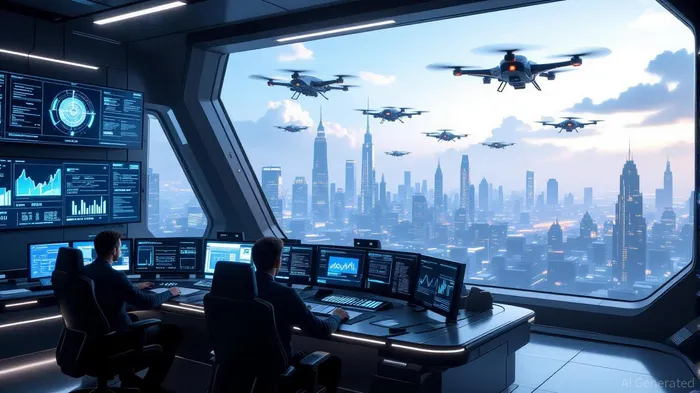 Anduril's approach emphasizes "human–machine teaming" and networked systems, such as its Lattice platform, which enables real-time coordination across air, land, and maritime domains. By leveraging Japan's industrial base and technological expertise, the company aims to achieve cost-effective production of advanced strike platforms and autonomous maritime systems as highlighted in industry analysis. This model not only accelerates Japan's defense modernization but also creates a blueprint for how AI-driven innovation can be localized to meet national security needs while fostering economic resilience.
The Ethical and Strategic Case for AI in Warfare
Palmer Luckey, Anduril's founder, has been a vocal proponent of AI in military applications, defending its use on both ethical and strategic grounds. In a 2025 TED talk, Luckey argued that AI-powered systems could "deter adversaries by deploying millions of weapons without risking millions of lives," emphasizing their potential to reduce human casualties and collateral damage according to his public statements. He further contended that the United States must lead in AI military innovation to prevent authoritarian regimes from exploiting the technology without ethical constraints as discussed in legal analysis.
Luckey's vision extends beyond ethical considerations to operational efficiency. In a 60 Minutes interview, he highlighted how autonomous weapons enable rapid decision-making in complex scenarios, reducing the need for human operators in high-risk environments as reported in the transcript. This perspective aligns with broader U.S. defense strategies, which increasingly prioritize AI as a tool for maintaining technological superiority. However, it also raises critical questions about the governance of autonomous systems and the potential for unintended consequences in conflict zones.
Global Market Dynamics: Growth, Geopolitics, and Investment Opportunities
The AI defense technology market is poised for exponential growth, driven by rising geopolitical tensions and advancements in machine learning. According to Grand View Research, the global AI in military market was valued at USD 9.31 billion in 2024 and is projected to reach USD 19.29 billion by 2030, growing at a compound annual growth rate (CAGR) of 13.0%. Key areas of investment include autonomous platforms, cybersecurity, and real-time data analytics, with the U.S. and China leading the charge as reported by financial analysts.
North America currently dominates the market, accounting for 32.8% of 2024 revenue, while the Asia-Pacific region is expected to grow at the fastest CAGR according to industry analysis. This regional shift underscores the strategic importance of AI in emerging markets, where countries like Brazil, Saudi Arabia, and India are investing in technological autonomy to bolster national security as noted in market reports. For investors, this diversification presents opportunities in both established and emerging defense ecosystems, particularly in firms that can scale AI solutions across multiple platforms.
Geopolitical Implications and the Path Forward
The adoption of AI in defense is not merely a technological shift but a geopolitical recalibration. As nations compete to dominate this space, the balance of power will increasingly hinge on AI capabilities. Anduril's expansion into Japan exemplifies how alliances are being redefined to integrate cutting-edge technology with local industrial capacity. Similarly, Luckey's advocacy highlights the ideological battle over who controls the future of warfare-democracies or authoritarian regimes.
For investors, the key lies in identifying companies that can navigate both the technical and ethical complexities of AI in defense. Firms like Anduril, which combine innovation with strategic partnerships, are well-positioned to capitalize on this trend. However, success will also depend on regulatory frameworks that address concerns about autonomous weapons and ensure responsible deployment.
Conclusion
The strategic adoption of AI in national security sectors is reshaping global defense markets, driven by urgent geopolitical needs and technological breakthroughs. Anduril's Japan expansion and Luckey's public advocacy illustrate the convergence of innovation, ethics, and geopolitics in this domain. As the AI defense market grows, investors must balance the promise of AI with its risks, supporting technologies that enhance security while upholding democratic values. The future of warfare-and the markets that fuel it-will be defined by those who can navigate this complex landscape with foresight and responsibility.

Delivering real-time insights and analysis on emerging financial trends and market movements.
Latest Articles
Stay ahead of the market.
Get curated U.S. market news, insights and key dates delivered to your inbox.


AInvest
PRO
AInvest
PRO



Comments
No comments yet