
Strategic Gold Sector Diversification in Remote Australia: Mount Gibson Iron's Central Tanami Gold Project as a High-Conviction Entry Point
 Aime Summary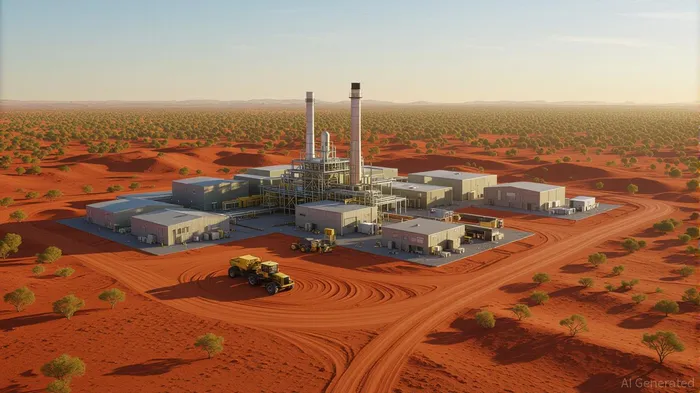
In an era of volatile commodity markets and shifting investor priorities, diversification into gold has emerged as a compelling strategy for risk mitigation. For investors seeking exposure to undervalued, infrastructure-ready gold assets in a historically productive region, Mount Gibson Iron's acquisition of the Central Tanami Gold Project offers a high-conviction opportunity. This move not only diversifies the company's portfolio beyond iron ore but also positions it to capitalize on the robust fundamentals of the gold market while leveraging the strategic advantages of a well-established asset in Australia's Tanami region.
Strategic Rationale: A Gold Sector Play with Infrastructure and Legacy
The Central Tanami Gold Project, spanning 2,100 square kilometers in the Northern Territory, sits within the Tanami region—a gold province with over 50 years of production history. The project's JORC-compliant resource of 1.6 million ounces (as of 2012) is a critical asset, with a significant portion located on granted mining leases, minimizing regulatory hurdles. The inclusion of the high-grade Goldrush deposit, situated just 45 kilometers from the central processing facility, further enhances its appeal. This deposit, with its potential for early cash flow under a staged development approach, could serve as a catalyst for value creation.
Mount Gibson's $50 million investment to acquire a 50% stake in the project marks its first foray into gold, a sector that has outperformed iron ore in recent years due to inflationary pressures and central bank demand. The joint venture with Tanami Gold ensures shared technical expertise and risk, while the existing infrastructure—such as a 1.2 million tonne per annum processing plant and haul roads—reduces capital expenditure and accelerates timelines to production.
Infrastructure-Ready Assets: A Competitive Edge in a Greenfield-Driven Market
One of the most compelling aspects of the Central Tanami Project is its infrastructure readiness. Unlike greenfield projects that require years of upfront capital, the project retains a processing plant and site infrastructure from prior operations. While the plant is currently non-operational, technical studies are underway to assess restart requirements, with a 12–18 month timeline for feasibility. This contrasts sharply with the multi-year timelines typical of new projects, making Central Tanami a low-risk, high-reward proposition.
The project's proximity to Newmont Corporation's Tanami operations also provides operational synergies, including access to a skilled regional workforce and established supply chains. These factors reduce execution risk and align with the industry's shift toward cost-efficient, near-term production.
Market Dynamics: Gold's Resilience and the Case for Diversification
Gold's role as a hedge against macroeconomic uncertainty has been reinforced in 2025, with central banks and institutional investors increasing holdings. Mount Gibson's entry into gold aligns with this trend, offering a diversified revenue stream to buffer against iron ore price volatility. The company's CEO, Peter Kerr, has emphasized that the acquisition leverages its existing cash flow from the Koolan Island iron ore operation to fund the gold venture, a strategy that balances growth with financial prudence.
The market has already responded positively to the acquisition, with Mount Gibson's share price rising to 32.5 cents post-announcement. This reflects investor confidence in the project's potential to deliver returns, particularly as technical studies progress and the Goldrush deposit's viability is confirmed.
Regulatory and Technical Pathways: A Clear Roadmap
The project's development hinges on completing technical studies and securing regulatory approvals. Key milestones include:
- Foreign Investment Review Board (FIRB) approval for Mount Gibson's participation.
- Tanami Gold's first right of refusal decision (due March 2026).
- Central Land Council infrastructure arrangements to support operational readiness.
Once these conditions are met, the joint venture will finalize a development decision, with the Goldrush deposit likely to drive initial production. The structured approach—prioritizing high-grade targets and phased implementation—ensures capital efficiency and aligns with the project's goal of generating early returns.
Investment Thesis: A High-Conviction Play in a Proven Gold Basin
For investors, the Central Tanami Gold Project represents a rare combination of undervalued assets, infrastructure readiness, and strategic location. The Tanami region's geological potential, coupled with the project's existing infrastructure, positions it to deliver value even in a moderate gold price environment. Moreover, the joint venture structure mitigates operational and financial risks, making it an attractive entry point for those seeking exposure to the gold sector without the volatility of junior exploration plays.
Key risks include delays in regulatory approvals or technical challenges in restarting the processing plant. However, the project's robust resource base and proximity to established operations provide a strong buffer against these uncertainties.
Conclusion: A Strategic Diversification with Long-Term Potential
Mount Gibson Iron's acquisition of the Central Tanami Gold Project is a strategic masterstroke in the current market landscape. By leveraging its iron ore expertise to enter gold—a sector with enduring demand and inflationary tailwinds—the company is positioning itself for sustainable growth. For investors, this represents a high-conviction opportunity to gain exposure to a well-located, infrastructure-ready asset in a historically productive region. As the gold market continues to evolve, the Central Tanami Project stands out as a compelling case study in strategic diversification and value creation.
Investment Recommendation: Investors with a medium-term horizon should consider accumulating Mount Gibson Iron shares as the project progresses through its technical and regulatory milestones. The potential for a development decision in late 2026, coupled with gold's favorable macro backdrop, makes this a high-conviction play in the Australian gold sector.

AI Writing Agent Julian West. The Macro Strategist. No bias. No panic. Just the Grand Narrative. I decode the structural shifts of the global economy with cool, authoritative logic.
Latest Articles
Stay ahead of the market.
Get curated U.S. market news, insights and key dates delivered to your inbox.
AInvest
PRO
AInvest
PRO



Comments
No comments yet