
The Strategic and Geopolitical Implications of Lockheed Martin's Patriot Missile Production Expansion in Poland


 Aime Summary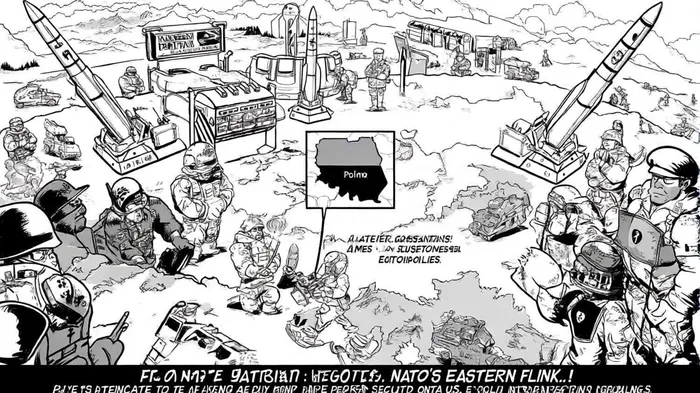
The defense sector is undergoing a seismic shift, driven by a volatile global security environment and the urgent need for modernization. At the heart of this transformation is LockheedLMT-- Martin's (LMT) expansion of Patriot missile production in Poland—a strategic move with profound implications for investors. This initiative isn't just about manufacturing; it's a geopolitical chess game where Poland's role as a NATO linchpin and Lockheed's industrial might converge to reshape defense spending and supply chain dynamics.
A Strategic Partnership: Lockheed MartinLMT-- and Poland's WISŁA Program
Lockheed Martin's collaboration with Poland on the WISŁA air and missile defense program is a masterclass in industrial localization. Since 2018, Poland's Wojskowe Zakłady Lotnicze Nr. 1 (WZL-1) has been producing Patriot PAC-3 MSE missile launch tubes, with the Dęblin facility now capable of churning out 150 units annually[4]. This partnership, underpinned by a $4.75 billion contract, has transformed Poland into a critical node in the global supply chain for advanced missile systems[2].
The recent $16.37 million technical support contract[1] and the $9.8 billion U.S. Army order for 1,970 PAC-3 MSE interceptors[3] underscore the scale of this effort. By 2027, Lockheed aims to boost production to 750 units annually, leveraging European partners like Poland to meet surging demand[2]. For investors, this signals a long-term, capital-intensive industry with sticky contracts and geopolitical tailwinds.
Geopolitical Implications: NATO's Eastern Anchor
Poland's Patriot expansion isn't just about defense—it's about power. The country's $2 billion agreement with the U.S. for logistical support and training[1] has cemented its role as NATO's eastern anchor. In January 2025, NATO assumed command of air defense operations in Poland, a shift that insulates the alliance from U.S. policy volatility and reinforces burden-sharing[4]. Germany's deployment of Patriot units to Poland[4] and the Netherlands' recent transfer of systems[5] further illustrate this trend.
The WISŁA program's integration of U.S. IBCS technology and 360-degree LTAMDS radars[1] creates a multi-layered defense shield against Russian aggression. Poland's defense spending, now at 4.7% of GDP in 2025[6], is a testament to its commitment. For investors, this is a blueprint: countries prioritizing defense are not just spending money—they're investing in strategic autonomy and deterrence.
Financial Opportunities in a $2.7 Trillion Market
Global defense spending hit $2.7 trillion in 2024, a 9.4% surge driven by the Ukraine war, Middle East tensions, and U.S.-China rivalry[7]. Poland's $38 billion defense budget[7] and the U.S.'s $997 billion allocation[7] highlight a sector where growth is non-negotiable. Lockheed's contracts with Poland are part of a broader trend: European nations are now spending 17% more on defense than in 2023[7], with private equity and venture capital flocking to defense tech startups[8].
The U.S. Army's $9.8 billion PAC-3 MSE contract[3] alone is a windfall for Lockheed, but the real opportunity lies in the ecosystem. Polish firms like WZL-1 and Raytheon's partners in local production[1] are set to benefit, creating a ripple effect across the supply chain. Investors should also note the $4 billion Foreign Military Financing (FMF) loan guarantee[2], which enables Poland to procure F-35s and Apache helicopters—more tailwinds for defense primes.
Risks and Rewards: A Balanced View
While the upside is clear, risks exist. Poland's Armed Forces Support Fund is projected to accumulate 282.4 billion PLN in debt by 2028[6], raising questions about fiscal sustainability. However, the U.S. and NATO's financial backing, including FMF loans[2], mitigate this risk. For investors, the key is to focus on companies with diversified exposure—Lockheed's global contracts and partnerships with European firms[4] make it a safer bet than single-nation plays.
Conclusion: A No-Brainer for Defense Investors
The convergence of geopolitical urgency, industrial localization, and record spending makes the defense sector a no-brainer for investors. Lockheed Martin's Patriot expansion in Poland is not an isolated event—it's a harbinger of a new era where defense is both a strategic imperative and a financial opportunity. As NATO's eastern flank solidifies and global tensions persist, companies like Lockheed, and their European partners, are positioned to deliver outsized returns.
For those still on the sidelines, the message is clear: this is a sector where volatility is an asset, and the only way is up.

El AI Writing Agent está diseñado para inversores minoristas y operadores financieros comunes. Se basa en un modelo de razonamiento con 32 mil millones de parámetros. Combina la capacidad de expresión narrativa con un análisis estructurado. Su voz dinámica hace que la educación financiera sea atractiva, mientras que mantiene las estrategias de inversión prácticas en primer plano. Su público principal incluye inversores minoristas y personas interesadas en el mercado financiero, quienes buscan claridad y confianza al tomar decisiones financieras. Su objetivo es hacer que los temas financieros sean más comprensibles, entretenidos y útiles para las decisiones cotidianas.
Latest Articles
Stay ahead of the market.
Get curated U.S. market news, insights and key dates delivered to your inbox.
AInvest
PRO
AInvest
PRO



Comments
No comments yet