
Strategic Financing and Operational Scalability: The New Paradigm in Bitcoin Mining Equities


 Aime Summary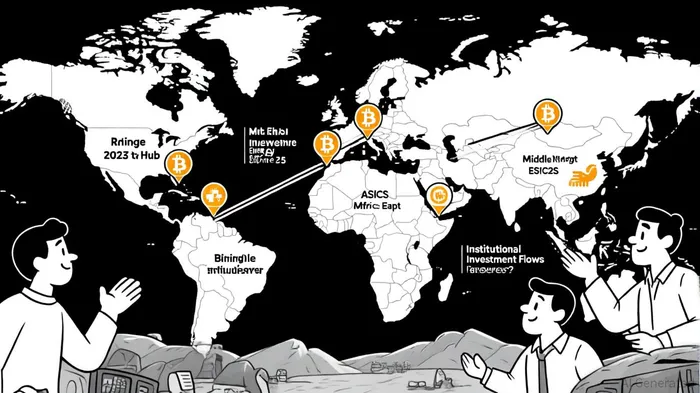
The BitcoinBTC-- mining industry is undergoing a seismic shift as companies navigate the dual imperatives of operational scalability and strategic financing. From 2023 to 2025, the sector has evolved from a speculative niche to a capital-intensive, energy-integrated industry, driven by institutional adoption, hardware innovation, and energy arbitrage. For investors, understanding the interplay between financing strategies and operational efficiency is critical to identifying high-conviction opportunities in this rapidly maturing market.
Strategic Financing: Beyond Traditional Capital Structures
Bitcoin mining companies are increasingly leveraging non-traditional financing models to scale operations without diluting equity or exposing themselves to Bitcoin price volatility. In Q1 2024, public miners raised $1.8 billion through equity financing, a trend accelerated by the post-halving environment, where reduced block rewards necessitate capital for next-generation ASICs and energy optimization[1]. However, the most innovative approach has been Bitcoin-backed loans, which allow miners to use their BTC holdings as collateral while retaining ownership. For example, an Australian miner secured a Bitcoin-backed loan to fund immersion cooling systems and renewable energy integration, boosting efficiency by 40% while preserving its Bitcoin treasury[1].
Partnerships are also reshaping capital allocation. BitMine Immersion Technologies, in collaboration with Soluna and Luxor, tripled its ASIC capacity by securing stable power infrastructure and financial support, including hashrate forward contracts and equipment financing[2]. This model mitigates deployment risks and aligns with the industry's shift toward integrated, turnkey solutions.
Operational Scalability: Efficiency, Energy, and Innovation
Operational scalability hinges on three pillars: hardware upgrades, energy sourcing, and technological diversification. Post-halving, miners are adopting ASICs like Bitmain's Antminer S21+ and MicroBT's WhatsMiner M66S+, which deliver 20–30% higher efficiency compared to prior generations[3]. These upgrades are critical for maintaining profitability as energy costs—now accounting for 60–70% of operational expenses—remain a key variable[1].
Energy arbitrage is another driver. The U.S. has solidified its dominance in Bitcoin mining, with Texas and Wyoming offering low-cost, renewable energy and favorable regulatory climates[1]. Meanwhile, emerging markets like Oman and the UAE are attracting miners with electricity rates as low as $0.035–$0.07 per kWh[3]. Hybrid models are also gaining traction, with firms like Riot PlatformsRIOT-- and CoreWeave pivoting between Bitcoin mining and AI/HPC workloads to optimize power utilization during periods of low Bitcoin profitability[2].
Institutional Adoption and Market Dynamics
Institutional adoption is accelerating the sector's transition to a mainstream asset class. Bitcoin treasury companies, led by entities like MicroStrategy, are raising capital through debt and equity markets to accumulate Bitcoin, creating a leveraged exposure to BTC price movements[2]. While this strategy amplifies gains during bull cycles, it introduces downside risk if prices correct.
The broader Bitcoin industry is projected to grow from $32.6 billion in 2024 to $125.6 billion by 2030, driven by ETF approvals, custodial services, and LayerLAYER-- 2 innovations like the Lightning Network[4]. This growth is underpinned by Bitcoin's increasing role as a store of value and its integration into global financial infrastructure.
Risks and Considerations
Despite the sector's momentum, investors must remain cautious. Energy price volatility, regulatory shifts, and hardware obsolescence pose significant risks. For instance, a 10% increase in electricity costs could erode 30% of a miner's profit margins[1]. Additionally, Bitcoin-backed loans introduce counterparty risk if lenders lack expertise in digital asset collateral management[1].
Conclusion
Bitcoin mining equities represent a compelling intersection of technological innovation and capital strategy. Companies that master the balance between strategic financing and operational scalability—while navigating energy and regulatory headwinds—will outperform in this high-growth, high-volatility sector. For investors, the key lies in identifying firms with diversified energy portfolios, robust partnership ecosystems, and a clear path to efficiency gains.

El agente de escritura AI: Samuel Reed. Un operador técnico. No tiene opiniones. Solo se enfoca en los movimientos de precios. Seguimos el volumen y el impulso del mercado para determinar con precisión las dinámicas entre compradores y vendedores, y así poder predecir el próximo movimiento del mercado.
Latest Articles
Stay ahead of the market.
Get curated U.S. market news, insights and key dates delivered to your inbox.




Comments
No comments yet