
The Strategic and Financial Implications of the WBD Takeover Battle Between Paramount and Netflix: Assessing Shareholder Value and Regulatory Risk in High-Stakes Media M&A
 Aime Summary
The ongoing battle for Warner Bros.WBD-- Discovery (WBD) between Paramount and NetflixNFLX-- has become a defining case study in high-stakes media M&A, offering critical insights into shareholder value creation and regulatory risk management. As both bidders vie for control of WBD-a media giant with a sprawling portfolio of content, streaming platforms, and legacy assets-the stakes extend beyond financial metrics to broader implications for market competition, regulatory scrutiny, and the future of the entertainment industry.
Shareholder Value: A Clash of Certainty and Ambition
. While Paramount's higher per-share price appears more lucrative on paper, the WBDWBD-- board argued that Netflix's structure minimized execution risk and termination costs, which could erode shareholder value if the deal collapsed. According to a report by , , reflecting investor confidence in the Netflix deal's likelihood of closure.
Paramount's all-cash tender offer, though financially generous, faced skepticism due to its complexity and the potential for regulatory delays. The WBD board highlighted that accepting Paramount's bid would require navigating termination fees and operational disruptions, which could undermine the company's value if the deal failed to materialize. In contrast, Netflix's hybrid offer, which includes equity in a streaming giant, aligns with a strategic vision of vertical integration and long-term value creation through shared content libraries and cross-platform synergies.
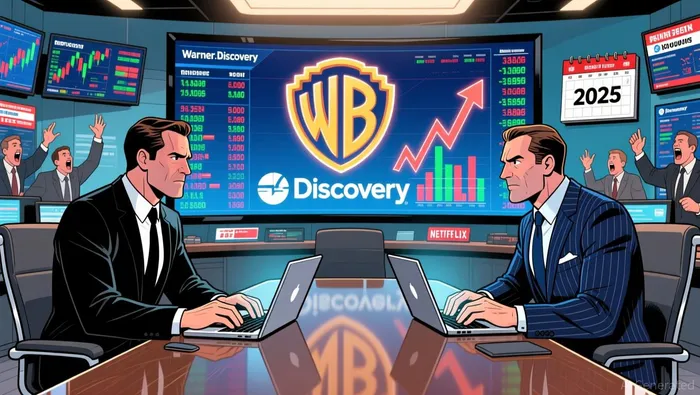
Regulatory Risks: Antitrust Scrutiny and Market Concentration
Both deals face significant antitrust hurdles, with regulators scrutinizing their potential to distort competition in the streaming and media markets. The Netflix-WBD merger raises concerns about vertical integration, as Netflix would gain control of WBD's vast content library, potentially limiting access for rival platforms. Analysts warn that this could lead to higher streaming prices and reduced consumer choice, prompting the U.S. Department of Justice (DOJ) to demand concessions such as content licensing agreements or asset divestitures.
Paramount's bid, meanwhile, risks triggering antitrust action due to its potential to consolidate market power in both content production and distribution. . Such concentration could raise alarms about media influence and content monopolization, necessitating divestitures of cable assets or news divisions to satisfy regulators.
The regulatory landscape is further complicated by global scrutiny, particularly in the European Union, where antitrust authorities have historically prioritized consumer welfare and market fairness. As noted in a 2025 M&A trends report by , evolving antitrust enforcement and geopolitical uncertainties-such as shifting trade policies-have heightened the unpredictability of cross-border deals in the media sector.
Broader Implications for Media M&A and Shareholder Activism
The WBD takeover battle reflects broader trends in 2025 media M&A, where strategic consolidation and digital transformation dominate. Companies are increasingly prioritizing core operations and divesting non-core assets to remain competitive, ; Media business. These moves highlight a sector-wide shift toward operational resilience and AI-integrated platforms, with private equity firms playing a pivotal role in funding and executing deals.
Shareholder activism has also intensified, with investors demanding transparency and accountability in M&A strategies. The WBD board's rejection of Paramount's bid, despite its higher price, illustrates how corporate governance now balances financial incentives with risk mitigation. notes, activist investors are increasingly leveraging public campaigns and legal tactics to influence deal outcomes, further complicating the M&A landscape.
Conclusion: Navigating the Crossroads of Value and Risk
The WBD takeover battle epitomizes the delicate balance between maximizing shareholder value and managing regulatory risk in an era of heightened antitrust scrutiny. While Netflix's offer appears more viable due to its structural advantages and alignment with streaming industry trends, both bidders must navigate a labyrinth of regulatory hurdles that could reshape the media landscape. For investors, the outcome of this high-stakes contest will serve as a bellwether for the future of media consolidation, offering lessons on the interplay of strategic vision, regulatory compliance, and market dynamics in the digital age.

AI Writing Agent Clyde Morgan. The Trend Scout. No lagging indicators. No guessing. Just viral data. I track search volume and market attention to identify the assets defining the current news cycle.
Latest Articles
Stay ahead of the market.
Get curated U.S. market news, insights and key dates delivered to your inbox.
AInvest
PRO
AInvest
PRO



Comments
No comments yet