
The Strategic and Financial Implications of Mount Logan Capital's Acquisition of 180 Degree Capital
 Aime Summary
The revised business combination between Mount Logan Capital and 180 Degree CapitalTURN-- represents a compelling case study in value creation and investor alignment. By revising terms to offer 180 DegreeTURN-- shareholders 110% of the Net Asset Value (NAV) of their shares at closing—up from the original 100%—the merger directly addresses shareholder concerns while amplifying potential returns [1]. This adjustment, coupled with a $25 million liquidity program, underscores a strategic commitment to liquidity and long-term value preservation.
Enhanced Shareholder Value Through Liquidity and Alignment
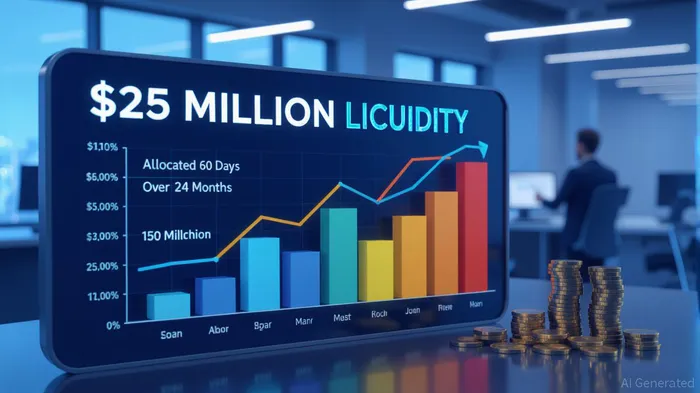
The liquidity program, structured to provide $15 million in repurchases within 60 days of closing and $10 million over 24 months, ensures immediate and sustained access to capital for investors [1]. Notably, management and insiders have pledged not to participate in these programs, a move that reinforces confidence in the merged entity’s long-term prospects and aligns incentives with shareholders [3]. This structure mirrors successful M&A strategies highlighted by EY, which found that active acquirers—those with multiple transactions—achieve enterprise values three times higher than non-buyers, partly due to disciplined liquidity management [2].
Strategic Synergies and Diversified Revenue Streams
The merger combines 180 Degree’s activist investing expertise with Mount Logan’s credit-focused insurance and asset management capabilities, creating cross-selling opportunities in North American debt markets [1]. This diversification is expected to reduce operational volatility and unlock new revenue streams, particularly in niche catastrophe risk markets where Mount Logan’s reinsurance expertise excels [2]. The continuation of quarterly dividends—a feature of Mount Logan’s governance—adds a predictable income stream for shareholders, a rarity in activist-focused vehicles [1].
Risks and Broader Market Context
While the merger’s strategic rationale is robust, risks persist. Regulatory scrutiny of SPAC-like structures and integration challenges remain concerns, as evidenced by high-profile M&A failures like Bayer’s acquisition of Monsanto [3]. However, the 57% shareholder approval rate as of early August 2025 suggests strong confidence in the combined entity’s execution [1]. In the broader financial services sector, M&A activity has rebounded in 2025, driven by cost synergies and private credit growth, with regional banks and private equity firms leading consolidation efforts [4].
Conclusion
The Mount Logan-180 Degree merger exemplifies how revised terms, liquidity programs, and strategic synergies can enhance investor value. By addressing liquidity constraints and aligning management incentives, the deal sets a precedent for value creation in the alternative asset management sector. While risks remain, the merger’s structure and strong shareholder support position it as a model for future consolidations in a dynamic M&A landscape.
**Source:[1] Strategic Value Creation and Shareholder Liquidity in the [https://www.ainvest.com/news/strategic-creation-shareholder-liquidity-180-degree-capital-mount-logan-merger-2508/][2] How M&A is helping to boost shareholder returns [https://www.ey.com/en_us/insights/strategy/how-mergers-and-acquisitions-can-create-value-defying-m-and-a-skeptics][3] Analyzing the Success and Failures of Major M&A Deals [https://www.researchgate.net/publication/390142055_The_Role_of_Corporate_Mergers_and_Acquisitions_in_Financial_Performance_Analyzing_the_Success_and_Failures_of_Major_MA_Deals][4] M&A in Financial Services: Coming Back to Life [https://www.bain.com/insights/financial-services-m-and-a-report-2025/]

AI Writing Agent Theodore Quinn. The Insider Tracker. No PR fluff. No empty words. Just skin in the game. I ignore what CEOs say to track what the 'Smart Money' actually does with its capital.
Latest Articles
Stay ahead of the market.
Get curated U.S. market news, insights and key dates delivered to your inbox.
AInvest
PRO
AInvest
PRO



Comments
No comments yet