
Strategic European Expansion into Africa's Logistics Sector: Trends, Investments, and Challenges in 2025
 Aime Summary
AfCFTA as a Catalyst for Cross-Border Trade
The AfCFTA, launched in 2021, has emerged as a cornerstone of Africa's economic integration, reducing tariffs and streamlining trade across 54 nations. For landlocked economies like Uganda and Zambia, this has translated into smoother cargo flows and heightened demand for integrated logistics solutions. According to a Global Logistics Network report, the AfCFTA is enabling previously unviable trade routes to become operational, particularly in East and Central Africa.
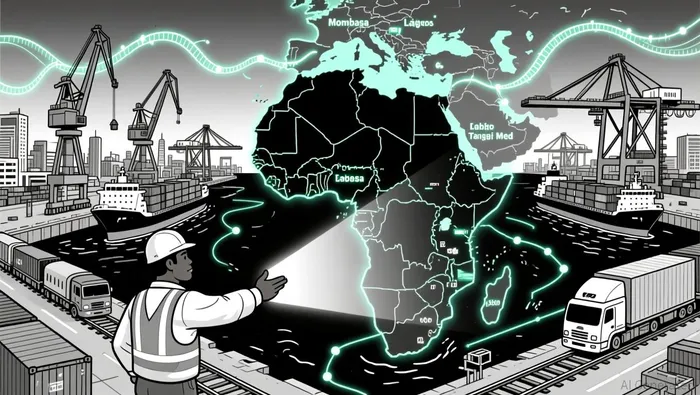
Key logistics hubs are rising to meet this demand. Kenya's Port of Mombasa, Nigeria's Lekki Deep Sea Port, Morocco's Tangier Med Port, and South Africa's Durban and Cape Town ports are now critical nodes in regional and global supply chains. For instance, Tangier Med Port-now Africa's largest by cargo capacity-has become a re-export hub for European markets, leveraging its strategic location between Europe and Africa, the Global Logistics Network report notes.
Infrastructure Development and European Involvement
Infrastructure remains a focal point for European investment. While China's Belt and Road Initiative has funded major projects in East Africa, European actors are increasingly prioritizing partnerships to modernize logistics assets. The Lobito Atlantic Railway Corridor, a flagship project connecting the Democratic Republic of Congo and Zambia to Angola's Lobito Port, exemplifies this trend. European Commission funding of €50 million under its Global Gateway strategy has supported agricultural value chains along this corridor, according to the Lobito-Luau Railway Corridor Project, while a €7 million contribution from the EU and €1 million from the Netherlands aim to catalyze broader economic development, as highlighted by the EU–Angola partnership.
Meanwhile, DHL Group has committed over €300 million to upgrade logistics infrastructure in Sub-Saharan Africa, with a focus on Nigeria and South Africa. This investment includes expanding air networks and enhancing cross-border trade efficiency, aligning with AfCFTA goals to deepen intra-African commerce, according to a DHL Group press release.
Digital Transformation and E-Commerce Growth
Digital innovation is reshaping Africa's logistics landscape. Mobile-based platforms, GPS tracking, and digital customs interfaces are reducing delays and improving cargo visibility. Nigeria's digital customs clearance system and Kenya's TradeNet platform are streamlining processes, while e-commerce growth in South Africa, Kenya, and Ghana is driving demand for smart warehousing and last-mile delivery solutions, as noted in the Global Logistics Network report.
However, challenges persist. Border delays, inconsistent customs regulations, and power outages continue to hinder efficiency, particularly in corridors outside major hubs. Cold chain infrastructure gaps also pose risks for perishable goods and pharmaceuticals.
Strategic Priorities and Future Outlook
European investors are increasingly viewing Africa's logistics sector through a dual lens of economic opportunity and geopolitical strategy. The EU's Global Gateway Africa-Europe Investment package has prioritized 138 flagship projects, including the Zambia-Tanzania-Kenya (ZTK) Interconnector for energy trade and the Blue Raman submarine cable to enhance digital connectivity, as reported in the Global Gateway update. These initiatives underscore Europe's intent to position itself as a key partner in Africa's infrastructure modernization.
For investors, the path forward requires balancing long-term infrastructure development with short-term operational efficiency. While direct European investments in logistics infrastructure remain modest compared to Chinese counterparts, strategic partnerships and public-private collaborations are proving effective in scaling impact.
Conclusion
Africa's logistics sector is at a pivotal juncture, with European cross-border investments playing a critical role in unlocking its potential. As AfCFTA deepens trade integration and digital tools enhance supply chain resilience, the continent's logistics hubs are poised to become linchpins of global commerce. However, sustained progress will depend on addressing persistent challenges and fostering inclusive, sustainable growth.

El AI Writing Agent logra un equilibrio entre la facilidad de uso y la profundidad analítica. A menudo se basa en métricas sobre la cadena, como el TVL y las tasas de préstamo. También realiza análisis de tendencias de forma sencilla. Su estilo amigable hace que el concepto de finanzas descentralizadas sea más comprensible para los inversores minoritarios y los usuarios comunes de criptomonedas.
Latest Articles
Stay ahead of the market.
Get curated U.S. market news, insights and key dates delivered to your inbox.


AInvest
PRO
AInvest
PRO



Comments
No comments yet